Starting an Amazon FBA business can feel overwhelming, especially if you are launching your first product. You need to find reliable suppliers, calculate your investment, create a high converting product listing, understand Amazon SEO, manage inventory, and learn how to advertise without wasting your budget. On top of that, you need to understand Amazon’s policies, product compliance requirements, and the competitive landscape of your chosen niche.
This is why many new sellers look for the best Amazon FBA agency for beginners. The right agency can help simplify the process, reduce avoidable mistakes, and give you a clear roadmap for building a profitable Amazon business.
However, not every Amazon agency is suitable for beginners. Some focus exclusively on advertising, while others offer product research, sourcing, private labeling, listing optimization, inventory planning, and ongoing account management. Choosing the right partner depends on your business model, available capital, experience, and long term goals.
In this guide, we will explain what makes an Amazon FBA agency worth hiring, which services beginners should prioritize, how Amazon SEO and Answer Engine Optimization can improve product visibility, and how to evaluate an agency before investing your money.
What Is an Amazon FBA Agency?
An Amazon FBA agency is a service provider that helps sellers launch, manage, and grow their Amazon businesses.
FBA stands for Fulfillment by Amazon. Under this model, sellers send inventory to Amazon’s fulfillment network, and Amazon handles eligible order fulfillment, shipping, customer service, and returns according to its policies.
An agency can support different parts of this process, depending on its capabilities.
For example, a full service Amazon FBA agency may help with:
- Product research and niche validation
- Supplier sourcing and manufacturer negotiations
- Private label product development
- Branding, packaging, and product design
- Amazon listing creation and optimization
- Keyword research and Amazon SEO
- Product photography and listing graphics
- Amazon PPC campaign setup and management
- Inventory forecasting and replenishment planning
- Brand Registry application assistance
- Account health monitoring and compliance guidance
- Performance reporting and business growth strategy
For beginners, the biggest advantage is having a structured process instead of trying to figure out every operational detail independently.
Nevertheless, hiring an agency does not guarantee sales or profitability. Your results still depend on product demand, competition, pricing, landed costs, advertising efficiency, customer satisfaction, and execution.
What Is the Best Amazon FBA Agency for Beginners?
The best Amazon FBA agency for beginners is one that offers transparent pricing, practical guidance, reliable supplier coordination, measurable deliverables, and services that match the seller’s actual needs.
There is no single agency that is best for every business. A seller launching a private label product needs different support from someone reselling established brands through a wholesale model.
For beginners who want to build their own brand, a full service private label partner can be particularly useful because it can coordinate product sourcing, branding, listing preparation, and fulfillment planning under one process.
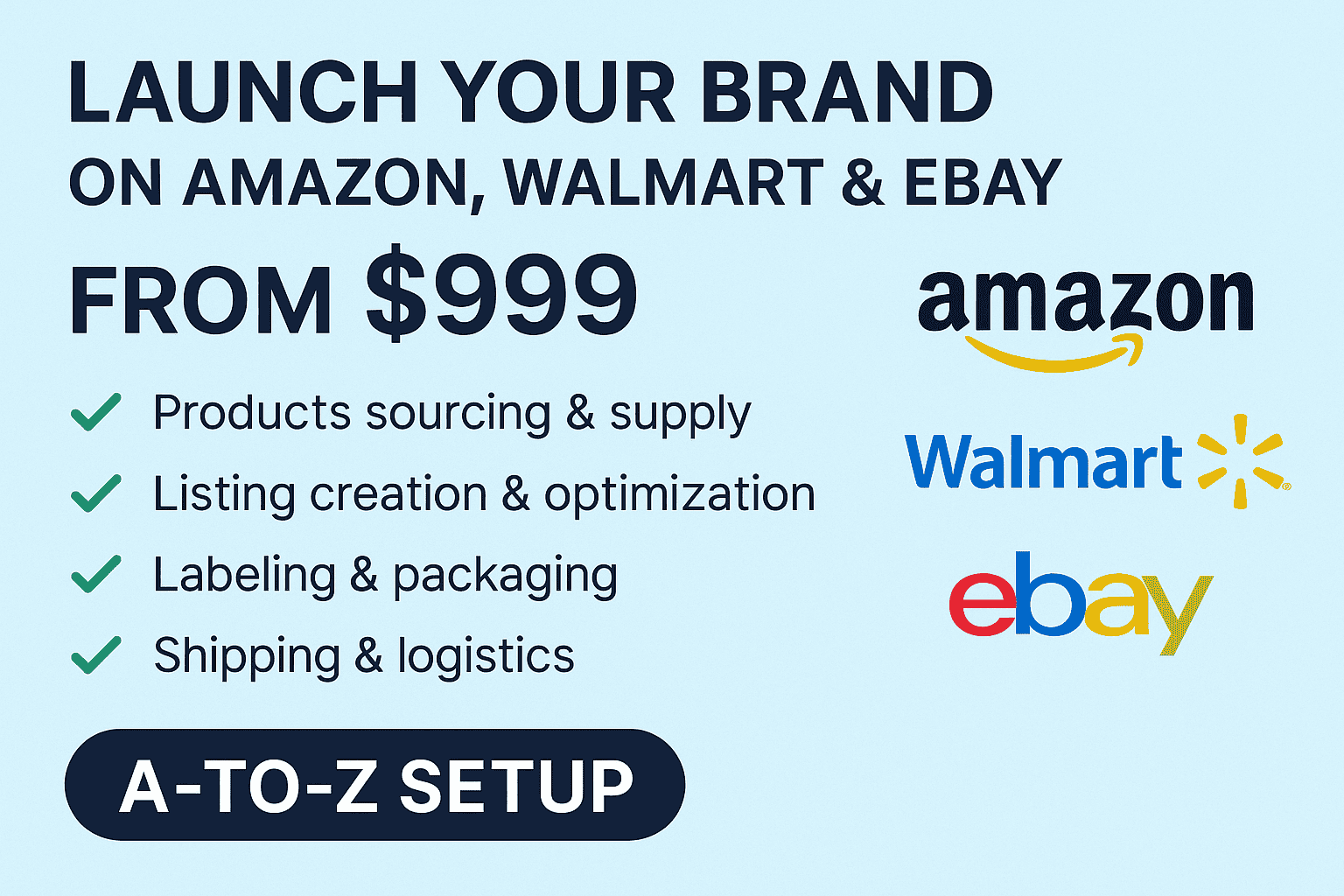
HighRise Wholesale is one option to consider for sellers exploring private label and wholesale opportunities. Its services focus on product sourcing, private labeling, product preparation, listing support, and shipping coordination for Amazon FBA and Walmart WFS sellers.
You can explore its services at https://highrisewholesale.com
As with any provider, beginners should independently verify the current service scope, pricing, supplier arrangements, timelines, and contractual terms before committing funds.
The most important question is not simply which agency has the best marketing. It is which agency can demonstrate how it will help you move from product selection to a properly prepared, financially viable launch.
Why Beginners Should Consider a Full Service Amazon FBA Agency
Starting an Amazon business involves several connected activities. A mistake in one area can create problems throughout the operation.
For example, selecting a product without understanding its landed cost can leave you with weak margins. Ordering inventory before validating demand can tie up your capital. Creating a listing without researching relevant search terms can limit organic visibility. Launching advertising without monitoring profitability can quickly consume your budget.
A full service agency can help coordinate these activities and make the launch process more manageable.
1. Product Research and Market Validation
Product research is one of the most important stages of launching an Amazon business.
Beginners often choose products because they appear popular or have impressive sales estimates. Unfortunately, high demand does not automatically mean an attractive business opportunity.
A proper product research process should examine:
- Search demand and sales trends
- Competition and the strength of established brands
- Average selling prices and price fluctuations
- Customer reviews and recurring product complaints
- Product differentiation opportunities
- Estimated manufacturing and shipping costs
- Amazon referral and fulfillment fees
- Advertising requirements
- Seasonal demand and inventory risks
- Product restrictions and compliance requirements
An experienced agency should explain why a product may be worth pursuing and identify the risks that could make it unsuitable.
For example, a kitchen accessory might have consistent demand, but dozens of established sellers could compete on price. A differentiated version may offer an opportunity, but only if the additional manufacturing cost makes commercial sense.
Ask the agency to show you the assumptions behind its research. Sales estimates are useful, but they should never be treated as guaranteed future revenue.
2. Product Sourcing and Supplier Management
Finding a manufacturer is only one part of sourcing a product.
You also need to evaluate product quality, minimum order quantities, sample costs, production timelines, packaging requirements, payment terms, and shipping arrangements.
A good sourcing partner should help you understand these details before you place a substantial order.
Beginners should request information about:
- Manufacturer identity and verification
- Product specifications and approved samples
- Minimum order quantities
- Quality control procedures
- Production and inspection timelines
- Packaging and labeling requirements
- Shipping methods and estimated landed costs
- Responsibility for defective or nonconforming goods
Independent inspections can be especially valuable when ordering from an unfamiliar manufacturer.
Never assume that an agency’s involvement eliminates supplier risk. Confirm who is responsible for quality disputes, refunds, replacement inventory, and shipping delays.
3. Private Label Branding and Product Differentiation
Private labeling allows you to sell products under your own brand rather than simply reselling another company’s existing merchandise.
However, adding a logo to a generic product is not always enough to create a competitive advantage.
Strong product differentiation may involve improved materials, more useful features, better packaging, additional accessories, clearer instructions, or a design that solves a genuine customer problem.
A capable agency should help you assess which improvements customers value and whether the additional cost is justified.
Branding support may include logo development, packaging design, product inserts where permitted, and visual assets for your Amazon listing.
The objective is to create a product that customers have a reason to choose, rather than relying entirely on discounts or advertising.
4. Amazon Listing Creation and Optimization
Your product listing is one of the most important parts of your Amazon business.
A listing needs to communicate the product’s benefits, answer customer questions, establish credibility, and help shoppers make an informed purchasing decision.
An Amazon FBA agency should understand how to develop an effective product title, key feature bullets, product description, relevant backend search terms, and supporting images.
Depending on the category and eligibility, the agency may also assist with A+ Content and Brand Store development.
A strong listing should clearly communicate:
- What the product is
- Who it is designed for
- What problem it solves
- What makes it different
- What is included in the package
- Relevant dimensions, materials, and specifications
- Important usage instructions or limitations
Keyword placement matters, but readability matters too. Repeating the same keyword unnaturally throughout the listing can create a poor shopping experience.
The goal is to create a listing that is relevant to search queries and persuasive to real customers while complying with Amazon’s content policies.
Amazon SEO for Beginners: How to Improve Organic Visibility
Amazon SEO is the process of improving a product listing’s relevance and performance so it has a better opportunity to appear in relevant Amazon search results.
Amazon’s search system considers multiple signals. These can include query relevance, product information, availability, price, customer experience, and sales performance. The precise ranking system is proprietary and can change over time.
No agency can legitimately guarantee a permanent first position for every target keyword.
Instead, a reliable agency should follow a systematic optimization process.
Conduct Thorough Keyword Research
Keyword research identifies the search phrases customers use when looking for products.
For example, someone shopping for a reusable kitchen cleaning product might search for terms related to kitchen sponges, dishwashing scrubbers, reusable cleaning pads, or non scratch cleaning tools.
Each phrase may represent a different customer need.
An agency should identify relevant primary keywords, secondary keywords, specific long tail searches, and terms that indicate stronger purchase intent.
Research tools can help estimate keyword demand and competition, but the results should be validated against the product and the actual search results.
Optimize the Product Title
The product title should describe the item clearly and incorporate relevant search terms naturally.
Avoid keyword stuffing, unnecessary repetition, misleading claims, and formatting that violates Amazon’s category specific requirements.
Amazon has title rules that vary by product type and may change, so sellers should verify the applicable requirements before publishing.
A title should help shoppers understand the product quickly rather than read like a list of disconnected keywords.
Improve Bullet Points and Product Descriptions
Bullet points should explain meaningful product benefits and supporting features.
Instead of simply stating that a product is durable, explain the relevant material or construction and why it matters to the customer, provided those claims are accurate.
Product descriptions can provide additional context, specifications, compatibility information, and usage guidance.
Every claim should be supported. Avoid unsupported medical benefits, exaggerated performance promises, and misleading comparisons.
Optimize Product Images
Product images influence how customers understand and evaluate a product.
A well planned image sequence may include the main product image, feature explanations, dimensions, product contents, usage scenarios, and comparisons that accurately demonstrate differences between available options.
The main image must follow Amazon’s category and image requirements.
Supporting images should be easy to understand on mobile devices. Overcrowded graphics and tiny text can make a listing less effective.
Monitor Performance and Keep Improving
Listing optimization should not end when a product goes live.
Agencies should monitor relevant performance indicators, including impressions, click through rate, conversion rate, organic keyword visibility, advertising performance, and customer feedback where available.
Changes should be based on evidence rather than arbitrary edits.
If a listing receives impressions but few clicks, the main image, title, price, or perceived value may need investigation. If shoppers click but rarely purchase, the problem may involve pricing, reviews, product information, competition, or a mismatch between the search query and the offer.
These metrics provide clues, not definitive diagnoses, so changes should be evaluated carefully.
What Is AEO, and Why Does It Matter for Amazon Sellers?
AEO stands for Answer Engine Optimization.
Traditional SEO focuses on helping content appear in search results. AEO focuses on making information clear, relevant, structured, and useful enough to be surfaced in direct answers provided by AI assistants, answer engines, and other question answering systems.
For Amazon sellers, AEO creates an additional opportunity to communicate product value and answer the questions customers ask before purchasing.
However, AEO does not guarantee that an AI assistant will recommend a product. Amazon search visibility and visibility in external AI systems are different outcomes, and neither should be promised without evidence.
How AEO Can Support an Amazon FBA Business
Customers often search for answers rather than product names alone.
They may ask questions such as:
- Which reusable kitchen sponge is suitable for nonstick cookware?
- What should beginners look for when choosing a pet hair remover?
- How do I choose the correct size of a product?
- What is the difference between two similar cleaning accessories?
- Which product features matter most for everyday use?
Your listing and supporting brand content should answer relevant questions accurately and directly.
If a product is designed for a particular purpose, explain that purpose clearly. If it has limitations, communicate them honestly. If specifications affect compatibility, provide the details shoppers need.
This makes your content more useful to customers and easier to interpret across different discovery channels.
Write Content That Answers Real Customer Questions
An AEO focused content strategy begins with customer research.
Review customer questions, product reviews, search query data, support inquiries, and common objections. Use these insights to create clear answers on appropriate pages and within permitted Amazon listing fields.
For example, a product page for a kitchen cleaning accessory might explain which surfaces it is intended for, how to clean it after use, what comes in the package, and what limitations customers should know.
Do not add unsupported claims simply because they appear likely to attract attention.
Use Clear Structure and Specific Information
Answer engines benefit from content that communicates meaning without ambiguity.
Use descriptive headings, concise explanations, consistent product specifications, and direct answers to common questions on your website and other appropriate publishing channels.
For a private label brand, a supporting website can provide educational articles, product comparisons, care instructions, and buying guides that expand on the information available in an Amazon listing.
Keep product names, dimensions, materials, model details, and other factual information consistent across channels.
Structured data may help eligible search engines interpret website content, but it does not guarantee inclusion in AI answers or enhanced search results.
Build Trust Through Accurate Brand Information
AEO is not simply about inserting questions into articles.
Useful content should demonstrate real product knowledge, explain relevant limitations, and provide consistent information that customers can verify.
For Amazon sellers, that means aligning listing claims with product specifications, avoiding fabricated reviews, and ensuring that product descriptions match what customers actually receive.
The long term objective is to make your brand easier to understand, evaluate, and trust.
Amazon PPC Management: What Beginners Should Know
Amazon PPC, or pay per click advertising, allows sellers to promote eligible products through Amazon’s advertising platform.
Advertising can help generate visibility for a new product, test customer search terms, and gather performance data. However, advertising does not automatically make an unprofitable product successful.
A beginner friendly agency should explain campaign structure, budgets, keyword targeting, bidding, search term analysis, and the relationship between advertising costs and contribution margin.
Start With a Realistic Advertising Budget
Before launching campaigns, estimate the amount you can afford to spend while gathering data.
Your budget should account for product costs, fulfillment fees, referral fees, shipping, preparation, storage, advertising, returns, and other applicable expenses.
An agency should explain what the initial budget is intended to achieve and what decisions will be made based on the results.
Understand ACoS and TACoS
Advertising cost of sales, or ACoS, measures advertising spend relative to sales attributed to advertising.
Total advertising cost of sales, or TACoS, compares advertising spend with total sales, including sales not attributed directly to advertising.
These metrics provide different perspectives on performance.
A lower ACoS is not always the only objective. A new product may require an initial testing period, while a mature product may prioritize contribution margin or efficient growth.
The appropriate target depends on the product’s margins, stage of development, advertising strategy, and overall business objectives.
Look Beyond Revenue
An agency should report more than advertising sales and impressions.
You need to understand whether the business is generating enough contribution to cover its costs and whether the strategy is sustainable.
For example, a product generating substantial sales may still lose money if its landed cost, Amazon fees, returns, and advertising expenses are too high.
Ask for regular reports that explain what changed, why it changed, and what actions the agency recommends next.
How Much Does an Amazon FBA Agency Cost?
Amazon FBA agency pricing varies considerably according to the services provided, business size, product complexity, and level of ongoing management.
Some agencies charge a fixed project fee for product research or listing creation. Others charge monthly retainers, advertising management fees, a percentage of sales or advertising spend, or a combination of these arrangements.
Full service launch packages may include sourcing and preparation coordination, while other providers bill each service separately.
Before signing an agreement, establish the total expected cost.
Your evaluation should cover:
- Agency service fees
- Product samples and development
- Initial inventory
- Freight and customs charges where applicable
- Product inspection and preparation
- Amazon selling and fulfillment fees
- Advertising expenditure
- Photography, design, and packaging
- Applicable testing and compliance expenses
- Working capital for replenishment
A low agency fee does not necessarily represent better value if important services are excluded.
Likewise, an expensive package is not automatically superior.
Compare the actual deliverables, the provider’s experience, the level of transparency, and the total investment required to launch and sustain the business.
How Much Money Does a Beginner Need to Start Amazon FBA?
There is no universal minimum investment that guarantees a successful Amazon FBA business.
The required amount depends on the product, minimum order quantity, selling price, category, manufacturing location, shipping method, compliance requirements, and advertising strategy.
A simple product with a low minimum order quantity may require less capital than a customized product with specialized packaging or testing requirements.
Private label sellers should also plan for inventory replenishment. Spending the entire budget on the first order can leave insufficient funds to respond to demand or resolve unexpected issues.
Before placing an order, prepare a realistic financial model that includes:
- Estimated selling price
- Manufacturing cost per unit
- Packaging and branding expenses
- Freight, duties, and preparation costs
- Amazon referral and fulfillment fees
- Expected advertising cost per sale
- Returns and other operating expenses
- Expected contribution margin
- Cash required for the next inventory order
Use conservative assumptions and test different sales scenarios.
If the business only appears profitable under optimistic sales forecasts or unrealistically low advertising costs, reconsider the product before committing substantial capital.
Private Label vs Wholesale: Which Model Is Better for Beginners?
Choosing the right business model is just as important as choosing the right agency.
Amazon Private Label
Private label sellers develop or source products and sell them under their own brand.
This model offers more control over branding, packaging, positioning, and product differentiation. It can also require more upfront work involving product development, supplier coordination, inventory purchasing, and marketing.
Private label may suit entrepreneurs who want to build a long term brand and are prepared to invest in product research and differentiation.
Amazon Wholesale
Wholesale sellers purchase established branded products from legitimate suppliers or authorized distributors and resell them on Amazon, subject to applicable selling permissions and brand restrictions.
This approach can avoid the need to develop a new consumer brand, but competition, pricing, supplier access, and marketplace restrictions can still create significant challenges.
Wholesale sellers need to verify product authenticity, invoices, supplier legitimacy, and eligibility to sell particular products.
Neither model is automatically better.
The right choice depends on your available capital, risk tolerance, supplier relationships, operational skills, and long term objectives.
A suitable agency should explain the tradeoffs rather than pushing every beginner toward the same package.
How to Choose the Best Amazon FBA Agency
Before hiring an agency, evaluate how it works, what it delivers, and whether its incentives align with your business goals.
Look for Relevant Experience
Ask for examples of previous work involving products, categories, or business models similar to yours.
Case studies should explain the starting situation, actions taken, time period, costs where available, and results.
Be cautious when an agency presents revenue figures without discussing advertising expenditure, product costs, or profitability.
A successful campaign for one product does not guarantee similar results for another.
Ask for a Clear Scope of Work
You should know exactly which services are included.
Will the agency conduct product research? Will it negotiate with suppliers? Does it coordinate inspections? Who creates the listing? Who manages advertising? Who handles inventory planning?
Also clarify which tasks remain your responsibility.
A written scope reduces misunderstandings and helps you compare competing proposals fairly.
Verify Ownership and Account Access
Your Amazon Seller Central account should remain under your control.
Understand who owns the account, brand assets, listing content, advertising data, supplier documentation, and other business materials.
Use appropriate user permissions rather than sharing your main account credentials unnecessarily.
Make sure you can access your reports and operational information if you decide to change agencies.
Check Compliance Practices
Amazon has strict requirements covering product authenticity, restricted products, listing claims, customer reviews, intellectual property, and other areas.
Depending on the product, additional legal or regulatory requirements may apply.
Ask how the agency identifies compliance risks before sourcing inventory or publishing a listing.
Be cautious of providers who suggest manipulating reviews, using misleading claims, creating artificial sales, or bypassing marketplace rules.
Shortcuts can put your account and investment at risk.
Understand Communication and Reporting
Beginners often need more explanation than experienced sellers.
Choose a partner that communicates clearly, answers questions, provides written updates, and explains its decisions in language you can understand.
You should know who manages your project, how frequently updates are provided, and how issues are escalated.
A reliable agency should be willing to explain problems rather than hide them behind impressive marketing language.
Avoid Guaranteed Profit Claims
No agency can control every factor affecting your Amazon business.
Demand, competition, supplier quality, customer behavior, advertising costs, and marketplace policies can all change.
Treat guaranteed income, guaranteed rankings, and guaranteed sales claims with skepticism.
A credible provider can explain its process, assumptions, risk management approach, and performance measurement methods without promising outcomes it cannot control.
Common Mistakes Beginners Make When Hiring an Amazon Agency
Many new sellers focus on the agency’s advertised package price instead of evaluating the complete business opportunity.
One common mistake is selecting a product solely because a research tool estimates high sales. These estimates are not guarantees, and high demand may come with intense competition.
Another mistake is underestimating working capital. Inventory, freight, advertising, and replenishment can consume cash faster than expected.
Some beginners also assume that listing optimization alone will generate sales. In reality, visibility, pricing, product quality, customer experience, and market conditions all matter.
A further mistake is hiring an agency without confirming who owns the Seller Central account, product designs, listing assets, or supplier relationships.
Finally, some sellers outsource everything without understanding their own numbers. Even when an agency manages daily operations, the business owner should understand unit economics, inventory exposure, advertising performance, and cash flow.
An agency should make your business easier to operate, not leave you unable to evaluate its performance.
Frequently Asked Questions About Amazon FBA Agencies
What is the best Amazon FBA agency for beginners?
The best agency is one that matches your business model, offers transparent pricing, provides clearly defined deliverables, and helps you understand the commercial decisions behind your launch.
Beginners interested in building their own brand can evaluate full service providers such as HighRise Wholesale alongside other qualified agencies. Compare the exact services, pricing, experience, and contractual terms before choosing.
Is hiring an Amazon FBA agency worth it?
Hiring an agency can be worthwhile if it fills skill gaps, saves time, improves execution, or helps prevent expensive mistakes.
It may be less attractive if your budget is very limited, the agency’s fees leave insufficient working capital, or the services offered are tasks you can reasonably perform yourself.
Evaluate the expected value of the service against its cost rather than assuming outsourcing is always the best decision.
Can a beginner start Amazon FBA without an agency?
Yes. Sellers can conduct their own product research, contact suppliers, create listings, and manage advertising.
However, they need to invest time in learning Amazon’s policies, understanding the fee structure, validating products, and managing operational risks.
Some beginners choose to outsource specialized tasks while retaining control of the overall business.
Does an Amazon FBA agency guarantee sales?
No legitimate agency can guarantee a specific level of sales or profit under all market conditions.
Agencies can provide research, execution, optimization, and reporting, but commercial results depend on multiple factors beyond their control.
How long does it take to launch an Amazon FBA product?
The timeline depends on product availability, supplier responsiveness, customization, production, inspections, shipping, listing preparation, and any required approvals.
A straightforward product may move faster than a customized product that requires testing or specialized packaging.
Ask for a realistic milestone based timeline rather than relying on a single launch date.
What is the difference between Amazon SEO and Amazon AEO?
Amazon SEO focuses on improving the relevance and discoverability of product listings within Amazon search.
AEO focuses on making useful information easier for answer engines and AI assistants to interpret and potentially surface in responses.
Both benefit from accurate product information, clear communication, and content designed around real customer needs. Neither guarantees a particular ranking or AI recommendation.
Should beginners hire an Amazon PPC agency immediately?
Not necessarily. Advertising can be valuable during a launch, but the product should have a clear value proposition, a reasonable margin structure, and a listing that is ready to convert shoppers.
Before spending heavily on PPC, make sure you understand your costs, target customers, campaign objectives, and acceptable advertising losses during testing.
What should I ask an Amazon FBA agency before signing a contract?
Ask about pricing, deliverables, launch timelines, supplier verification, quality control, account ownership, advertising management, reporting frequency, compliance practices, termination terms, and responsibility for unexpected costs.
Request a written proposal that identifies both included services and exclusions.
Final Thoughts: Choosing the Right Amazon FBA Agency
Finding the best Amazon FBA agency for beginners is about more than choosing a provider with an attractive website or an impressive sales pitch.
You need a partner who understands the entire business process, from product selection and sourcing to listing optimization, advertising, inventory management, and profitability.
Amazon SEO can improve the relevance and discoverability of your listings. AEO can help make your product information more useful to customers and answer engines. PPC can support visibility and provide valuable campaign data. However, none of these activities can compensate indefinitely for a poorly differentiated product or an unsustainable cost structure.
Start by defining your business model, budget, and objectives. Evaluate product opportunities carefully, understand the financial risks, and choose an agency that provides transparent services and realistic expectations.
For sellers exploring private label or wholesale opportunities, HighRise Wholesale is one provider worth evaluating as part of the selection process. Review its current offerings, compare them with alternatives, and confirm that the services match your requirements before making a commitment.
The most effective Amazon FBA strategy is one that builds a sustainable business, protects your working capital, and helps you make informed decisions as you grow.
Success is not simply about getting your first product onto Amazon. It is about building a business that can compete, serve customers well, manage costs, and remain profitable over time.