Choosing the right Amazon private label suppliers can determine whether your product launch becomes a profitable brand or an expensive inventory mistake. The best supplier is not always the one offering the lowest unit price. You need a partner that can deliver consistent quality, reasonable minimum order quantities, reliable communication, accurate Amazon FBA preparation, and a total landed cost that supports your margins.
For small businesses, supplier selection is especially important. Limited capital means that poor-quality inventory, unexpected shipping charges, or excessive minimum order quantities can quickly create cash flow problems. This guide explains where to find Amazon private label suppliers, how different sourcing options compare, what to evaluate before placing an order, and how to launch your first product with less risk.
What Are Amazon Private Label Suppliers?
Amazon private label suppliers are manufacturers, sourcing companies, or wholesale partners that provide products a business can sell under its own brand name.
Instead of reselling an established brand, you purchase or develop a product and customize it with your logo, packaging, design, colors, materials, or product features. You then create an Amazon listing and sell the product through Amazon FBA or another fulfillment method.
Common private label product categories include:
• Kitchen accessories and household products
• Pet supplies and grooming accessories
• Beauty tools and personal care accessories
• Storage organizers and home improvement products
• Fitness accessories and sports equipment
• Toys, crafts, and educational products
For example, a small business could source kitchen sponges from a manufacturer, create custom branded packaging, develop an Amazon listing, and sell the product through Amazon FBA.
Some suppliers provide manufacturing only. Others can assist with product sourcing, customization, packaging, quality inspections, labeling, freight, and shipment preparation.
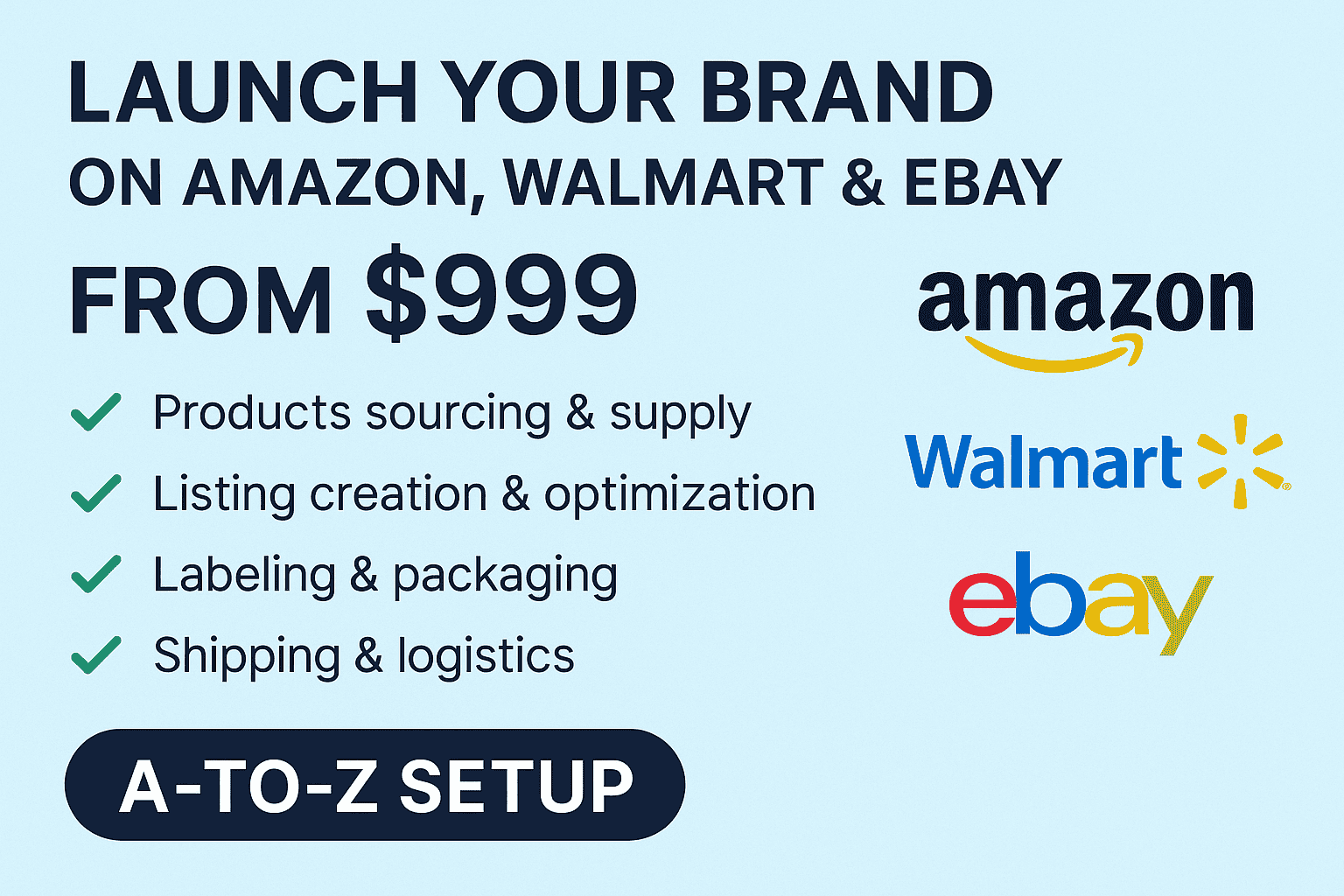
HighRise Wholesale supports Amazon and Walmart sellers with product sourcing, private labeling, quality inspection coordination, and fulfillment preparation. This may be useful for entrepreneurs who want help coordinating several parts of the product launch process.
Best Sources for Amazon Private Label Suppliers
Small businesses can find private label suppliers through international marketplaces, regional manufacturers, and sourcing companies. The best option depends on your product category, budget, desired customization, order quantity, and ability to manage supplier relationships.
Comparison of Amazon Private Label Supplier Sources
Supplier source Best for Main advantages Potential limitations Alibaba Broad product selection and China-based manufacturing Large supplier network, customization options, and quotation comparisons Requires careful supplier verification and quality control Global Sources Export-ready manufacturers and alternative supplier research Access to international suppliers and established exporters Product selection and pricing vary by category Indian manufacturers Textiles, home goods, handicrafts, beauty accessories, and kitchen products Regional sourcing opportunities and potential communication advantages Export experience and Amazon FBA knowledge may vary Vietnam and Indonesia Selected furniture, textiles, home décor, and household products Alternative manufacturing locations and product specialization Factory capabilities, lead times, and shipping costs differ by supplier Product sourcing companies Beginners or businesses needing end-to-end coordination Help with supplier discovery, samples, branding, inspections, and shipping Service fees and responsibilities must be reviewed carefully
Alibaba
Alibaba is one of the most widely used platforms for finding Amazon private label suppliers, particularly manufacturers in China. It offers a broad selection of suppliers across consumer product categories.
Small businesses can use Alibaba to compare quotations, request samples, discuss customization, and negotiate minimum order quantities. Before placing an order, review supplier credentials, manufacturing experience, production timelines, communication practices, and available buyer protections.
Request samples and confirm all product specifications in writing. Do not choose a supplier based only on the lowest quotation. A slightly higher price may be worthwhile if the supplier provides stronger quality control, better communication, or more reliable production.
Global Sources
Global Sources connects international buyers with suppliers and manufacturers across multiple industries. It can be useful for businesses seeking export experience, customized products, and alternatives to suppliers found on Alibaba.
Request quotations from several suppliers and compare product quality, production capacity, payment terms, certifications where applicable, lead times, and shipping arrangements before making a decision.
Indian Manufacturers
India offers sourcing opportunities in textiles, home furnishings, kitchen products, handicrafts, beauty accessories, and other consumer goods.
Working with Indian manufacturers may provide advantages in communication, supplier visits, and regional logistics, depending on your product and business location. However, not every manufacturer has experience with international exports or Amazon FBA requirements.
Confirm that the supplier can meet your product specifications, provide required documentation, and prepare goods according to your packaging and labeling instructions.
Vietnam and Indonesia
Vietnam and Indonesia are additional sourcing destinations for selected consumer products, furniture, textiles, home décor, and household goods.
The best manufacturing country depends on the product, factory capabilities, production costs, quality standards, order quantity, and shipping arrangements. Rather than assuming one country is always cheaper, compare the complete landed cost from multiple suppliers.
Product Sourcing Companies
Product sourcing companies help businesses identify manufacturers, compare quotations, coordinate samples, and manage purchasing activities.
This option can be useful for beginners who do not have established supplier relationships or experience managing international orders. A sourcing partner may also help coordinate product selection, branding, quality checks, freight, and Amazon FBA preparation.
HighRise Wholesale helps sellers explore product sourcing and private label opportunities across India, China, Indonesia, and Vietnam. Before choosing a sourcing company, confirm its service fees, responsibilities, payment terms, communication process, and the specific services included in the agreement.
How Much Does It Cost to Start an Amazon Private Label Business?
The cost of starting an Amazon private label business depends on the product, order quantity, customization requirements, shipping costs, compliance needs, and advertising budget.
Some standard products can be tested with a relatively modest investment. Customized products requiring specialized packaging, molds, certifications, or testing may require substantially more capital.
Your initial budget should account for:
• Product samples and testing
• Initial inventory
• Custom logo and packaging
• Quality inspection
• International shipping and customs charges
• Amazon selling and fulfillment fees
• Product photography and listing creation
• Advertising and promotional discounts
• Working capital for future inventory orders
For example, if you have a budget of $2,500, spending the entire amount on inventory could leave you without enough funds for shipping, advertising, and unexpected expenses.
A better approach is to calculate your complete landed cost and reserve enough capital to support the launch after inventory arrives. HighRise Wholesale offers private label sourcing support for businesses with different product requirements. Confirm the current minimum order value, included services, and total costs before committing your budget.
How to Choose the Best Amazon Private Label Supplier
Finding a supplier is only the first step. You must also determine whether the supplier can consistently deliver the product your customers expect at a cost that supports your business model.
Review Minimum Order Quantities
Minimum order quantity, or MOQ, determines the number of units you must purchase.
Some manufacturers accept smaller orders for standard products, while customized designs and packaging may require larger quantities. Ask whether the MOQ applies to the complete order, each product variation, or each customized design.
For a new seller, an order that is too large can create serious cash flow problems. Choose a quantity that balances the supplier’s requirements with your budget and realistic sales expectations.
Request and Test Product Samples
Never approve a large production order based only on photographs or product descriptions.
Samples allow you to evaluate material quality, dimensions, durability, finish, packaging, and overall performance. If you plan to customize the product, request a sample that reflects the final design as closely as possible.
For regulated products, verify applicable testing, certification, and documentation requirements before ordering inventory.
Compare Total Landed Costs
A low unit price does not automatically mean a product will be profitable.
Your total landed cost may include manufacturing, packaging, inspection, freight, customs duties, and other applicable expenses. You must also account for Amazon referral fees, fulfillment expenses, storage, advertising, returns, and other operating costs.
When comparing quotations from HighRise Wholesale or another sourcing partner, request a clear breakdown of included costs and any additional charges you may need to pay.
Confirm Amazon FBA Preparation Capabilities
Amazon has requirements for product identification, packaging, labeling, and shipment preparation. Requirements can vary depending on the product and fulfillment program.
Confirm whether your supplier can prepare products according to the applicable requirements and coordinate shipments to Amazon fulfillment centers. Do not assume that every manufacturer automatically understands Amazon FBA procedures.
Evaluate Communication and Reliability
A dependable supplier should answer questions clearly, provide realistic production timelines, and document important commitments.
Your agreement should specify materials, dimensions, colors, packaging, acceptable defect levels, inspection procedures, and delivery schedules. Clear documentation helps reduce misunderstandings and provides a reference if delivered products do not match the approved sample.
Check Compliance and Documentation
Before ordering, determine whether your product requires testing, certifications, labeling disclosures, safety documentation, or other compliance measures.
Requirements depend on the product, destination market, and applicable regulations. Ask the supplier what documentation it can provide, but verify important requirements independently before investing in inventory.
Common Mistakes to Avoid When Choosing Private Label Suppliers
Ordering Too Much Inventory
Large orders can reduce unit costs, but excess inventory ties up capital and increases storage risk.
Start with a quantity that matches your available budget and validated demand. Increase order sizes when sales data supports expansion.
Skipping Quality Inspections
Product defects can lead to returns, negative reviews, and additional expenses.
Agree on quality standards before production and arrange appropriate inspections before shipment.
Choosing Suppliers Based Only on Price
An unusually low quotation may come with compromises in materials, quality control, or communication.
Compare the complete offer, including product specifications, packaging, shipping, lead times, and supplier reliability.
Ignoring Intellectual Property
Avoid copying protected designs, trademarks, patented features, or copyrighted packaging.
Review relevant intellectual property risks before investing in custom manufacturing or brand development.
Underestimating Amazon Fees
A product can have a low purchase cost and still produce very little profit after fulfillment fees, advertising, returns, and other expenses.
Calculate expected profit before placing an order instead of relying on revenue projections alone.
Trusting Guaranteed Sales Promises
No supplier can legitimately guarantee that your product will achieve a specific sales volume or organic ranking.
Successful private label businesses require product research, competitive positioning, effective listings, advertising management, and ongoing performance analysis.
Working with HighRise Wholesale or another sourcing partner may help coordinate parts of the supply chain, but your business should still evaluate costs, quality, and commercial risks independently.
Should You Work Directly With a Manufacturer or Use a Sourcing Partner?
Both approaches can work for small businesses.
Working directly with a manufacturer gives you greater control over negotiations, product specifications, and supplier relationships. It may also reduce intermediary expenses, although you will need to manage communication, inspections, production, and shipping.
A sourcing partner can help coordinate supplier discovery, samples, branding, quality checks, and fulfillment preparation. This can be useful for entrepreneurs who have limited experience with international sourcing or want to manage multiple products.
HighRise Wholesale provides product sourcing and private label support for Amazon and Walmart sellers who want assistance coordinating different stages of the product launch process.
The best choice depends on your experience, budget, available time, and operational requirements. Regardless of the approach, maintain visibility into your product costs, quality standards, and supplier commitments.
How to Launch Your First Amazon Private Label Product
A structured launch process can reduce unnecessary spending and improve decision-making.
Step 1: Research product demand.
Identify products with credible customer demand, manageable competition, and opportunities for differentiation. Use product research tools and marketplace data to evaluate potential opportunities.
Step 2: Calculate profitability.
Estimate the selling price, landed cost, Amazon fees, advertising expenses, and expected profit margin. Avoid products that depend on unrealistic sales projections to become profitable.
Step 3: Shortlist Amazon private label suppliers.
Compare quotations, minimum order quantities, customization options, production timelines, communication practices, and manufacturing capabilities.
Step 4: Test product samples.
Evaluate quality and resolve any issues before approving final product specifications.
Step 5: Finalize branding.
Develop your brand identity, packaging, product specifications, and listing content. Check applicable intellectual property and compliance requirements.
Step 6: Place an appropriate order.
Choose a quantity that balances supplier requirements with your budget and expected demand.
Step 7: Prepare inventory for Amazon FBA.
Coordinate quality inspections, labeling, shipping, customs documentation, and fulfillment preparation.
Step 8: Monitor sales and profitability.
Track sales, conversion rates, advertising costs, customer feedback, inventory levels, and profit margins. Use this information to improve the listing, optimize advertising, and plan future orders.
HighRise Wholesale can be considered during the sourcing and preparation stages if you prefer assistance coordinating multiple launch requirements.
Frequently Asked Questions About Amazon Private Label Suppliers
What is the best Amazon private label supplier for beginners?
The best supplier depends on your product category, budget, and customization requirements. Look for reasonable minimum order quantities, consistent quality, transparent pricing, reliable communication, and suitable shipping arrangements.
Compare several suppliers and request samples before committing to a large order.
Can I start an Amazon private label business with a small budget?
Yes, depending on the product and supplier requirements. Standard products with limited customization may be easier to test than products requiring specialized molds, extensive testing, or large production runs.
Keep sufficient funds available for shipping, Amazon fees, advertising, and future inventory purchases.
Do private label suppliers ship directly to Amazon FBA warehouses?
Some manufacturers and sourcing partners can coordinate direct shipments to Amazon fulfillment centers.
Confirm who is responsible for labeling, packaging, shipping arrangements, customs documentation, and compliance with Amazon’s current requirements.
Is Alibaba a good place to find private label manufacturers?
Alibaba can be a useful sourcing platform because it provides access to many manufacturers and product categories.
However, verify suppliers carefully, confirm specifications in writing, use appropriate payment protections, and evaluate samples before placing a substantial order.
How long does it take to launch a private label product?
The timeline depends on sample approval, product customization, manufacturing, inspection, international shipping, and Amazon receiving times.
A straightforward product may take several weeks to launch, while customized products can require considerably longer.
Can a sourcing company help with Amazon private labeling?
Some sourcing companies provide assistance with manufacturer selection, product customization, branding, quality inspection coordination, and shipping preparation.
HighRise Wholesale supports Amazon and Walmart sellers with product sourcing and private label launch requirements. Review the available services and pricing to determine whether the offering suits your business.
Do I need a trademark to sell private label products on Amazon?
Trademark requirements depend on your marketplace and business objectives. Amazon Brand Registry has specific eligibility requirements, including qualifying trademark requirements.
Review the current program rules and relevant trademark regulations before making significant branding investments.
Final Thoughts
Finding the right Amazon private label suppliers is about building a reliable supply chain, not simply negotiating the lowest purchase price.
Small businesses should prioritize product quality, manageable order quantities, transparent costs, dependable communication, compliance, and realistic profit margins.
Whether you work directly with manufacturers or use a sourcing partner, thorough supplier evaluation can help protect your investment and create a stronger foundation for growth.
HighRise Wholesale supports entrepreneurs looking for product sourcing, private labeling, quality inspection coordination, and Amazon FBA preparation. Evaluating your product requirements, budget, and launch objectives can help you determine whether a sourcing partnership fits your business.
Start with a product you understand, compare multiple supplier sources, verify your suppliers, test product quality, and scale your investment based on actual market performance.
Explore product sourcing and private label services at: