Launching a private label product on Amazon can be a profitable business model, but the success of your brand often depends on decisions made long before the product reaches an Amazon FBA warehouse.
One of the most important decisions is choosing the right Amazon private label sourcing company.
A good sourcing partner can help you find reliable manufacturers, negotiate better pricing, manage quality control, arrange private labeling, handle packaging, and coordinate shipping to Amazon. The wrong supplier, however, can lead to poor product quality, unexpected costs, delays, compliance problems, and inventory that is difficult to sell.
With hundreds of sourcing companies, agents, manufacturers, and trading companies available online, how do you know which one is actually right for your Amazon business?
This guide explains what to look for when choosing an Amazon private label sourcing company, what questions to ask, common mistakes to avoid, and how to evaluate a supplier before placing your first order.
What Is an Amazon Private Label Sourcing Company?
An Amazon private label sourcing company helps sellers find and purchase products that can be sold under their own brand.
Instead of purchasing an existing branded product, the seller works with a manufacturer or sourcing partner to create a product that can be customized with:
- Your brand name
- Logo
- Product packaging
- Product colors
- Product dimensions
- Product features
- Labels and inserts
- Product bundles
- Custom specifications
A professional sourcing company may manage several parts of the process, including:
- Product sourcing
- Manufacturer selection
- Price negotiation
- Product customization
- Samples
- Quality inspection
- Packaging
- Barcode and labeling requirements
- Amazon FBA preparation
- International shipping
- Documentation and compliance
The exact services vary between companies, so it is important to understand what is included before signing an agreement or making a payment.
Why Choosing the Right Sourcing Company Matters
Private label sourcing is more complicated than simply finding the cheapest supplier.
Your supplier directly affects your:
- Product cost
- Profit margin
- Product quality
- Customer satisfaction
- Amazon reviews
- Inventory availability
- Delivery times
- Brand reputation
- Ability to scale
For example, saving $0.30 per unit does not necessarily make sense if the cheaper manufacturer produces inconsistent products that result in negative reviews and returns.
The goal should be to find the best overall supplier, not necessarily the supplier offering the lowest quote.
A reliable Amazon sourcing partner should help you optimize the complete supply chain rather than focusing only on the factory price.
1. Look for Experience With Amazon Private Label Sellers
The first thing to evaluate is whether the company actually understands Amazon.
Traditional sourcing companies may be good at purchasing products but may not understand Amazon’s operational requirements.
An experienced Amazon private label sourcing company should understand concepts such as:
- Amazon FBA
- FNSKU labels
- UPC or GTIN requirements
- Product packaging
- Carton requirements
- Shipping plans
- Amazon fulfillment centers
- Product compliance
- Product inspections
- Private labeling
- Bundling
- Inventory planning
Ask the company how many Amazon sellers they currently work with and what types of products they typically source.
Experience with your particular category is even more valuable.
For example, sourcing requirements for kitchen products can be very different from supplements, cosmetics, electronics, toys, or products intended for children.
2. Check Where They Source Products
A good sourcing company should be transparent about its sourcing network.
China remains one of the world’s largest manufacturing markets, but it is not the only option.
Depending on the product, you may consider sourcing from:
- China
- India
- Vietnam
- Indonesia
- Turkey
- Mexico
- Other manufacturing markets
The best sourcing location depends on your product category, target price, order quantity, quality requirements, shipping costs, tariffs, and compliance requirements.
Don’t automatically assume that China is always the cheapest option.
A professional sourcing partner should be able to compare manufacturing options and explain why a particular country or factory makes sense for your product.
3. Ask How They Select Manufacturers
One of the most important questions to ask is:
How do you select the factory?
A sourcing company should have a structured supplier-selection process.
Ideally, they should evaluate factors such as:
- Factory experience
- Production capacity
- Product specialization
- Certifications
- Quality control procedures
- Previous export experience
- Customer references
- Production equipment
- Minimum order quantity
- Pricing
- Lead times
- Communication
Be careful if a sourcing company immediately sends you a product link and asks you to place an order without explaining who will manufacture it.
You want to understand the supply chain behind your product.
4. Don’t Choose a Supplier Based Only on Price
Price is important, but it should not be the only deciding factor.
Suppose Supplier A offers:
$2.00 per unit
and Supplier B offers:
$2.35 per unit
At first glance, Supplier A looks better.
But what if Supplier B provides:
- Better materials
- Better packaging
- Lower defect rates
- Faster production
- Better inspection
- More reliable shipping
- Better communication
The additional $0.35 may actually produce a better business outcome.
Instead of asking:
Who has the cheapest product?
Ask:
Who provides the best combination of quality, cost, reliability, and scalability?
This is particularly important for Amazon private label sellers because product quality directly affects reviews, returns, conversion rates, and long-term brand value.
5. Understand the MOQ
MOQ means Minimum Order Quantity.
Every sourcing company has different MOQ requirements.
Some suppliers may accept small orders, while manufacturers may require hundreds or thousands of units.
Ask about:
- Minimum order value
- Minimum units per SKU
- Minimum units per color
- Minimum units per variation
- Sample quantities
- Reorder quantities
A lower MOQ can be extremely useful for new Amazon sellers because it allows you to test demand before committing significant capital.
However, a larger order may provide better unit economics.
The right MOQ depends on your budget, expected sales velocity, product price, and risk tolerance.
6. Always Request Samples
Never place a large private label order without evaluating a sample.
A sample allows you to inspect:
- Product quality
- Materials
- Dimensions
- Weight
- Functionality
- Packaging
- Branding
- Color
- Finish
- User experience
For customized products, request a pre-production sample before mass production whenever possible.
Don’t approve a sample simply because it looks good in photographs.
You should physically evaluate the product whenever practical.
For more complex products, consider having the sample tested by an independent laboratory or inspection company.
7. Ask About Quality Control
Quality control is one of the biggest areas where inexperienced Amazon sellers make mistakes.
Your sourcing company should have a clear quality-control process.
Ask:
- Is there a pre-production inspection?
- Is there an inspection during production?
- Is there a pre-shipment inspection?
- What happens if products fail inspection?
- Who pays for rework?
- Are inspection reports provided?
- What quality standards are used?
A strong process could involve:
Factory selection → Sample approval → Production → Inspection → Rework if required → Final inspection → Shipment
Don’t assume that because you approved a sample, every production unit will be identical.
Mass production can introduce defects, material changes, color differences, packaging mistakes, and other inconsistencies.
8. Check Amazon FBA Preparation Services
If your sourcing company also offers Amazon FBA prep services, this can simplify your operation considerably.
Depending on the product, FBA preparation may include:
- FNSKU labeling
- UPC labeling
- Poly-bagging
- Bundling
- Product inserts
- Carton labeling
- Carton preparation
- Packaging
- Inspection
- Shipping to Amazon
Having sourcing and FBA preparation managed through one supply-chain partner can reduce the number of vendors you need to coordinate.
However, always verify exactly what is included in the quoted price.
9. Understand the Complete Landed Cost
One of the biggest sourcing mistakes is looking only at the product price.
Your actual cost may include:
Product Cost + Packaging + Branding + Inspection + Prep + Shipping + Duties + Other Fees = Landed Cost
For example:
Product: $2.00
Custom packaging: $0.20
Inspection: $0.10
FBA preparation: $0.15
Shipping: $0.60
Estimated landed cost:
$3.05 per unit
That $3.05 figure is much more useful for Amazon profitability calculations than the $2.00 factory price.
Before placing an order, request a detailed quotation showing the costs separately.
10. Ask About Shipping to Amazon FBA
Your sourcing company should understand international logistics and Amazon delivery requirements.
Ask whether they can ship:
- To your warehouse
- To a 3PL
- Directly to Amazon FBA
- Through air freight
- Through sea freight
- Through other available shipping methods
You should also clarify whether the quoted shipping price includes relevant charges such as customs clearance, duties, handling, and delivery.
Never assume that a shipping quote is an all-inclusive landed cost unless it is clearly stated.
11. Verify Product Compliance Requirements
This is one of the most important steps when sourcing products for Amazon.
Different product categories may require different documentation, testing, labeling, or certifications.
Depending on the product, requirements may include:
- Safety testing
- Material documentation
- Certificates
- Laboratory reports
- Ingredient information
- SDS/MSDS documentation
- FDA-related requirements
- FCC requirements
- CE requirements
- Prop 65 considerations
- Children’s product testing
- Country-specific labeling
A sourcing company should not simply tell you that a product is compliant.
Ask what documentation is available and whether it is applicable to the exact product and manufacturer.
If you are selling in a regulated category, consider consulting an appropriate compliance professional or laboratory before ordering large quantities.
12. Check Communication and Response Times
Communication is often overlooked when evaluating suppliers.
But once you have thousands of dollars of inventory in production, communication becomes extremely important.
Pay attention to:
- Response speed
- Product knowledge
- Transparency
- English communication
- Documentation
- Willingness to answer questions
- Ability to handle problems
A supplier that takes three days to answer a simple question can become a major operational problem when production is delayed.
Good communication is part of supplier quality.
13. Ask About Product Exclusivity
If you are building a serious private label brand, ask whether the sourcing company can provide product or territory exclusivity.
For example, you may not want the exact same customized product being offered to dozens of competing Amazon sellers.
Exclusivity arrangements vary considerably, so get the terms in writing.
At minimum, understand:
- Whether the product is exclusive
- Whether the manufacturer can sell it to other customers
- Whether competitors can use the same design
- Whether custom molds or tooling belong to you
- What happens if the relationship ends
Don’t rely on verbal promises.
14. Understand Payment Terms
Before placing an order, clearly understand the payment structure.
Common arrangements may include:
- Deposit before production
- Balance before shipment
- Payment against inspection
- Payment through specific banking methods
Ask for a formal quotation or invoice that clearly identifies:
- Company name
- Product
- Quantity
- Unit price
- Shipping
- Other charges
- Payment terms
- Production timeline
Be cautious if payment instructions keep changing or the beneficiary name does not match the company you are dealing with.
15. Check Reviews and Reputation
Before committing to a sourcing company, research its reputation.
Look for:
- Google reviews
- Independent reviews
- Reddit discussions
- Business directories
- LinkedIn presence
- Customer testimonials
- Case studies
- Website history
Don’t rely entirely on testimonials displayed on the supplier’s own website.
Look for independent evidence.
You can also ask the sourcing company for references from existing customers if appropriate.
16. Ask These Questions Before Hiring an Amazon Sourcing Company
Before choosing your supplier, ask the following questions:
- How long have you been sourcing products for Amazon sellers?
- Which countries do you source from?
- Which product categories do you specialize in?
- What is your minimum order quantity?
- Can you provide samples?
- How do you inspect manufacturers?
- What quality-control process do you use?
- Can you customize packaging?
- Can you handle private labeling?
- Can you provide FBA preparation?
- Can you ship directly to Amazon?
- What is the expected production time?
- What is the estimated landed cost?
- What happens if products fail inspection?
- What compliance documentation is available?
- How are payments handled?
- Are there additional fees?
- Can you help with reorders?
- Can you scale production if sales increase?
- What happens if there is a manufacturing problem?
The answers to these questions will tell you much more than a low product quote.
Common Mistakes When Choosing an Amazon Sourcing Company
Choosing the Cheapest Supplier
The cheapest supplier is not always the most profitable supplier.
Quality problems can easily cost more than the initial savings.
Ordering Too Much Inventory
New sellers sometimes place a large order before validating the product.
Start with a manageable quantity whenever possible and use real sales data to determine reorder levels.
Skipping Quality Inspection
A factory sample is not a guarantee that mass production will be perfect.
Independent inspection can significantly reduce risk.
Ignoring Compliance
A product can look profitable on paper and still become a problem if it lacks required documentation.
Research compliance before production, not after your shipment arrives.
Focusing Only on Product Cost
Always calculate the complete landed cost.
Your Amazon profit calculation should include all relevant costs, including Amazon fees, advertising, returns, storage, and logistics.
Not Having a Backup Plan
Supply-chain disruptions happen.
A strong sourcing strategy should consider alternative manufacturers or sourcing locations when practical.
How to Compare Amazon Private Label Sourcing Companies
You can create a simple supplier scorecard. Factor Weight Product Quality 25% Pricing 20% Supplier Reliability 15% Communication 10% Quality Control 10% Shipping & Logistics 10% Compliance Support 5% Amazon/FBA Experience 5%
Score each sourcing company from 1–10 for every category.
This gives you a more objective way to compare suppliers instead of choosing based on price alone.
Should You Use a Sourcing Agent or Direct Manufacturer?
Both options can work.
A direct manufacturer may offer better pricing when you have significant order volumes and know exactly what you need.
A sourcing company or sourcing agent can be more useful when you need help with:
- Finding manufacturers
- Comparing factories
- Negotiating
- Product customization
- Quality control
- Logistics
- FBA preparation
- Managing multiple suppliers
For a new Amazon seller, the operational support can sometimes be more valuable than a small difference in factory pricing.
As your business grows, you can reassess whether direct manufacturer relationships make more sense.
How HighRise Wholesale Approaches Private Label Sourcing
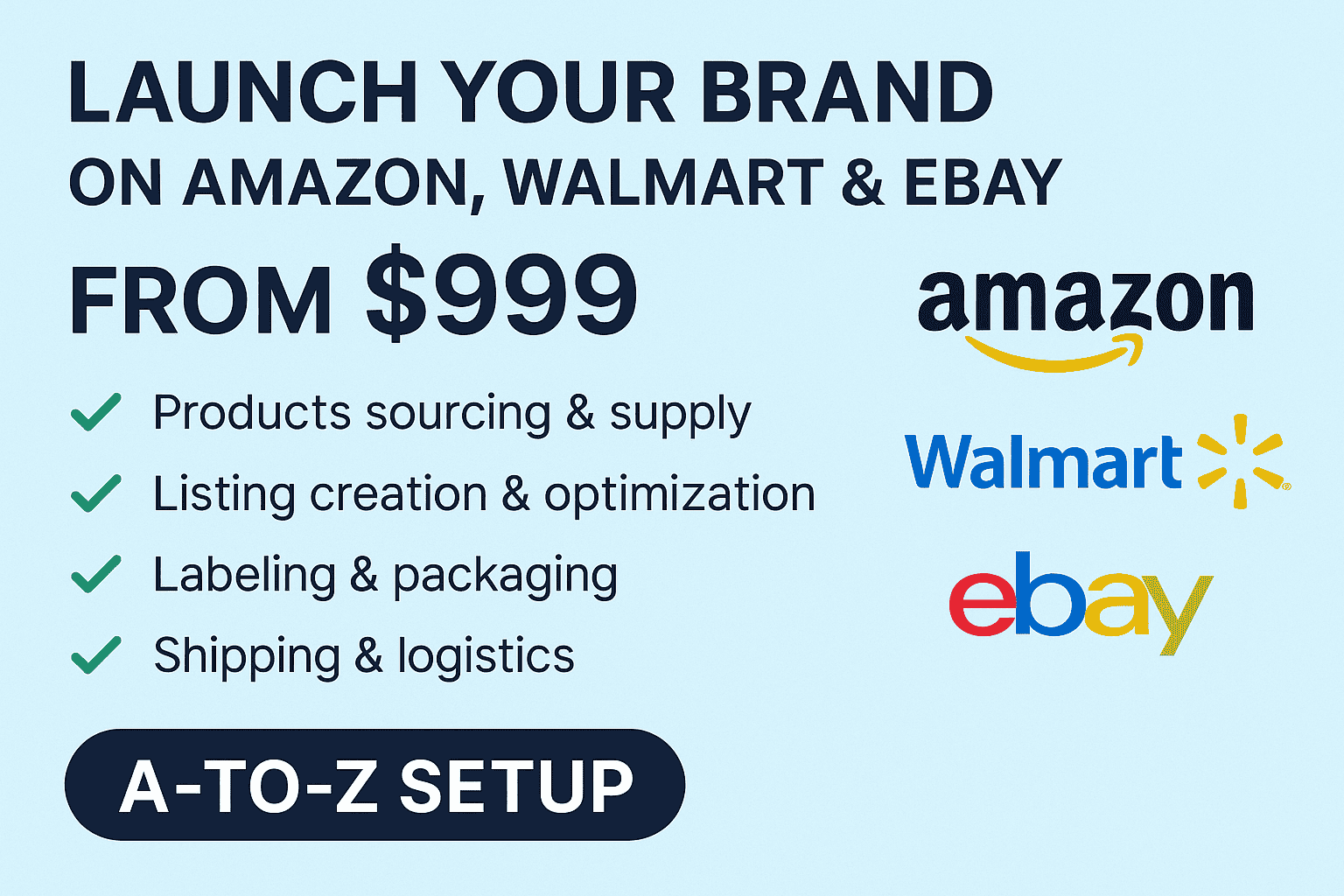
For Amazon sellers who want a more streamlined sourcing process, HighRise Wholesale provides private label sourcing and related supply-chain services.
The focus is on helping sellers move from product selection to a ready-to-sell private label product without having to coordinate every individual step themselves.
Depending on the product and requirements, the process can include:
Product sourcing → Supplier selection → Pricing → Samples → Private labeling → Quality control → Packaging → FBA preparation → Shipping
The key advantage of working with an integrated sourcing partner is operational simplicity.
Instead of managing separate suppliers for sourcing, branding, inspection, preparation, and logistics, sellers can potentially consolidate several parts of the supply chain.
You can learn more about the sourcing and private label services offered by HighRise Wholesale at highrisewholesale.com.
Final Checklist Before Choosing Your Supplier
Before making your final decision, make sure you have confirmed:
- Product specifications
- Manufacturer
- MOQ
- Unit price
- Packaging cost
- Branding cost
- Sample cost
- Quality-control process
- Inspection process
- Production timeline
- Shipping method
- Landed cost
- Amazon FBA preparation
- Compliance requirements
- Payment terms
- Warranty or replacement policy
- Reorder process
- Communication process
If a sourcing company cannot clearly answer these questions, take a step back before placing a large order.
Final Thoughts
Choosing an Amazon private label sourcing company is not simply about finding someone who can provide a product at the lowest price.
The right sourcing partner should help you control quality, manage costs, reduce supply-chain risk, meet Amazon requirements, and build a reliable path for scaling your brand.
Think about sourcing as a long-term supply-chain relationship rather than a one-time transaction.
Start with samples, verify the manufacturer, calculate your complete landed cost, confirm compliance requirements, inspect production, and make sure every important agreement is documented.
The goal isn’t simply to find a supplier.
The goal is to build a supply chain that can support a profitable Amazon private label brand for years.
Frequently Asked Questions
What is Amazon private label sourcing?
Amazon private label sourcing is the process of finding a manufacturer or sourcing partner that can produce a product that you sell under your own brand on Amazon.
How much does Amazon private label sourcing cost?
The cost varies depending on the product, quantity, customization, packaging, manufacturing location, shipping, and other services. Always calculate the complete landed cost rather than looking only at the factory price.
Is China the best country for Amazon product sourcing?
China is a major manufacturing market, but it is not automatically the best option for every product. India, Vietnam, Indonesia, Turkey, Mexico, and other countries may be competitive depending on the product.
Should I use an Amazon sourcing agent?
A sourcing agent can be useful if you need help finding manufacturers, negotiating prices, managing quality control, customizing products, and coordinating logistics. Direct sourcing may make more sense once your order volumes become substantial.
What should I look for in a private label supplier?
Look for manufacturing experience, consistent quality, transparent pricing, reliable communication, reasonable MOQs, quality-control procedures, compliance knowledge, shipping capabilities, and experience working with Amazon sellers.
Can a sourcing company ship products directly to Amazon FBA?
Some sourcing companies can prepare and ship products directly to Amazon FBA warehouses. Confirm that they understand Amazon’s labeling, packaging, carton, and shipment requirements before using this service.
How do I avoid private label sourcing scams?
Research the company independently, verify its business information, request samples, confirm payment details, inspect products before shipment, avoid large initial orders, and document all commercial terms in writing.