Finding profitable private label products in the home and kitchen category is an attractive opportunity for Amazon FBA, Walmart WFS, and ecommerce entrepreneurs. From kitchen cleaning accessories and storage organizers to cooking tools and household essentials, this category offers numerous opportunities to develop products under your own brand.
However, choosing the right product is what separates a sustainable private label business from an expensive inventory experiment.
A product might have thousands of monthly sales but still be difficult to enter because of established competitors, high advertising costs, or limited profit margins. Successful product research requires understanding customer demand, identifying market gaps, evaluating suppliers, and calculating the complete cost of launching a product.
In this guide, we explain how to find profitable home and kitchen private label products, which niches are worth researching, where to find manufacturers, and how to launch your own branded products on Amazon and Walmart.
Why Is Home and Kitchen a Good Category for Private Label?
Home and kitchen is one of the broadest ecommerce product categories because it covers everyday household requirements.
Consumers regularly purchase kitchen accessories, cleaning supplies, storage solutions, cooking utensils, and home organization products.
For private label sellers, this creates several opportunities:
- Consistent customer demand: Many household products are used regularly throughout the year.
- Multiple product niches: Sellers can explore kitchen cleaning, storage, cooking, and household organization.
- Branding opportunities: Products can be customized through materials, colors, designs, logos, and packaging.
- Product bundling: Complementary products can be combined into higher-value packages.
- Marketplace flexibility: Suitable products can be sold through Amazon, Walmart, Shopify, and other ecommerce channels.
- Brand expansion: Successful products can become the foundation for a broader household product range.
The biggest opportunity is finding products that solve specific customer problems rather than simply introducing another generic item into an overcrowded market.
15 Home and Kitchen Private Label Product Ideas to Research
Before investing in inventory, explore smaller product niches and identify opportunities where existing products could be improved.
Here are 15 product ideas worth researching for a private label business.
1. Kitchen Cleaning Sponge Sets
Dishwashing sponges are everyday household products with opportunities for multipacks, different cleaning textures, improved durability, and branded packaging.
Consider developing a kitchen cleaning set with multiple sponge types and complementary cleaning accessories.
2. Kitchen Drawer Organizers
Drawer organizers help customers arrange cutlery, cooking tools, and kitchen accessories.
Look for adjustable compartments, expandable designs, and durable materials that offer practical advantages over standard products.
3. Under-Sink Storage Organizers
Under-sink organizers address a common household storage problem.
Potential improvements include adjustable shelves, better drainage, easier assembly, and stronger construction.
4. Silicone Cooking Utensil Sets
Silicone cooking accessories offer opportunities for different colors, product combinations, and packaging styles.
Material quality and applicable food-contact safety requirements should be carefully evaluated.
5. Refrigerator Storage Containers
Refrigerator organizers appeal to customers interested in food storage and kitchen organization.
Explore stackable containers, different sizes, transparent designs, and convenient handles.
6. Sink Caddies and Cleaning Organizers
Sink caddies combine functionality and organization.
Look for improved drainage, removable compartments, rust-resistant materials, and compact designs.
7. Spice Racks and Seasoning Organizers
Spice organizers can be developed in countertop, drawer, wall-mounted, and cabinet-friendly variations.
Product dimensions and installation convenience are important differentiation factors.
8. Bottle Cleaning Brush Sets
Bottle cleaning brushes are practical accessories for cleaning bottles, tumblers, and narrow containers.
Consider multipurpose sets with different brush sizes and materials.
9. Food Storage and Pantry Organizers
Food storage products offer opportunities for coordinated sets, stackable designs, and improved sealing.
Check material specifications and food-contact compliance before sourcing.
10. Kitchen Cleaning Cloth Multipacks
Cleaning cloths can be sold in multipacks with different sizes, textures, and intended uses.
Quality, absorbency, durability, and washing performance can help differentiate products.
11. Foldable Storage Baskets
Foldable baskets are suitable for organizing closets, bedrooms, laundry areas, and household supplies.
Consider material quality, load capacity, and storage convenience.
12. Drawer and Cabinet Shelf Organizers
These products help customers create additional storage space without major kitchen modifications.
Adjustable designs and easy installation can provide differentiation opportunities.
13. Reusable Lint Removers
Reusable lint removers can target customers looking for household cleaning and clothing maintenance accessories.
Research product effectiveness, material durability, and competing product designs.
14. Silicone Baking Accessories
Baking accessories can be combined into convenient product bundles.
Explore baking mats, spatulas, pastry brushes, and measuring accessories.
15. Household Furniture Protection Products
Furniture protection pads and related accessories are practical household products.
Consider multipacks, different sizes, improved adhesive quality, and clear installation instructions.
These ideas are starting points for research, not guaranteed profitable products. Validate actual demand, competition, sourcing costs, and marketplace requirements before selecting one.
How to Find Profitable Home and Kitchen Products on Amazon
Amazon is an important research source because its search results, product listings, bestseller rankings, and customer reviews provide insights into market demand.
Follow these steps to identify potential private label opportunities.
1. Research Amazon Best Sellers
Visit the Amazon Best Sellers section and explore the Home and Kitchen category.
Look at different subcategories rather than focusing exclusively on the main category.
Identify products that appear consistently among popular listings and investigate their selling prices, product features, and customer feedback.
A bestseller ranking is a useful research signal, but it does not guarantee that a new product will achieve similar sales.
2. Use Helium 10 for Product Research
Helium 10 offers tools for researching product demand, keywords, competition, and estimated sales.
You can use it to:
- Discover potential product opportunities.
- Estimate competitor sales.
- Research relevant keywords.
- Analyze historical product performance.
- Identify related search terms.
- Compare competing listings.
Use multiple data points instead of selecting a product based on a single estimated sales figure.
3. Use Jungle Scout to Evaluate Product Opportunities
Jungle Scout is another useful platform for Amazon product research.
Its tools can help evaluate estimated revenue, demand, pricing, competition, and product trends.
Compare several products within the same niche to understand which opportunities offer more attractive business economics.
4. Research Amazon Search Suggestions
Enter relevant product keywords into Amazon’s search bar.
For example:
- Kitchen cleaning sponge
- Under-sink organizer
- Kitchen drawer organizer
- Silicone cooking utensils
- Refrigerator storage containers
- Bottle cleaning brush set
Amazon autocomplete suggestions can reveal related search phrases that customers use.
Use these keywords to expand your research and identify more specific product niches.
How to Find Low-Competition Home and Kitchen Products
Finding a product with demand is only the first part of product research. You must also determine whether a new brand can realistically compete.
Start by examining the first page of Amazon search results.
Pay attention to the following factors:
Competitor review counts: Are all leading products supported by thousands of reviews, or are there newer listings with lower review counts?
Product pricing: Is there room to offer a better product without entering an unsustainable price war?
Brand concentration: Are sales dominated by a few established brands?
Product quality: Do customers repeatedly complain about durability, materials, functionality, or packaging?
Listing quality: Are competitors using professional images, detailed descriptions, and effective product demonstrations?
Advertising competition: Are sponsored placements dominating the search results?
A useful opportunity may exist when customers demonstrate strong interest but existing products have recurring weaknesses.
For example, customers might complain that standard sink organizers have poor drainage or insufficient space for cleaning accessories.
A better-designed product could provide a competitive advantage.
However, remember that low competition does not automatically mean high profitability. Demand and commercial viability must be evaluated together.
How to Use Customer Reviews to Discover Private Label Product Opportunities
Customer reviews are among the most valuable resources for developing a differentiated product.
Instead of simply looking at the number of reviews, study what customers actually say.
Pay particular attention to two-star and three-star reviews.
Look for repeated complaints involving:
- Poor material quality.
- Products breaking after limited use.
- Difficult installation.
- Incorrect product dimensions.
- Poor packaging.
- Missing accessories.
- Uncomfortable product designs.
- Difficult cleaning or maintenance.
For example, if several customers complain that a kitchen drawer organizer slides around, you could investigate designs with non-slip bases or improved stability.
If customers complain that cleaning brushes lose their shape quickly, investigate stronger bristle materials and better manufacturing specifications.
This research can help you develop a product based on actual customer requirements rather than assumptions.
How to Calculate Profitability Before Selecting a Product
A product with strong sales potential is not necessarily a profitable business opportunity.
You must calculate the complete cost of selling it.
Your financial analysis should include:
- Manufacturing cost.
- Custom logo and packaging.
- International shipping.
- Customs duties and applicable taxes.
- Amazon referral fees.
- FBA fulfillment fees.
- Storage fees.
- Advertising expenses.
- Returns and replacement costs.
- Other operating expenses.
Example: Amazon Private Label Kitchen Product
Suppose you plan to sell a kitchen organizer for $24.99.
Your estimated per-unit expenses could look like this:
- Manufacturing and packaging: $5.00
- Shipping and import allocation: $2.00
- Amazon referral fee: $3.75
- FBA fulfillment fee: $4.50
- Advertising allocation: $3.00
- Other expenses: $0.75
Total estimated expenses: $19.00
Estimated profit per unit: $5.99
Estimated margin: Approximately 24%
These figures are illustrative and exclude additional business overhead and income taxes. Actual Amazon fees, shipping costs, and advertising expenses will vary.
Use the Amazon Revenue Calculator to estimate applicable marketplace fees before finalizing your product selection.
The objective is to select a product that can remain profitable after advertising and other operational expenses.
Where to Find Home and Kitchen Private Label Manufacturers
Once you identify a suitable product, the next step is finding manufacturers capable of producing it according to your requirements.
Several sourcing options are available.
Alibaba
Alibaba is widely used to find Chinese manufacturers and suppliers for kitchen accessories, cleaning products, storage solutions, and household goods.
You can compare quotations, discuss customization, request samples, and negotiate minimum order quantities.
Global Sources
Global Sources provides access to manufacturers and suppliers across multiple consumer product categories.
It can be useful when comparing sourcing options for specific home and kitchen products.
Made-in-China
Made-in-China is another sourcing platform for discovering manufacturers, comparing product specifications, and exploring customization opportunities.
IndiaMART
IndiaMART helps buyers discover Indian manufacturers and suppliers.
It can be useful for researching household textiles, metal kitchenware, cleaning accessories, and selected storage products.
Direct Factory Sourcing
Contacting manufacturers directly can help establish long-term supplier relationships.
You can discuss product specifications, packaging requirements, production capacity, quality control, and pricing.
Always verify supplier credentials and manufacturing capabilities before placing a substantial order.
HighRise Wholesale
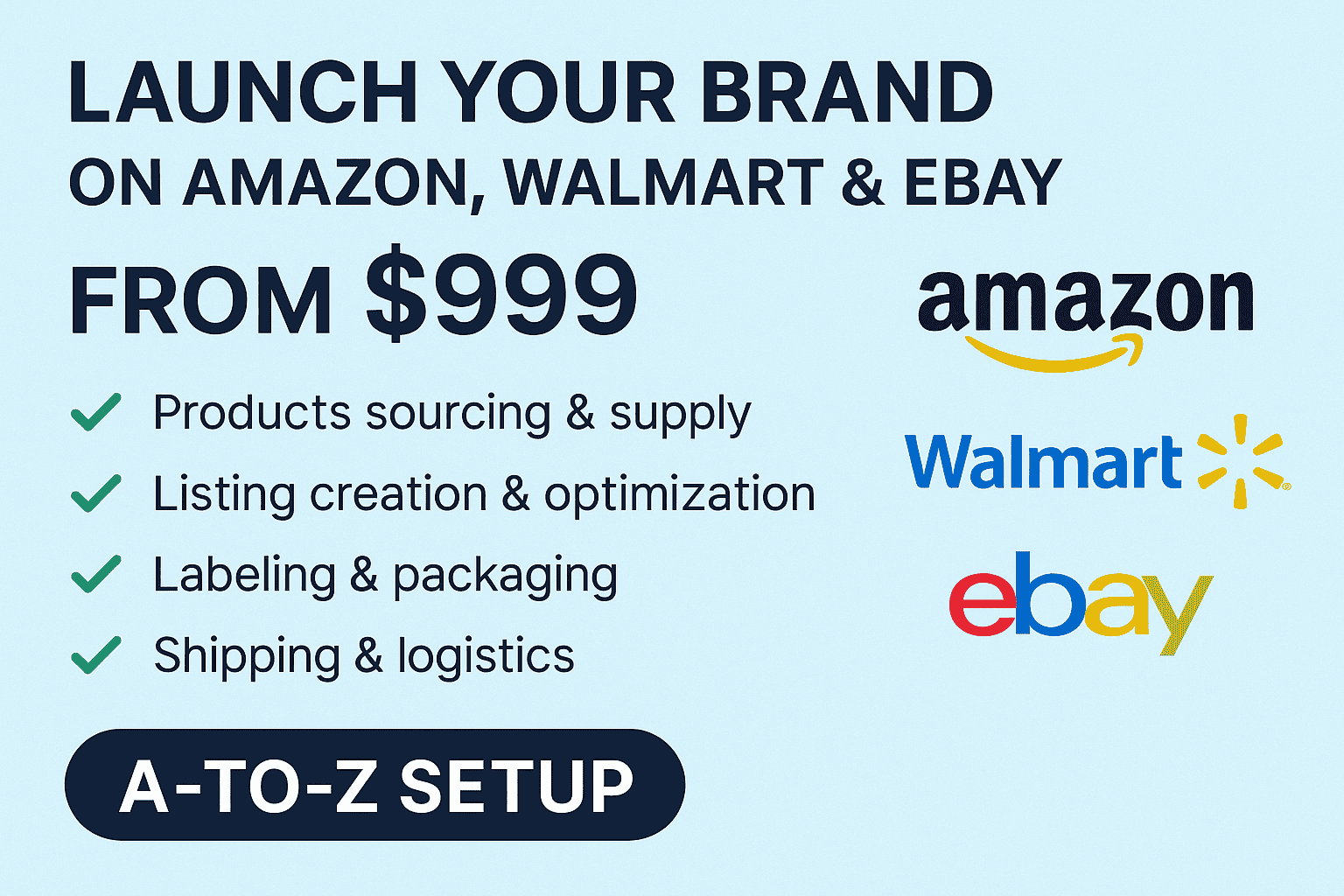
HighRise Wholesale provides private label sourcing and launch support for entrepreneurs who want to build their own ecommerce brands.
Instead of independently coordinating manufacturers, packaging designers, product preparation providers, and shipping arrangements, sellers can work with HighRise Wholesale for assistance across multiple stages of the private label process.
Services include:
- Home and kitchen product sourcing.
- Private label manufacturing coordination.
- Product branding and logo support.
- Packaging design.
- Product quality checks.
- Amazon FBA preparation.
- Product labeling and bundling.
- Shipping coordination to Amazon and Walmart fulfillment locations.
HighRise Wholesale works with sourcing opportunities across India, China, Vietnam, and other manufacturing markets, depending on product requirements.
For entrepreneurs planning to launch kitchen cleaning products, household organizers, storage accessories, and other private label products, HighRise Wholesale can help coordinate the sourcing and launch process.
Explore available products and sourcing opportunities:
https://highrisewholesale.com/highrise-products
How to Choose the Right Private Label Manufacturer
Selecting the right manufacturer is essential for maintaining product quality and protecting your investment.
Before placing an order, evaluate these factors.
Manufacturing experience: Does the supplier regularly produce similar products?
Product customization: Can they customize colors, dimensions, materials, designs, and packaging?
Minimum order quantity: Does the MOQ fit your investment plan?
Sample quality: Does the sample meet your specifications?
Production capacity: Can the manufacturer handle your initial order and future replenishment?
Quality control: Are inspections performed before shipment?
Compliance documentation: Can the supplier provide applicable testing reports and material documentation?
Communication: Does the supplier respond clearly and understand your requirements?
Request quotations from multiple suppliers and compare the complete manufacturing offer.
The cheapest supplier is not necessarily the best supplier.
How to Differentiate Your Home and Kitchen Private Label Brand
Selling a product that looks identical to competing listings makes it difficult to build a recognizable brand.
Your product should offer a clear reason for customers to choose it.
Improve Product Functionality
Identify customer complaints and develop practical improvements.
For example, a standard kitchen cleaning brush could have a more comfortable handle or improved bristles.
Offer Better Product Bundles
Combine related accessories into a useful package.
Examples include:
- Kitchen cleaning kits.
- Sink organization sets.
- Baking accessory bundles.
- Food storage collections.
- Kitchen drawer organization sets.
Invest in Professional Packaging
Use attractive packaging that protects the product and communicates important product information.
Consistent packaging also helps establish brand recognition.
Develop a Consistent Brand Identity
Choose a brand name, logo, color scheme, and visual style that can support multiple products.
Rather than launching unrelated products under the same brand, consider developing a complementary range of household and kitchen products.
HighRise Wholesale can support entrepreneurs with product branding and private label coordination to help establish their own branded product lines.
How Much Investment Is Required to Start a Home and Kitchen Private Label Business?
The investment depends on product specifications, manufacturing quantity, customization, shipping, and marketplace requirements.
Your budget should include:
- Product research and development.
- Samples and quality verification.
- Initial inventory.
- Logo and packaging design.
- Applicable testing and compliance.
- International shipping and import expenses.
- Marketplace fees.
- Product photography and listing creation.
- Initial advertising.
- Working capital for replenishment.
A simple kitchen cleaning accessory may have different manufacturing and inventory requirements from a customized kitchen storage product.
Do not calculate your budget using manufacturing cost alone.
Your total investment should account for getting the product manufactured, delivered, prepared, listed, advertised, and ready for customers.
HighRise Wholesale can help sellers coordinate product sourcing and launch requirements based on their chosen products and order quantities.
How to Launch Private Label Home and Kitchen Products on Amazon FBA and Walmart WFS
After selecting a product and confirming the manufacturer, follow a structured launch process.
Step 1: Finalize Product Specifications
Confirm the material, dimensions, weight, colors, product features, and packaging requirements.
Step 2: Approve Product Samples
Request samples and evaluate product quality before approving mass production.
Step 3: Complete Branding
Finalize your brand logo, packaging artwork, product labels, and instructions.
Step 4: Verify Compliance Requirements
Check the safety, testing, labeling, and documentation requirements applicable to your product and target marketplace.
Step 5: Create Your Product Listing
Prepare an optimized title, relevant keywords, informative bullet points, and professional product photography.
Clearly communicate product features and customer benefits.
Step 6: Prepare Inventory
Ensure products meet the applicable Amazon FBA or Walmart WFS packaging, labeling, and shipment requirements.
Step 7: Launch and Monitor Sales
Track sales performance, conversion rates, advertising costs, customer feedback, and inventory levels.
Use the results to improve your listing, pricing, advertising strategy, and future production orders.
HighRise Wholesale supports sellers with sourcing, private labeling, product preparation, and shipping coordination throughout this process.
Common Mistakes to Avoid When Finding Private Label Home and Kitchen Products
Many new sellers make avoidable mistakes during product research and sourcing.
Here are some important ones to avoid.
Choosing products only because they are bestsellers: High sales do not guarantee an attractive opportunity for a new brand.
Ignoring competition: Established brands may have stronger customer loyalty and advertising budgets.
Selecting products with poor margins: Always calculate complete landed costs and marketplace expenses.
Skipping product samples: Never assume the production quality will match supplier photographs.
Ignoring customer complaints: Negative reviews can reveal important product improvement opportunities.
Ordering excessive inventory: Avoid tying up too much capital before validating demand.
Ignoring compliance requirements: Food-contact products and electrical appliances may require additional testing and documentation.
Competing only through discounts: Sustainable private label brands need differentiation, not just lower prices.
Ignoring shipping dimensions: Large products can generate unexpected fulfillment and storage expenses.
A disciplined research process helps reduce these risks before you commit your investment.
Frequently Asked Questions About Home and Kitchen Private Label Products
What are the most profitable home and kitchen products to sell on Amazon?
Kitchen cleaning accessories, storage organizers, drawer dividers, silicone utensils, refrigerator organizers, and household utility products are categories worth researching. Profitability depends on demand, competition, sourcing costs, advertising, and fulfillment expenses.
How do I find private label kitchen products?
Start with Amazon Best Sellers, product research tools, keyword analysis, and customer reviews. Identify products with consistent demand and opportunities for improvement. Then contact manufacturers through Alibaba, Global Sources, IndiaMART, or a sourcing company such as HighRise Wholesale.
Is home and kitchen a good category for Amazon FBA?
Yes. The category offers a broad selection of everyday consumer products and opportunities to develop branded product lines. However, competition, fulfillment fees, product quality, and profit margins should be evaluated before launching.
What are the easiest home and kitchen products for beginners?
Compact, non-electrical products such as cleaning accessories, drawer organizers, sponge sets, and simple household utility products can be useful starting points. They may involve fewer technical complexities than larger appliances, although demand and profitability still require research.
Where can I find manufacturers for private label kitchen products?
You can find manufacturers through Alibaba, Global Sources, Made-in-China, IndiaMART, and direct factory sourcing. HighRise Wholesale can also help coordinate sourcing and private label requirements.
Can I sell private label home and kitchen products on both Amazon and Walmart?
Yes. Many products can be sold on both platforms if they meet the applicable product safety, listing, packaging, and compliance requirements. Research each marketplace separately before launching.
What is the minimum order quantity for private label kitchen products?
MOQ varies by manufacturer and product. Standard products may have lower minimum order quantities, while customized products and packaging can require larger orders. Always confirm the MOQ before finalizing your product selection.
How can I make my kitchen products different from competitors?
Focus on product improvements, better materials, functional designs, useful bundles, professional packaging, and customer feedback. A meaningful product improvement is generally more valuable than simply adding a logo to a generic item.
Should I source home and kitchen products from China or India?
Both countries offer sourcing opportunities. China has extensive manufacturing capabilities across numerous household product categories, while India offers opportunities in textiles, metalware, cleaning products, and other household goods. Compare suppliers based on quality, pricing, customization, and shipping requirements.
Can HighRise Wholesale help me launch a private label home and kitchen brand?
Yes. HighRise Wholesale offers support with product sourcing, private labeling, branding, packaging, quality checks, Amazon FBA preparation, and shipping coordination for ecommerce sellers.
Final Thoughts: Build a Profitable Home and Kitchen Private Label Brand
Finding the right home and kitchen private label product requires more than browsing Amazon Best Sellers or contacting the cheapest manufacturer.
You need to understand what customers are buying, why they prefer certain products, where existing products fall short, and whether you can introduce a better alternative at a competitive price.
Start with a focused niche, research customer demand, analyze competing listings, study negative reviews, and calculate your complete product costs.
Once you identify a promising opportunity, request samples, verify the manufacturer, finalize your branding, and prepare a realistic launch strategy.
You do not need to launch 20 products simultaneously. Starting with one well-researched product and expanding after validating its performance can be a more sustainable approach.
HighRise Wholesale helps entrepreneurs coordinate private label sourcing, branding, product preparation, and shipping for Amazon FBA and Walmart WFS.
The long-term opportunity is to build a recognizable home and kitchen brand with products that solve everyday problems, deliver consistent quality, and give customers a genuine reason to buy again.