Finding profitable private label products in the Home and Kitchen category is an attractive opportunity for entrepreneurs who want to build their own ecommerce brands. From kitchen storage organizers and cleaning accessories to cookware tools and household essentials, this category offers a wide range of products that customers purchase regularly.
However, finding a product that sells is not the same as finding a profitable product.
Successful Amazon private label sellers look beyond sales volume. They evaluate customer demand, competition, manufacturing costs, profit margins, product quality, and opportunities to make an existing product better.
Whether you are starting your first Amazon FBA business or expanding an established product portfolio, choosing the right product is one of the most important decisions you will make.
This guide explains how to find private label products in Home and Kitchen, which product research tools to use, where to find manufacturers, how to evaluate competition, and what to consider before investing in inventory.
What Are Private Label Home and Kitchen Products?
Private label Home and Kitchen products are items manufactured by third party suppliers and sold under your own brand name.
Instead of purchasing products from established brands and reselling them, you work with manufacturers to source existing products or develop customized versions. You can add your logo, improve the packaging, modify product features, and create a unique brand identity.
Popular examples of private label Home and Kitchen products include:
- Kitchen storage containers
- Dishwashing sponges
- Silicone cooking utensils
- Refrigerator organizers
- Pantry storage solutions
- Drawer dividers
- Spice racks
- Kitchen cleaning brushes
- Bathroom organizers
- Laundry accessories
- Food storage bags
- Sink organizers
- Kitchen racks and holders
- Reusable household cleaning products
For Amazon sellers, private labeling offers greater control over product presentation, branding, pricing strategy, and product development.

The objective is to build a recognizable brand that offers customers something valuable rather than competing exclusively on price.
1. Start With Amazon Product Research
The best place to begin your private label product research is Amazon itself.
Amazon provides valuable insights into customer purchasing behavior, popular products, pricing, reviews, and competition. You do not need expensive software to start identifying potential opportunities.
Visit the Amazon Home and Kitchen Best Sellers section and explore products that consistently attract customer attention.
Look for products with:
- Consistent customer demand
- Reasonable selling prices
- Manageable competition
- Positive customer feedback
- Opportunities for product improvement
- Potential for healthy profit margins
Pay particular attention to products that solve everyday problems.
For example, customers regularly look for better ways to organize kitchen cabinets, clean dishes, store food, maximize refrigerator space, and simplify household chores.
These everyday requirements can provide useful starting points for private label product research.
However, popularity alone should never determine your decision. A product with thousands of monthly sales may also have extremely strong competition and limited profit margins.
Your objective is to identify products where demand and commercial opportunity overlap.
2. Use Product Research Tools to Identify Profitable Niches
Product research software can make the process faster by providing estimated sales, keyword demand, competitor information, historical trends, and other marketplace insights.
Some widely used Amazon product research tools include:
Helium 10
Helium 10 offers product research, keyword research, competitor analysis, sales estimates, and listing optimization tools. Its Black Box feature can help sellers discover potential product opportunities based on different criteria.
Jungle Scout
Jungle Scout helps sellers evaluate product demand, estimate sales, analyze competition, and discover potential private label opportunities.
Keepa
Keepa provides historical pricing and sales rank information. It is particularly useful for understanding whether a product has consistent demand or experiences temporary sales spikes.
Amazon Product Opportunity Explorer
Amazon’s Product Opportunity Explorer provides insights into customer searches, purchasing behavior, niche demand, and marketplace opportunities.
Do not depend entirely on the sales estimates provided by any single research tool. These figures are estimates, not guaranteed sales results.
Compare multiple sources and investigate historical performance before selecting a product.
3. Explore Profitable Home and Kitchen Product Niches
One of the biggest mistakes beginners make is researching the entire Home and Kitchen category without narrowing their focus.
Instead, divide the category into smaller niches. This makes it easier to understand customer requirements, analyze competitors, and identify products with differentiation opportunities.
Here are some product segments worth researching.
Kitchen Organization and Storage Products
Kitchen organization is an interesting niche because customers constantly look for ways to make better use of their available space.
Potential private label products include:
- Cabinet organizers
- Pantry storage containers
- Spice racks
- Refrigerator storage bins
- Drawer dividers
- Under sink organizers
- Kitchen countertop storage racks
- Food storage containers
Look for opportunities to improve storage capacity, durability, accessibility, and overall product design.
For example, a kitchen organizer with adjustable compartments may provide more practical value than a basic organizer with fixed sections.
Kitchen Cleaning Accessories
Cleaning products are another segment worth exploring.
Potential product ideas include:
- Dishwashing sponges
- Scrub brushes
- Bottle cleaning brushes
- Reusable cleaning cloths
- Sink cleaning accessories
- Kitchen cleaning kits
- Multipurpose household cleaning tools
Consider creating useful product bundles rather than selling individual low priced accessories.
For example, a kitchen cleaning kit containing different sponge types, scrubbers, and cleaning brushes could offer customers a more complete solution.
HighRise Wholesale also works with sellers interested in sourcing household cleaning accessories and developing private label product ranges.
Kitchen Utensils and Cooking Accessories
This segment includes products used for everyday cooking and food preparation.
Some potential opportunities include:
- Silicone spatulas
- Measuring spoons
- Kitchen tongs
- Utensil holders
- Food preparation accessories
- Cutting tools
- Heat resistant cooking accessories
Product quality is particularly important in this category.
Evaluate material quality, durability, heat resistance, functionality, and applicable food contact requirements before selecting a manufacturer.
Bathroom and Household Organization
You can also explore related household niches when researching Home and Kitchen opportunities.
Examples include:
- Bathroom storage organizers
- Shower racks
- Toothbrush holders
- Laundry baskets
- Closet organizers
- Household storage accessories
- Space saving storage solutions
Products that address common household organization problems can offer opportunities for creating differentiated private label brands.
4. Analyze Amazon Competitors Before Choosing a Product
Finding a product with demand is only the beginning. You also need to understand how difficult it will be to compete.
Search your shortlisted product keywords on Amazon and examine the first two pages of search results.
Pay attention to five important factors.
Customer reviews
Look at the number of reviews received by competing products. If the first page is dominated by established listings with thousands of reviews, entering the market may require more investment and a stronger differentiation strategy.
Selling prices
Compare competitor prices and calculate the average selling price. Determine whether there is enough room to cover manufacturing, shipping, Amazon fees, advertising, and other operating expenses.
Listing quality
Examine product photography, titles, bullet points, A+ Content, and product descriptions. Weak listings may reveal opportunities to present your product more effectively.
Negative customer feedback
Read one star, two star, and three star reviews. Customers often explain exactly what they dislike about existing products.
For example, customers may complain about weak materials, unstable organizers, poor packaging, or products that do not match their advertised dimensions.
Competitor concentration
Look at how many established brands dominate the search results. Consider whether new sellers are gaining visibility or whether the market is controlled by a small number of established listings.
A product with moderate demand and identifiable customer problems may be more attractive than an extremely popular product where differentiation is difficult.
5. Find Products That Can Be Improved
Simply adding your logo to an existing product is rarely a strong long term competitive strategy.
Customers need a reason to choose your product over competing alternatives.
Before selecting a product, ask yourself one important question:
What can we offer that existing products are not offering effectively?
Consider these improvement opportunities:
- Better quality materials
- More durable construction
- Improved product dimensions
- More convenient functionality
- Additional useful accessories
- Better packaging
- Multiple size options
- More attractive product design
- Practical multipack combinations
For example, rather than launching another basic dishwashing sponge, you could develop a kitchen cleaning set with multiple sponge types, a scrubber, and a convenient storage accessory.
Similarly, a standard drawer organizer could be improved with adjustable compartments or a more durable construction.
The goal is not to create unnecessary features. It is to solve a real customer problem better than existing alternatives.
6. Find Reliable Home and Kitchen Manufacturers
Once you have shortlisted potential products, the next step is finding manufacturers who can deliver the required quality at a commercially viable price.
Several sourcing platforms can help you discover suppliers.
Alibaba
Alibaba is widely used by international ecommerce sellers looking for manufacturers, particularly in China. You can compare suppliers, request quotations, discuss customization, and order samples.
Made in China
This platform provides access to Chinese manufacturers across multiple product categories, including household goods and kitchen accessories.
IndiaMART
IndiaMART can help you discover Indian manufacturers, wholesalers, and suppliers offering products such as kitchen textiles, metal accessories, wooden products, and household essentials.
Global Sources
Global Sources offers supplier discovery and manufacturing opportunities across various Asian markets.
When evaluating manufacturers, consider:
- Manufacturing experience
- Minimum order quantity
- Product customization options
- Sample availability
- Production capacity
- Quality control procedures
- Packaging capabilities
- Export experience
- Communication and response times
Request quotations from multiple suppliers before making a decision.
Do not automatically select the manufacturer offering the lowest price. Poor quality products can result in customer complaints, negative reviews, returns, and financial losses.
7. Compare Manufacturers From Different Countries
China is not the only option for sourcing private label Home and Kitchen products.
Depending on the product, sourcing from other manufacturing markets may offer advantages in cost, materials, production capabilities, or product differentiation.
China: Offers an extensive manufacturing ecosystem, a wide variety of household products, customization options, and established export infrastructure.
India: Provides opportunities for kitchen textiles, wooden kitchenware, metal products, household accessories, and various handcrafted items.
Vietnam: Worth exploring for selected household goods, wooden products, and alternative manufacturing arrangements.
Indonesia: Offers opportunities in wooden kitchenware, natural materials, household accessories, and related product categories.
The best sourcing country depends on the product itself.
Compare manufacturing costs, production quality, shipping expenses, import duties, and delivery timelines before selecting a supplier.
HighRise Wholesale supports product sourcing across India, China, Indonesia, and Vietnam, helping sellers explore different manufacturing options for their private label businesses.
8. Calculate Product Profitability Before Investing
A product can generate impressive sales and still be a poor business opportunity if the profit margins are too low.
Calculate your estimated profitability before placing an inventory order.
Consider the following expenses:
- Manufacturing cost
- Custom packaging
- Logo and branding
- International shipping
- Customs duties and import charges
- Amazon referral fees
- FBA fulfillment fees
- Storage fees
- Advertising expenses
- Returns and damaged inventory
Example: Private Label Kitchen Organizer
Imagine you are planning to sell a kitchen organizer for $24.99 on Amazon.
Your estimated expenses might look like this:
- Manufacturing cost: $5.00
- Shipping and import costs: $2.00
- Amazon referral fee: $3.75
- FBA fulfillment fee: $4.50
- Advertising cost: $3.00
Your estimated remaining contribution would be $6.74 per unit before other operating expenses and potential returns.
These figures are illustrative and are not current Amazon fee quotations.
Actual fulfillment fees depend on product dimensions, weight, marketplace, and applicable fee schedules.
Use the Amazon Revenue Calculator to estimate fulfillment costs and build a realistic financial model.
Remember that your selling price is revenue, not profit. A product should leave enough margin to support advertising, operational expenses, and future price competition.
9. Order Samples Before Placing a Bulk Order
Never commit to a large manufacturing order without evaluating the actual product.
Request samples from multiple suppliers whenever possible.
Inspect the following:
- Material quality
- Product dimensions
- Weight
- Durability
- Packaging
- Functionality
- Finishing
- Overall customer experience
For products intended for food contact, pay particular attention to material suitability and applicable safety requirements.
For electrical products, investigate the relevant testing and certification requirements in your target marketplace.
Once you approve a sample, make sure the manufacturer understands the exact specifications required for bulk production.
You should also arrange an independent pre shipment inspection before approving the final shipment.
A sample may look excellent while the bulk production quality is inconsistent. Quality control helps reduce this risk.
10. Check Amazon Product Compliance Requirements
Home and Kitchen products are not automatically exempt from regulatory or marketplace compliance requirements.
Depending on the product and destination country, you may need to evaluate:
- Food contact material requirements
- Applicable FDA requirements
- Electrical safety standards
- Product labeling requirements
- Country of origin marking
- Chemical restrictions
- Packaging and warning requirements
- Relevant testing documentation
For example, a food storage container may require appropriate material testing and documentation, while an electrical kitchen appliance may require additional safety certifications.
Do not assume that a supplier’s existing certificates automatically satisfy the requirements of your destination country.
Verify the applicable regulations before manufacturing, importing, or listing your product.
11. Start With a Manageable Initial Inventory Order
One of the most expensive mistakes new Amazon sellers make is ordering too much inventory before validating demand.
A large initial order can tie up working capital and increase the risk of unsold stock, storage fees, and price reductions.
Where supplier minimums and unit economics allow, consider starting with a manageable order.
Use the initial launch to evaluate:
- Actual sales performance
- Conversion rates
- Customer feedback
- Advertising performance
- Return rates
- Product quality
- Pricing competitiveness
Once you have reliable performance data, you can decide whether to increase your next order.
The objective is to establish repeatable profitability before committing more capital.
12. Build a Recognizable Private Label Brand
A successful private label business is about more than finding products and selling them on Amazon.
Your brand should communicate quality, reliability, and a consistent customer experience.
Invest in the following areas:
Professional logo and packaging: Create a recognizable visual identity that makes your products look professional.
Product photography: Use clear product images that demonstrate functionality, dimensions, materials, and practical benefits.
Product descriptions: Explain what the product does, who it is designed for, and how it solves customer problems.
A+ Content: Eligible brand owners can use enhanced listing content to communicate product features and brand information.
Brand consistency: If you plan to launch several products, maintain a consistent visual identity across your product range.
Amazon Brand Registry can provide access to additional brand protection and marketing tools, subject to eligibility requirements.
Think beyond your first product. A focused kitchen organization brand, for example, could eventually expand into pantry storage, refrigerator organizers, and cabinet accessories.
Building a consistent product range can create more opportunities for long term brand growth.
Common Mistakes to Avoid When Finding Private Label Home and Kitchen Products
Even a promising product idea can fail because of poor research or execution.
Here are some mistakes worth avoiding:
Choosing products only because they have high sales: Strong demand does not guarantee healthy profit margins.
Ignoring established competitors: Entering a market dominated by recognized brands without a differentiation strategy can make customer acquisition expensive.
Copying existing products without improvements: Adding a logo does not automatically create a competitive advantage.
Ordering too much inventory: Large initial orders increase financial exposure before demand is validated.
Choosing suppliers based only on price: Inconsistent manufacturing quality can damage your brand.
Ignoring customer complaints: Negative reviews often contain useful product development insights.
Overlooking compliance: Missing documentation or required testing can delay product launches.
Underestimating advertising costs: New private label listings may require advertising investment to generate visibility and initial sales.
A structured research process can help reduce these risks before you commit your money.
How HighRise Wholesale Helps With Private Label Home and Kitchen Products
Finding the right product is only one part of launching a successful private label business.
You also need to coordinate manufacturing, product customization, quality checks, branding, packaging, and shipping to your target marketplace.
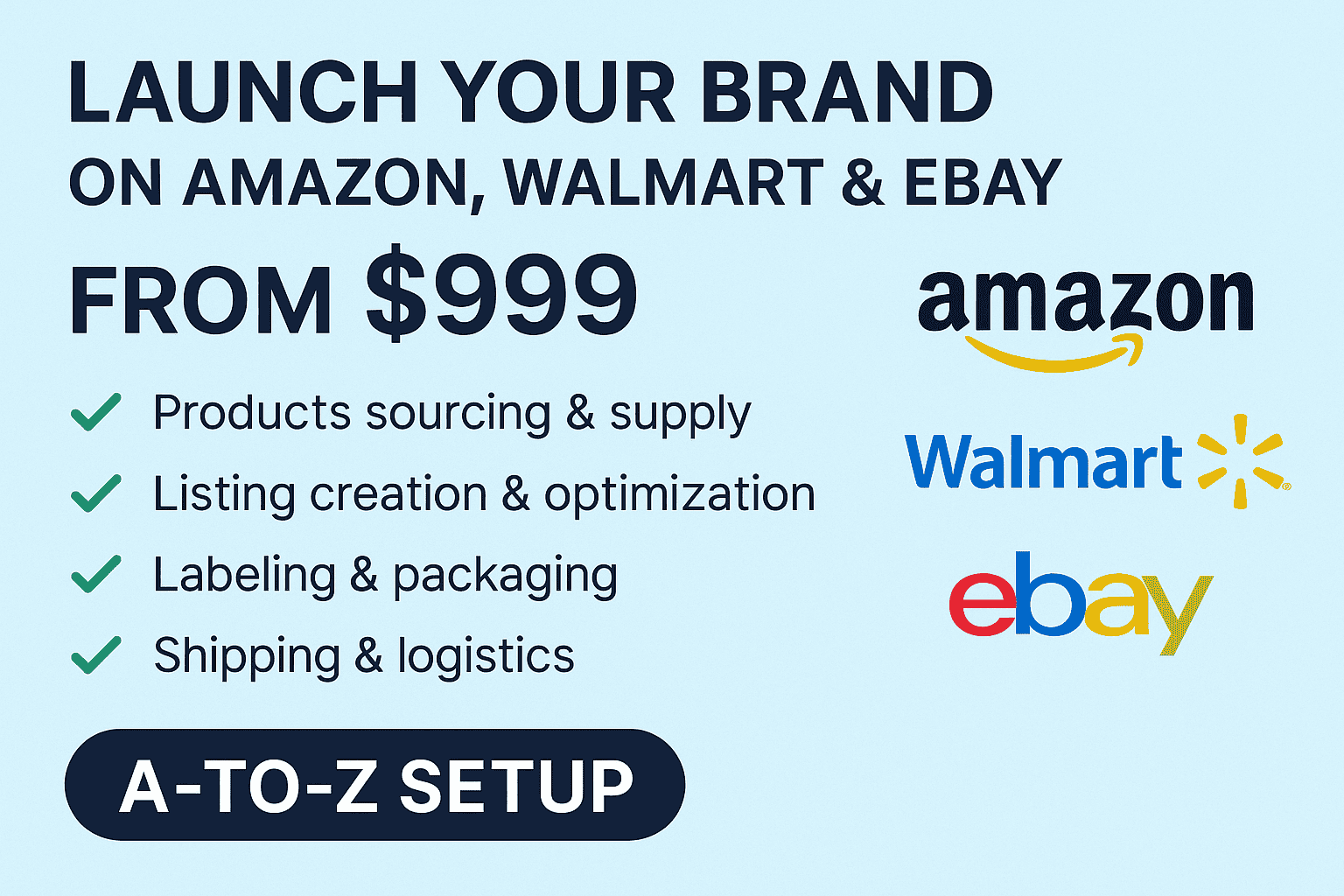
HighRise Wholesale works with entrepreneurs and ecommerce sellers looking to develop their own private label brands for Amazon FBA and Walmart WFS.
Our sourcing network covers India, China, Indonesia, and Vietnam, allowing sellers to explore different manufacturing opportunities based on their product requirements.
Our services include:
- Product research and sourcing assistance
- Manufacturer and supplier coordination
- Private label manufacturing
- Custom logo and packaging development
- Product quality inspection
- UPC and EAN barcode assistance
- Amazon listing creation
- FBA preparation, labeling, and bundling
- Shipping coordination to fulfillment centers
- PPC advertising setup
Whether you are interested in kitchen organizers, dishwashing sponges, household cleaning accessories, or storage solutions, HighRise Wholesale can help coordinate the different stages involved in bringing a private label product to market.
Learn more about our product sourcing and private label services:
The objective is straightforward: help ecommerce entrepreneurs move from product research to building and launching their own brands without having to coordinate every part of the process independently.
Frequently Asked Questions About Private Label Home and Kitchen Products
What are the best private label products in the Home and Kitchen category?
Some product niches worth researching include kitchen organizers, food storage containers, dishwashing sponges, silicone utensils, refrigerator organizers, drawer dividers, bathroom storage products, and household cleaning accessories.
The best product depends on customer demand, competition, manufacturing costs, profit margins, and your ability to offer something better than existing alternatives.
Is Home and Kitchen a profitable category for Amazon private label sellers?
Home and Kitchen can offer attractive private label opportunities because it includes a wide variety of everyday household products.
However, profitability depends on product selection, sourcing costs, competition, Amazon fees, advertising expenses, and product quality.
A product with high sales volume is not necessarily profitable.
How do I find low competition Home and Kitchen products?
Start by researching smaller product niches instead of broad keywords.
Analyze Amazon search results, competitor reviews, pricing, estimated sales, and listing quality.
Look for products with consistent demand where customers are reporting problems that existing sellers have not addressed effectively.
Helium 10 and Jungle Scout can help evaluate potential opportunities.
Where can I find manufacturers for private label kitchen products?
You can find manufacturers through Alibaba, IndiaMART, Made in China, Global Sources, and direct sourcing networks.
Compare multiple suppliers, request samples, verify manufacturing capabilities, and evaluate quality control procedures before placing an order.
HighRise Wholesale also supports sourcing from India, China, Indonesia, and Vietnam.
How much money do I need to start a Home and Kitchen private label business?
The required investment depends on the product, minimum order quantity, manufacturing costs, packaging, shipping, compliance requirements, and advertising budget.
Simple products may require less initial investment than customized products involving specialized materials, tooling, or complex manufacturing.
Prepare a complete cost estimate before committing to inventory.
Can beginners start an Amazon private label business in Home and Kitchen?
Yes. Beginners can explore this category by starting with focused product research and selecting products that are relatively straightforward to manufacture and evaluate.
It is important to understand Amazon fees, sourcing, product compliance, listing creation, and advertising before investing in inventory.
Should I manufacture a new product or customize an existing product?
For many beginners, customizing an existing product is a more practical starting point.
You can improve materials, functionality, packaging, design, or accessories without necessarily investing in expensive tooling and completely new product development.
How do I know if a private label product has enough demand?
Use Amazon search results, Best Sellers rankings, product research software, keyword search volume, and historical sales rank information.
Compare several competing listings and investigate whether demand remains consistent over time.
No research tool can guarantee future sales, so validate your assumptions before ordering large quantities.
Can I sell multiple Home and Kitchen products under one brand?
Yes. You can build a product range around a common customer need.
For example, a kitchen organization brand could start with drawer organizers and later expand into pantry containers, refrigerator storage bins, cabinet organizers, and countertop accessories.
Maintaining a consistent brand identity can help customers recognize your products.
Final Thoughts: Finding the Right Private Label Product Is About More Than Sales
The Home and Kitchen category offers plenty of opportunities for ecommerce entrepreneurs, but successful product selection requires more than following trends or copying popular Amazon listings.
Start with market research, identify customer problems, analyze competitors, compare manufacturers, calculate your complete landed costs, and test product quality before committing to inventory.
Most importantly, look for products where you can offer genuine improvements rather than simply adding a logo to an existing item.
A focused product strategy, reliable manufacturing partners, and disciplined financial planning can help turn a promising product idea into a sustainable private label business.
If you are planning to launch your own Home and Kitchen brand, HighRise Wholesale can support you with product sourcing, private labeling, quality control, and Amazon FBA preparation.
The first step toward building a successful brand is finding a product worth putting your name on.