Launching a successful product on Amazon requires more than finding a supplier and creating a listing. Sellers need a clear product strategy, reliable manufacturing partners, competitive pricing, professional branding, quality control, and a plan for entering the marketplace. An Amazon product development agency can help coordinate these moving parts and turn a product idea into a market-ready offer.
For entrepreneurs, small businesses, and established ecommerce brands, working with an experienced Amazon product development company can simplify product research, sourcing, customization, branding, and FBA preparation.
HighRise Wholesale helps businesses navigate the Amazon private label journey, from product sourcing and customization to branding, packaging, and FBA preparation. Our goal is to help sellers build their own brands with a structured approach to product development.
What Is an Amazon Product Development Agency?
An Amazon product development agency helps sellers research, develop, source, customize, and prepare products for sale on Amazon. Depending on the provider, services may cover the entire product lifecycle, from initial market research to inventory delivery at an Amazon fulfillment center.
Unlike a traditional sourcing company that focuses primarily on finding suppliers, an Amazon product development partner considers the broader business opportunity. This includes customer demand, competition, product differentiation, manufacturing costs, packaging requirements, compliance, and potential profit margins.
For example, a seller interested in launching kitchen accessories may need help identifying an underserved product category, improving an existing design, selecting suitable materials, creating branded packaging, and finding a manufacturer capable of meeting quality requirements.
An Amazon product development agency coordinates these activities to create a more organized and accountable launch process.
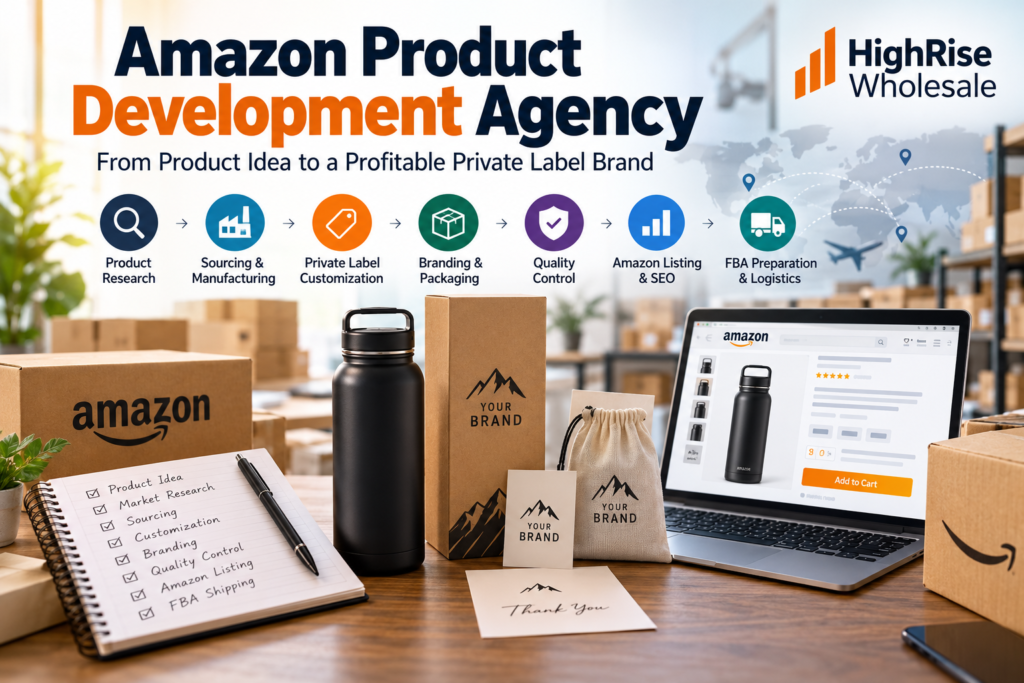
What Does an Amazon Product Development Agency Do?
The services available depend on the agency, but comprehensive Amazon product development support typically includes the following areas.
1. Amazon Product Research and Validation
Product research is one of the most important steps in building a private label business. Choosing a product based solely on popularity can lead to intense competition, expensive advertising, and limited profitability.
A product development agency can evaluate market demand, competing listings, pricing patterns, customer reviews, product differentiation opportunities, and estimated operating costs.
Research tools such as Helium 10 and Jungle Scout can help sellers analyze marketplace data. However, these tools should support decision-making rather than replace commercial judgment.
At HighRise Wholesale, we believe product selection should consider both market opportunity and practical sourcing requirements. A product with attractive demand is not necessarily a good investment if manufacturing costs, shipping expenses, or competition leave insufficient room for profit.
2. Product Sourcing and Manufacturer Selection
Finding the right manufacturer can significantly influence product quality, costs, and delivery timelines.
An Amazon sourcing and product development agency may help sellers identify suppliers in countries such as India, China, Vietnam, and Indonesia. The right location depends on the product category, manufacturing capabilities, order quantity, quality requirements, and logistics costs.
Before choosing a supplier, sellers should evaluate production capacity, sample quality, communication, certifications where applicable, and consistency across production batches.
HighRise Wholesale supports product sourcing for private label sellers looking to develop their own branded products. The objective is to connect product requirements with suitable manufacturing options while considering cost and quality expectations.
3. Private Label Product Customization
Private labeling allows sellers to market products under their own brand rather than simply reselling an existing branded item.
Product customization can involve changes to materials, colors, dimensions, functionality, included accessories, or packaging. These improvements should address a genuine customer need instead of adding features that increase costs without creating meaningful value.
For example, a seller developing pet grooming accessories might improve the handle design, introduce a more convenient cleaning mechanism, or create a better-organized product bundle.
HighRise Wholesale helps sellers explore private label opportunities and coordinate product branding and customization according to their business requirements.
4. Product Design, Branding, and Packaging
A product’s presentation can influence customer perception and purchase decisions. Professional branding helps create a consistent identity across the physical product, packaging, and Amazon listing.
Typical services may include logo development, packaging design, product inserts where permitted, color selection, and preparation of visual assets.
Packaging must also meet practical requirements. It should protect the product during transportation, support efficient storage, and comply with applicable Amazon packaging and labeling rules.
HighRise Wholesale offers branding and product design support for qualifying private label orders, helping sellers move from a generic product concept toward a more recognizable brand identity.
5. Product Sampling and Quality Control
A product sample provides an opportunity to evaluate quality before committing to a larger manufacturing order.
Sellers should assess dimensions, materials, functionality, finishing, packaging, and compliance with the agreed specifications. For larger orders, an independent preshipment inspection can help identify defects before the remaining payment is released.
A reliable product development process should establish measurable quality standards rather than relying on verbal assurances from a supplier.
HighRise Wholesale emphasizes product quality checks and coordination with suppliers as part of the product sourcing process. Sellers should also confirm the scope of inspection, acceptance criteria, and responsibility for resolving defects before production begins.
6. Amazon Listing Development and Optimization
A well-developed product needs a listing that clearly communicates its value to potential customers.
Amazon listing development may include keyword research, an optimized product title, relevant bullet points, a detailed product description, backend search terms, and high-quality product images.
The listing should address customer questions while accurately describing product features and benefits. Unsupported claims, misleading comparisons, and keyword stuffing can damage customer trust and create compliance problems.
For stronger search visibility, sellers should understand the difference between traditional search engine optimization and answer engine optimization.
SEO, or search engine optimization, helps product-related content become more discoverable through relevant keywords, clear headings, and useful information.
AEO, or answer engine optimization, focuses on providing direct, well-structured answers to questions that people ask through search engines and AI-powered assistants.
For example, an article about an Amazon product development agency can answer questions such as what the agency does, how product development works, what services are included, how much it costs, and how sellers should evaluate an agency.
HighRise Wholesale recognizes the importance of combining relevant keywords with useful, customer-focused content rather than relying on keyword repetition alone.
7. Amazon FBA Preparation and Logistics
After production and quality checks, products must be prepared for shipment and fulfillment.
Depending on the product and shipment requirements, preparation can include FNSKU labeling, bundling, carton labeling, packaging verification, shipping documentation, and coordination with freight providers.
Products must meet applicable Amazon fulfillment requirements before they are sent to a fulfillment center. Sellers should verify current requirements because packaging, labeling, and shipment rules can change.
HighRise Wholesale offers Amazon FBA preparation support and coordination for shipping products toward Amazon fulfillment centers, subject to product requirements and the agreed service scope.
How Much Does an Amazon Product Development Agency Cost?
The cost of hiring an Amazon product development agency varies according to the scope of work, product complexity, order quantity, customization requirements, and logistics arrangements.
Some agencies charge separate fees for research, sourcing, design, and listing creation. Others offer bundled services or incorporate their fees into product pricing.
Sellers should distinguish between agency fees and the actual cost of launching a product.
A realistic product launch budget may include:
- Product samples and testing
- Manufacturing and customization
- Logo and packaging design
- Product photography and listing creation
- Quality inspection
- Freight, customs duties, and applicable taxes
- Amazon selling fees and fulfillment costs
- Advertising and launch inventory
The total investment can vary considerably between product categories. A simple, lightweight product may require less capital than an item involving custom tooling, complex materials, specialized testing, or extensive packaging.
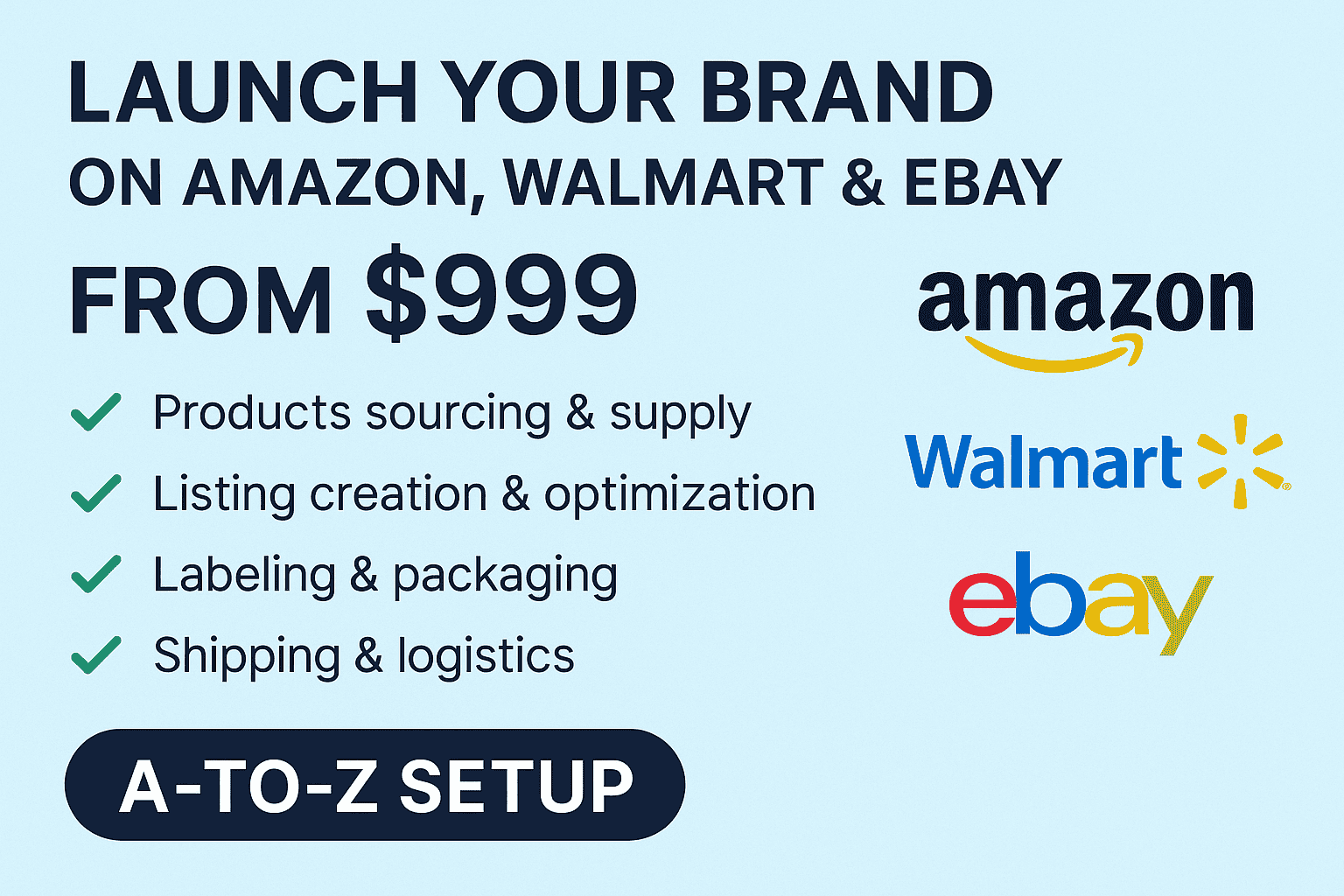
At HighRise Wholesale, private label programs have been offered with a minimum order value starting at $999, depending on the applicable program and product requirements. Sellers should confirm current pricing, inclusions, and exclusions before placing an order.
A low initial price should not be the only deciding factor. The more important question is whether the complete cost structure supports a sustainable business.
How to Choose the Right Amazon Product Development Agency
Choosing an agency is a business decision that deserves careful evaluation. Sellers should look beyond promotional claims and understand exactly what they will receive.
Transparent pricing: Request a written breakdown of product costs, service fees, shipping, and additional charges.
Clear service scope: Confirm whether research, sourcing, customization, branding, inspection, listing creation, and FBA preparation are included.
Supplier verification: Ask how manufacturers are evaluated and what happens if production quality does not meet the agreed specifications.
Realistic timelines: Product development can involve sampling, revisions, production, inspections, and transportation. Be cautious of guarantees that ignore these variables.
Communication and accountability: Establish who manages supplier communication, approvals, documentation, and quality issues.
Amazon compliance: Ensure that the agency understands relevant listing policies, intellectual property considerations, product safety requirements, and fulfillment rules.
Commercial ownership: Clarify ownership of branding assets, product designs, packaging files, and supplier documentation. Confirm any contractual limitations before proceeding.
HighRise Wholesale aims to provide sellers with a coordinated approach to product sourcing, private labeling, branding, and Amazon preparation. As with any service provider, prospective clients should review the written terms and verify that the services offered match their requirements.
Is Hiring an Amazon Product Development Agency Worth It?
An agency can be particularly useful for first-time Amazon sellers who do not yet have established supplier relationships or experience managing manufacturing and logistics.
It may also benefit existing sellers who want to expand their catalogs, develop differentiated products, or reduce the operational burden of coordinating multiple suppliers.
However, hiring an agency does not eliminate business risk. Product demand can change, competitors can reduce prices, advertising costs can rise, and manufacturing problems can affect profitability.
Sellers should remain involved in product selection, budget approval, quality standards, and final business decisions. Delegating execution works best when the seller maintains visibility into the numbers and understands the assumptions behind each recommendation.
A disciplined product development process can reduce avoidable mistakes, but no agency can guarantee sales, rankings, or profitability.
Common Mistakes to Avoid During Amazon Product Development
Even a promising product can struggle when sellers overlook important details during development.
Choosing Products Without Validating Demand
A product that looks attractive may not have enough consistent demand to justify the investment. Analyze competition, customer needs, pricing, and estimated sales before placing a large order.
Competing Only on Price
Selling the cheapest product can create pressure on margins and make the business vulnerable to competitors. Focus on product quality, useful differentiation, customer experience, and operational efficiency.
Ignoring the Full Cost Structure
Manufacturing cost is only one part of the investment. Include shipping, duties, packaging, Amazon fees, advertising, returns, and other operating expenses when calculating expected profitability.
Skipping Quality Inspections
A sample that meets expectations does not guarantee that every unit in a production run will meet the same standard. Establish specifications and suitable inspection procedures before production begins.
Overlooking Product Compliance
Some products require specific testing, documentation, labeling, or regulatory approvals. Determine the applicable requirements before ordering inventory, especially for products involving electronics, cosmetics, food contact, children’s use, or health-related claims.
Relying on SEO Alone
Keywords help customers discover products, but visibility does not automatically produce sales. Product images, pricing, customer reviews, listing accuracy, delivery performance, and advertising can all influence conversion.
HighRise Wholesale encourages sellers to treat product development as a complete business process rather than a single sourcing transaction.
Frequently Asked Questions About Amazon Product Development Agencies
What does an Amazon product development agency do?
An Amazon product development agency helps sellers research product opportunities, identify manufacturers, customize products, develop branding and packaging, coordinate quality checks, and prepare products for sale on Amazon. The exact services depend on the provider.
How is a product development agency different from a sourcing agent?
A sourcing agent primarily focuses on finding suppliers and coordinating purchasing. An Amazon product development agency may provide broader support that includes product research, customization, branding, quality control, listing development, and fulfillment preparation.
Can an Amazon product development agency help beginners?
Yes. Beginners may benefit from structured guidance through supplier selection, product specifications, quality control, and launch preparation. However, they should still understand their costs, risks, and Amazon selling responsibilities.
How long does Amazon product development take?
The timeline depends on product complexity, sample approvals, manufacturing capacity, customization, inspection, and shipping. A straightforward project may progress faster than a product requiring multiple revisions or specialized testing. Sellers should request a project-specific timeline rather than relying on a universal estimate.
Does an Amazon product development agency guarantee sales?
No reputable service should guarantee a specific sales outcome without a credible basis. Product performance depends on demand, pricing, competition, listing quality, advertising, reviews, inventory availability, and other market factors.
Can product development agencies help with Amazon FBA?
Many agencies coordinate FBA preparation, labeling, packaging, and shipping. Sellers should verify whether these services are included and confirm that the final shipment complies with Amazon’s current requirements.
What is the difference between Amazon SEO and AEO?
Amazon SEO focuses on improving product discoverability within Amazon through relevant keywords, listing relevance, and customer experience. AEO focuses on making information easy for search engines and AI assistants to understand and use when answering questions. Both benefit from accurate, helpful, clearly structured content.
How do I get started with a private label product development agency?
Start by identifying your target market, preferred product category, estimated budget, and business goals. Request a clear proposal outlining the services, product costs, timelines, quality control procedures, and responsibilities of each party. Compare the proposal against your expected margins before committing to an order.
Build Your Amazon Private Label Brand With a Structured Plan
Building a profitable Amazon business begins well before the first sale. Product research, supplier selection, product differentiation, quality control, accurate listings, and cost management all contribute to the long-term potential of a private label brand.
An experienced Amazon product development agency can help coordinate these activities and make the process more manageable, provided the service scope and commercial terms are clear.
HighRise Wholesale supports Amazon private label sellers with product sourcing, customization, branding, and FBA preparation services. Whether you are exploring your first product or expanding an existing catalog, the objective should be to develop products that meet customer needs and make commercial sense.
To learn more about our services and explore private label opportunities, visit:
The strongest product launches are built on informed decisions, verified quality, realistic budgets, and a clear understanding of the customer. Focus on these fundamentals before investing heavily in inventory, and you will be better positioned to build a sustainable Amazon brand.