Finding the right private label products is one of the most important steps when starting an Amazon business. Whether you are a new seller launching your first product or an established Amazon FBA seller expanding your catalog, choosing the right supplier can directly impact your profit margins, product quality, customer satisfaction, and long term growth.
But where can you actually buy private label products to sell on Amazon?
You can source private label products directly from manufacturers, wholesale suppliers, sourcing companies, and specialized private label service providers. Popular sourcing destinations include China, India, Vietnam, Indonesia, and other manufacturing markets.
The key is to find a supplier that can provide competitive pricing, consistent quality, customized packaging, reliable shipping, and the flexibility to build your own brand.
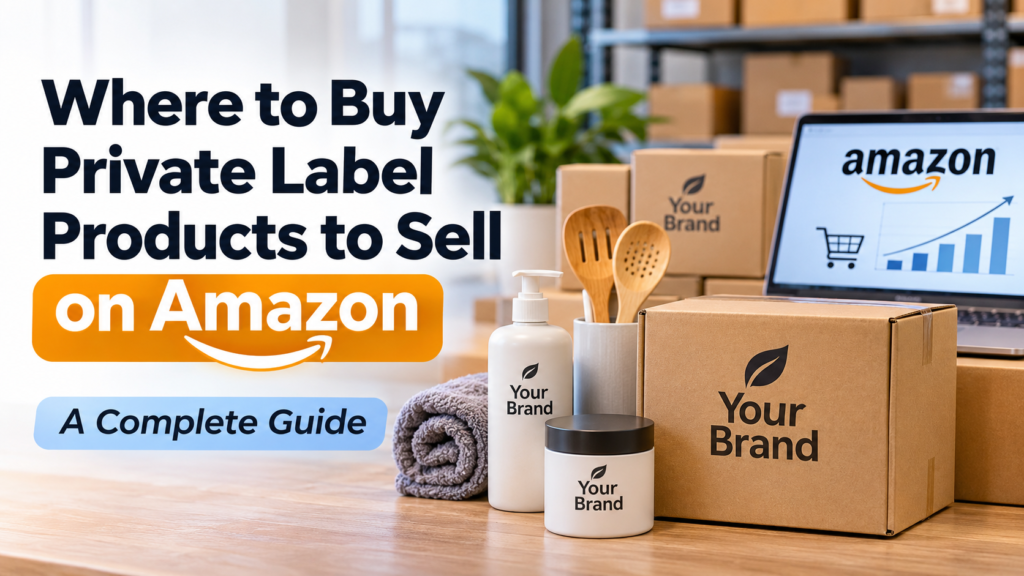
In this guide, we will explore the best places to buy private label products, how to find reliable manufacturers, what to look for when comparing suppliers, and how to get your products ready for Amazon FBA.
Where Can You Buy Private Label Products for Amazon?
There are several ways to source private label products for Amazon. Your ideal option depends on your investment budget, product category, customization requirements, and experience.
Here are some of the most popular sourcing options.
1. Alibaba
Alibaba is one of the most widely used platforms for finding private label manufacturers and suppliers. It connects international buyers with factories and trading companies, particularly in China.
You can find manufacturers offering products across categories such as:
- Kitchen accessories
- Home improvement products
- Pet supplies
- Beauty accessories
- Personal care products
- Fitness accessories
- Storage and organization products
- Household cleaning products
Many Alibaba suppliers offer private labeling, custom logos, packaging design, and bulk manufacturing.
However, not every supplier listed on Alibaba is a manufacturer. Some are trading companies or intermediaries. Always verify business credentials, request samples, check product specifications, and conduct quality inspections before placing a large order.
Website: https://www.alibaba.com/
2. Global Sources
Global Sources is another established B2B sourcing platform that connects international buyers with manufacturers and exporters.
It is particularly useful for sellers looking for electronics, consumer goods, home products, accessories, and other manufactured items.
The platform provides supplier information and opportunities to connect with manufacturers. You can compare quotations, discuss customization, and negotiate minimum order quantities.
It is worth considering when you want to explore multiple manufacturing options rather than relying on a single supplier.
Website: https://www.globalsources.com/
3. Made-in-China
Made-in-China is a sourcing marketplace focused on Chinese manufacturers and suppliers.
Amazon sellers can use it to discover factories producing household products, industrial goods, consumer accessories, electronics, and other private label items.
When contacting suppliers, ask whether they support custom branding, packaging modifications, product specifications, and export documentation.
Compare several quotations before selecting a manufacturer. A lower unit price does not necessarily mean a better deal if quality control and shipping costs are overlooked.
Website: https://www.made-in-china.com/
4. India-Based Private Label Manufacturers
India is another important destination for sourcing private label products.
Indian manufacturers offer products in categories such as textiles, home furnishings, kitchen accessories, personal care, handicrafts, household goods, and consumer products.
For Amazon sellers, sourcing from India can provide opportunities to work with manufacturers offering product customization, smaller production runs in selected categories, and competitive manufacturing costs.
India can be particularly interesting for sellers looking to diversify their supply chain beyond China.
However, supplier capabilities vary significantly. Check export experience, manufacturing capacity, quality certifications, packaging standards, and shipping arrangements before committing to an order.
5. HighRise Wholesale
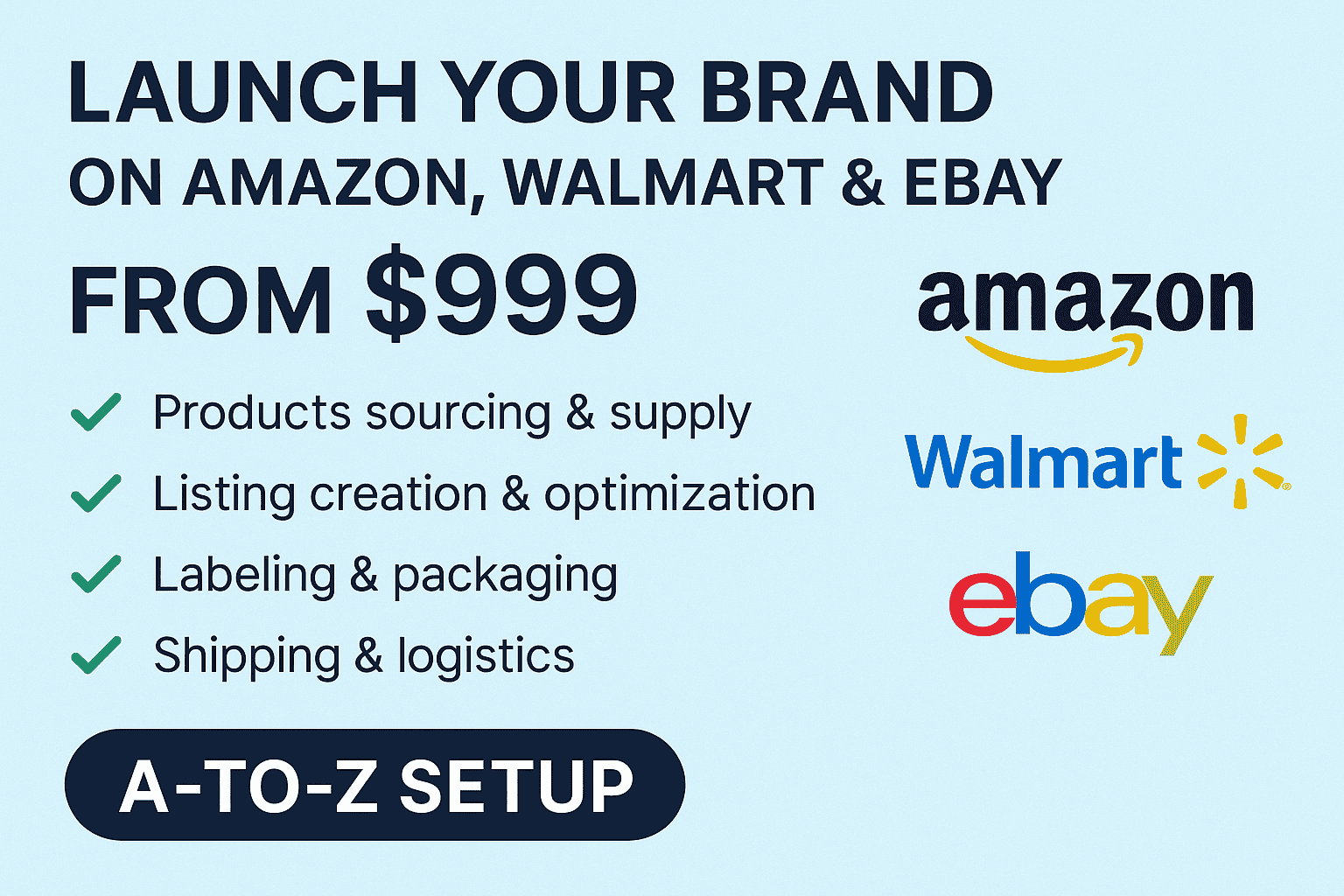
HighRise Wholesale is another option for entrepreneurs who want to source private label products without managing every part of the manufacturing and preparation process independently.
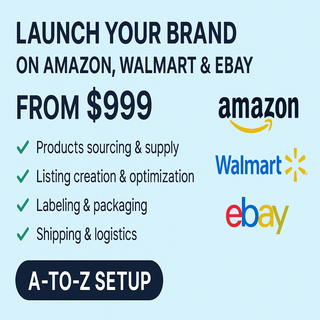
Rather than simply connecting buyers with factories, HighRise Wholesale offers a sourcing and private label support model designed around Amazon FBA and Walmart WFS sellers.
The service helps customers explore products, arrange private labeling, customize packaging, prepare products, and coordinate shipping to fulfillment warehouses.
Some of the services include:
- Product sourcing from India, China, Vietnam, and Indonesia
- Private label manufacturing and customization
- Custom logo and packaging options
- Product listing creation assistance
- UPC and EAN barcode support
- FNSKU labeling and product preparation
- Quality checks before shipment
- Shipping coordination to Amazon and Walmart warehouses
HighRise Wholesale can be worth considering if you prefer working with one sourcing partner instead of independently coordinating multiple manufacturers, designers, packaging suppliers, and preparation providers.
The company works with different product categories, including kitchen accessories, household products, pet supplies, beauty accessories, and personal care items.
Website: https://highrisewholesale.com/
For sellers who are new to private labeling, having support throughout the sourcing and preparation process can make the initial launch easier to manage.
Which Countries Are Best for Buying Private Label Products?
The best country depends on the product you want to manufacture, your budget, production requirements, and shipping arrangements.
China
China remains a major manufacturing destination for Amazon private label sellers.
It offers a broad supplier network, established export infrastructure, and extensive customization capabilities.
It is particularly popular for electronics accessories, household products, kitchen tools, toys, storage products, and consumer goods.
India
India offers opportunities in textiles, home products, personal care, kitchen accessories, handicrafts, and various consumer goods.
It can be a good alternative for sellers interested in building a diversified supply chain.
Vietnam
Vietnam is an established manufacturing destination for furniture, textiles, footwear, household goods, and other consumer products.
It is worth exploring when looking for alternatives to traditional Chinese manufacturing.
Indonesia
Indonesia has manufacturing capabilities in furniture, home accessories, textiles, natural materials, and selected consumer product categories.
Depending on the product, it can provide interesting sourcing opportunities.
There is no universally best country for private label manufacturing. The right choice is the one that offers the best balance between product quality, total landed cost, supplier reliability, and customer demand.
What Types of Private Label Products Can You Sell on Amazon?
Private labeling allows you to sell products manufactured by another company under your own brand name.
Instead of competing only on price with identical generic products, you can differentiate your offering through branding, packaging, product features, and customer experience.
Some categories worth researching include:
1. Kitchen and household products
Kitchen organizers, cleaning accessories, dishwashing tools, storage solutions, and household accessories.
2. Pet supplies
Pet grooming accessories, hair removers, feeding accessories, and pet care products.
3. Beauty and personal care
Beauty accessories, foot care products, nail care tools, and non regulated personal care accessories.
4. Home and organization
Storage organizers, bathroom accessories, closet organizers, and home improvement products.
5. Fitness and lifestyle
Exercise accessories, fitness organizers, travel accessories, and everyday lifestyle products.
These are product research starting points, not guaranteed profitable opportunities. Evaluate demand, competition, selling prices, reviews, product restrictions, and margins before investing.
How to Find Reliable Private Label Suppliers
Finding a supplier is relatively easy. Finding a reliable supplier that can consistently deliver the expected product quality is much more important.
Follow these steps before placing an order.
Step 1: Research the Supplier
Check the supplier’s business history, manufacturing capabilities, export experience, business registration, and customer feedback.
If possible, verify whether the supplier operates its own factory or works through third party manufacturers.
Step 2: Request Product Samples
Never place a large production order without evaluating the actual product.
Request samples and check:
- Material quality
- Product dimensions
- Weight
- Packaging quality
- Product functionality
- Finishing and durability
Compare samples from multiple suppliers whenever possible.
Step 3: Confirm Private Label Capabilities
Ask whether the supplier can customize the product with your logo, brand name, packaging, inserts, and other approved specifications.
Get written confirmation of all customization requirements before production.
Step 4: Compare Minimum Order Quantities
Manufacturers have different minimum order requirements.
Some suppliers may accept smaller orders, while others require hundreds or thousands of units.
Choose an order quantity that fits your budget and realistic sales forecast. Avoid purchasing excessive inventory simply to obtain a lower unit price.
Step 5: Calculate the Total Landed Cost
Your product cost is only one part of the investment.
Consider:
- Manufacturing cost
- Logo and packaging customization
- Quality inspection
- International shipping
- Customs duties and taxes
- Amazon FBA fees
- Storage fees
- Advertising expenses
Understanding the total landed cost helps you estimate your actual profitability rather than relying on the manufacturer’s quoted unit price.
Step 6: Conduct Quality Control
Before the products leave the manufacturing facility, arrange an appropriate quality inspection.
Check the finished products against your approved sample and purchase specifications.
This can help identify manufacturing defects, packaging problems, incorrect quantities, and labeling issues before the shipment reaches Amazon.
How Much Money Do You Need to Buy Private Label Products for Amazon?
The investment depends on your product category, supplier, order quantity, customization requirements, and shipping destination.
For a small private label launch, sellers may consider an initial budget of approximately $2,000 to $5,000. More competitive or customization intensive products can require a larger investment.
A typical budget should account for:
- Initial product inventory
- Branding and packaging
- Samples and inspections
- Shipping and import costs
- Amazon selling and fulfillment fees
- Initial advertising
- Working capital for restocking
For example, if you purchase 500 units at $3 each, your initial product cost is $1,500. However, shipping, packaging, advertising, Amazon fees, and other expenses must also be included.
Do not choose a product simply because it is inexpensive to manufacture. Choose a product with enough potential margin to support your operating costs and advertising.
How to Choose the Right Private Label Product for Amazon FBA
Before buying inventory, validate the product opportunity.
Here are some important factors to consider:
Demand: Look for consistent customer demand rather than relying on temporary trends.
Competition: Evaluate the number of established sellers, review counts, listing quality, and competitive advantages.
Profit margin: Calculate the expected profit after all Amazon fees, advertising costs, shipping, and product expenses.
Product differentiation: Identify opportunities to improve packaging, materials, functionality, design, or customer experience.
Size and weight: Smaller and lighter products can sometimes offer more manageable fulfillment and shipping economics.
Compliance: Check Amazon category requirements, applicable safety standards, testing requirements, documentation, and labeling regulations.
You can use research platforms such as Helium 10 and Jungle Scout to evaluate product demand, competitor performance, keywords, and market opportunities.
What Should You Ask a Private Label Manufacturer Before Ordering?
Before transferring money to a supplier, get clear answers to these questions:
- Are you the actual manufacturer or a trading company?
- What is your minimum order quantity?
- Can you customize products with my brand logo?
- Do you provide custom packaging?
- Can you provide product samples?
- What is your production lead time?
- Can you arrange quality inspections?
- Do you have experience exporting to the United States?
- Can you prepare FNSKU labels and Amazon compliant packaging?
- Can you ship directly to Amazon FBA warehouses?
- What payment methods do you accept?
- What happens if the delivered products do not match the approved specifications?
A professional supplier should be able to explain its production process, pricing, timelines, and quality control procedures clearly.
Can You Buy Private Label Products and Ship Them Directly to Amazon FBA?
Yes. Many manufacturers and sourcing partners can arrange shipments directly to Amazon fulfillment centers.
However, the products must comply with Amazon’s packaging, labeling, shipping, and preparation requirements.
Before shipping, make sure:
- Every unit has the correct product barcode or FNSKU where required.
- Products meet applicable packaging requirements.
- Cartons have accurate shipping labels.
- Shipment plans are created correctly in Seller Central.
- Product compliance documentation is available where required.
- The shipment meets Amazon’s current inbound requirements.
Amazon’s fulfillment requirements can change, so always verify the latest instructions in Seller Central before dispatch.
Is It Better to Buy Directly From Manufacturers or Use a Private Label Sourcing Company?
Both options have advantages.
Buying directly from manufacturers can offer greater control over negotiations, production specifications, and supplier relationships. However, you may need to coordinate several different services yourself.
A private label sourcing company can simplify the process by helping with supplier discovery, product customization, packaging, inspections, preparation, and logistics.
For beginners, working with an experienced sourcing partner can reduce operational complexity. Experienced sellers may prefer direct factory relationships when they have established processes and sufficient purchasing volume.
HighRise Wholesale provides an alternative for sellers looking to consolidate multiple sourcing and preparation requirements through one service provider.
The right decision depends on your experience, available time, order size, and operational capabilities.
Final Thoughts: Where Should You Buy Private Label Products for Amazon?
If you are planning to launch your own Amazon brand, you have several sourcing options.
Alibaba, Global Sources, Made-in-China, and India-based manufacturers are useful places to discover suppliers. You can also explore specialized sourcing partners such as HighRise Wholesale if you want assistance with product sourcing, private labeling, packaging, quality checks, and fulfillment preparation.
The most important thing is to conduct proper product research, compare multiple suppliers, request samples, calculate your total landed cost, and verify product compliance before investing in inventory.
Building a successful Amazon private label business is not simply about finding the cheapest manufacturer. It is about sourcing the right product, creating a competitive brand, managing costs, and delivering consistent quality.
If you are ready to explore private label sourcing, visit:
https://highrisewholesale.com/
HighRise Wholesale helps Amazon FBA and Walmart WFS sellers explore private label sourcing opportunities and manage key stages of the product launch process.