Starting an Amazon private label business in the fitness niche can be a profitable opportunity, but success depends on more than finding a product with high demand. You need reliable suppliers, competitive manufacturing costs, consistent product quality, and a clear strategy for differentiating your brand.
Fitness products are popular among customers looking to improve their health, build strength, exercise at home, and maintain active lifestyles. From resistance bands and yoga accessories to workout equipment and recovery tools, the market offers opportunities for sellers who know how to source the right products.
In this guide, we will explain how to source fitness products for Amazon private label, evaluate manufacturers, calculate sourcing costs, manage product quality, and prepare your products for launch.
Why Choose Fitness Products for Amazon Private Label?
The fitness category includes a broad range of products that serve different customer needs. Home workouts, strength training, yoga, mobility exercises, and recovery routines create opportunities for sellers to build specialized product lines.
However, not every fitness product is suitable for a new Amazon seller. Some products have intense competition, high shipping costs, safety concerns, or expensive certification requirements.
The best approach is to identify a specific customer problem and find a product that solves it effectively.
For example, instead of launching a generic resistance band, you could develop a resistance band set with clearly differentiated resistance levels, durable storage packaging, an exercise guide, and improved material quality.
Other potential private label opportunities include:
- Yoga straps, blocks, and stretching accessories
- Resistance bands and compact strength training equipment
- Jump ropes and agility training accessories
- Massage balls and muscle recovery tools
- Ankle straps and cable machine attachments
- Workout gloves and lifting accessories
- Fitness sliders and core training equipment
- Home workout storage and organization products
These are product ideas to research, not guaranteed profitable opportunities. Before investing, evaluate demand, competition, customer reviews, selling prices, and your expected profit margin.
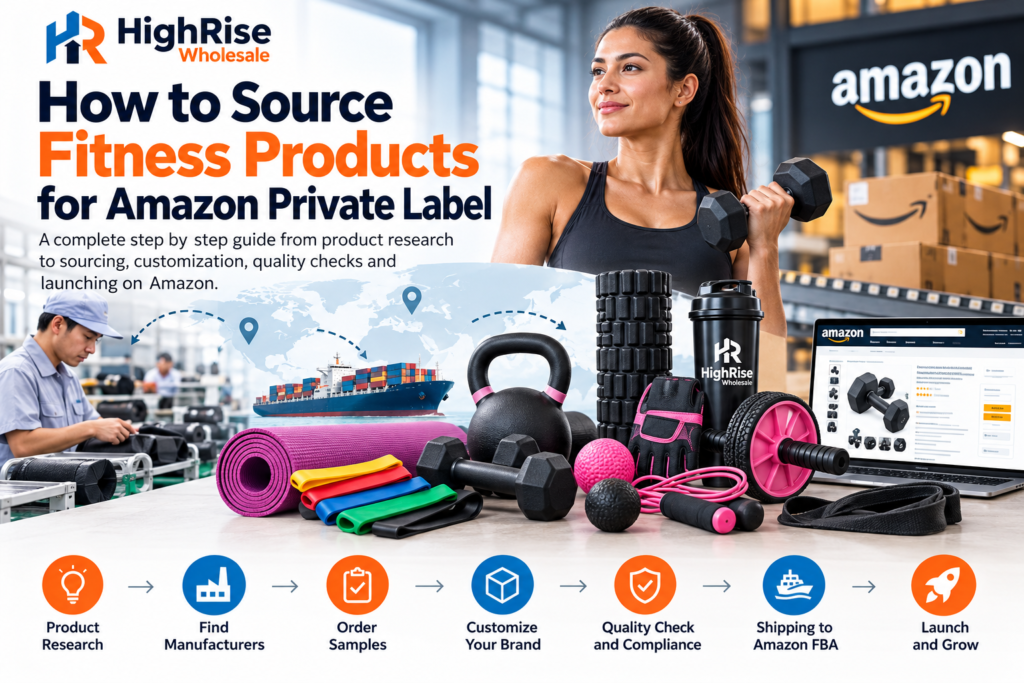
Step 1: Research the Amazon Fitness Market
Product research should be the first step in your sourcing process. Ordering inventory before validating demand can tie up capital in products that customers do not want.
Start by researching fitness related keywords on Amazon. Search for terms such as resistance bands, yoga accessories, workout gloves, home gym equipment, and muscle recovery tools.
Examine the search results and identify products with consistent customer demand. Review competing listings, prices, ratings, product variations, and the number of established brands.
Tools such as Helium 10 and Jungle Scout can help estimate sales volume, analyze keywords, and assess competition. Treat these figures as estimates rather than guaranteed sales forecasts.
Customer reviews are especially useful. Read negative reviews to discover recurring complaints about product quality, sizing, durability, packaging, or usability.
For example, if customers repeatedly report that resistance bands lose elasticity or yoga straps fray quickly, these issues may indicate an opportunity to develop a better product.
The goal is not simply to find a popular product. It is to find a product with sufficient demand and a realistic opportunity to differentiate your brand.
Step 2: Choose the Right Fitness Product
Once you have identified potential opportunities, compare products based on their commercial viability.
For a first private label launch, consider products that are relatively lightweight, easy to package, simple to inspect, and inexpensive to ship.
Small fitness accessories can be easier to manage than bulky gym equipment because they may involve lower freight and storage costs.
However, a low manufacturing price does not automatically make a product profitable. You must account for the complete cost of bringing the product to market.
Evaluate each product using the following criteria:
Demand: Is there consistent customer interest throughout the year?
Competition: Can a new brand compete without relying entirely on price discounts?
Differentiation: Can you improve the materials, design, packaging, accessories, or customer experience?
Shipping: Will the product fit efficiently into cartons and Amazon fulfillment requirements?
Quality: Can the manufacturer maintain consistent standards across production batches?
Compliance: Does the product require specific testing, documentation, warnings, or other regulatory checks?
Avoid starting with complicated products that carry significant injury risks or require specialized regulatory approvals unless you have the expertise and budget to manage them.
Step 3: Find Reliable Fitness Product Manufacturers
Finding the right supplier is one of the most important parts of Amazon private label sourcing.
Common sourcing channels include Alibaba, Global Sources, Made in China, industry trade shows, and direct manufacturer outreach. You can also explore manufacturers in India and other production markets depending on the product, materials, pricing, and quality requirements.
China has a large manufacturing ecosystem for fitness accessories, while India and other countries may offer suitable options for selected product categories. The best sourcing location depends on the individual product rather than the country alone.
When evaluating suppliers, ask whether they are actual manufacturers or trading companies. Trading companies can still be useful, especially when sourcing multiple products, but you should understand who controls production and quality.
Request information about minimum order quantities, unit pricing, production lead times, customization options, packaging, sample availability, and export experience.
Ask suppliers to provide recent product photographs, material specifications, and relevant test reports where applicable.
Do not select a manufacturer based only on the lowest quotation. A supplier offering a slightly higher price may deliver better quality, more consistent production, and fewer costly defects.
HighRise Wholesale can help Amazon sellers explore private label product sourcing, supplier coordination, customization, and preparation for Amazon FBA. Working with a sourcing partner can simplify communication and coordination, particularly for sellers who are new to overseas manufacturing.
Learn more at https://highrisewholesale.com
Step 4: Request Samples Before Placing a Bulk Order
Never commit to a large production order based solely on product photographs or a supplier’s promises.
Request samples from multiple shortlisted manufacturers and compare them side by side.
For fitness products, inspect the materials, stitching, dimensions, finish, packaging, and overall usability. For resistance bands, examine elasticity, resistance consistency, surface defects, and signs of premature wear. For workout gloves, assess stitching, grip, fit, and comfort.
If the product is intended to support body weight or substantial loads, consider whether professional testing is necessary to evaluate its safety and durability.
Test samples under realistic conditions and document any problems. Share clear specifications with the supplier before approving production.
Keep an approved reference sample whenever possible so you have a physical benchmark against which to compare the finished batch.
A sample approval process helps reduce misunderstandings and makes it easier to hold manufacturers accountable for deviations from the agreed specifications.
Step 5: Customize the Product for Your Brand
Private label success requires a compelling reason for customers to choose your product over established alternatives.
Simply placing a logo on a generic fitness accessory may not be enough to create a competitive advantage.
Consider improvements that directly address customer feedback. These might include stronger stitching, better grip, more comfortable materials, improved storage solutions, clearer instructions, or a more practical product bundle.
For example, a yoga accessory kit could include a strap, stretching guide, and storage pouch. A resistance band set could feature clearly labeled resistance levels and an organized carrying case.
Before approving customization, calculate its effect on manufacturing costs, minimum order quantities, and production time.
Request digital mockups or physical prototypes where necessary. Confirm the final logo placement, colors, dimensions, materials, and packaging details in writing.
HighRise Wholesale supports sellers looking to develop private label products with branding and product customization. The objective is to create an offer that stands out for meaningful reasons rather than competing only on price.
Step 6: Calculate Your Total Product Sourcing Cost
One of the most common mistakes new Amazon sellers make is focusing exclusively on the factory price.
Your actual investment includes multiple cost components, and overlooking even a few of them can significantly reduce profitability.
Your sourcing budget should account for:
- Product manufacturing cost
- Custom logo and packaging expenses
- Product samples and testing
- Inspection and quality control
- Shipping, freight insurance, and customs duties where applicable
- Import taxes and other applicable charges
- Amazon FBA preparation and inbound transportation
- Amazon referral and fulfillment fees
- Advertising, promotions, and returns
For example, imagine a fitness accessory costs $4 per unit to manufacture. Shipping, packaging, inspection, and other inbound expenses may increase the landed cost substantially.
You must then deduct Amazon selling fees, advertising costs, refunds, and other operating expenses from the selling price to estimate your contribution profit.
Use Amazon’s Revenue Calculator to estimate fulfillment fees and compare possible fulfillment methods before placing your order.
Do not assume that a product is profitable simply because the difference between its selling price and factory cost looks attractive.
A realistic financial model should include conservative sales estimates, advertising expenses, and a contingency for unexpected costs.
Step 7: Verify Product Quality and Compliance
Fitness products require particular attention to quality because some products are used during physical activity and may expose customers to injury if they fail.
Create a written quality control checklist before production begins. Specify acceptable materials, dimensions, construction, packaging, labeling, and defect tolerances.
For relevant products, arrange inspections before shipment. Depending on the product, you may also need independent laboratory testing or technical documentation.
Compliance requirements vary according to the product, its materials, intended use, and the countries where it will be sold. Do not assume that every fitness accessory requires the same certificates.
For products that support weight or place stress on the body, evaluate mechanical strength and durability requirements carefully. Products containing electronics, batteries, or regulated materials may have additional obligations.
Check applicable US product safety requirements, labeling rules, Amazon category policies, and any relevant standards before finalizing your order. Obtain appropriate documentation from qualified testing providers when needed.
For Amazon listings, ensure that product claims are accurate and supported. Avoid unsubstantiated claims about injury prevention, rehabilitation, medical benefits, or guaranteed fitness results.
A lower purchase price is not worth the financial and reputational damage that can result from unsafe products or compliance failures.
Step 8: Negotiate Minimum Order Quantities and Payment Terms
Minimum order quantity, commonly called MOQ, can significantly influence your initial investment.
Some manufacturers may accept small trial orders for standard products, while customized products often require larger commitments because of tooling, printing, packaging, or material purchasing requirements.
Ask suppliers to quote multiple order quantities. For example, compare the unit price at 200, 500, and 1,000 units where those quantities are commercially available.
This helps you understand whether a larger order delivers enough savings to justify the additional inventory risk.
Discuss payment milestones, production schedules, inspection arrangements, and the process for handling defective goods before signing an agreement.
Avoid committing to an unnecessarily large quantity just to secure a lower unit price. Unsold inventory can consume cash that would otherwise support advertising, product improvements, and future launches.
HighRise Wholesale can help sellers evaluate sourcing options and coordinate the process of developing private label products. For first time sellers, a structured sourcing process can make supplier communication and order planning easier to manage.
Step 9: Plan Amazon FBA Preparation and Shipping
Once production is complete and quality checks have been approved, the next step is preparing your inventory for Amazon fulfillment.
Confirm that every unit meets the applicable packaging and labeling requirements. Depending on your product and fulfillment setup, this may include FNSKU labeling, suffocation warnings for certain poly bags, bundle identification, and carton labeling.
Verify current Amazon requirements rather than relying on outdated supplier instructions.
Choose your shipping method based on shipment size, urgency, budget, and product characteristics. Air freight may be appropriate for smaller or time sensitive shipments, while sea freight can be more economical for larger shipments with flexible timelines.
Account for customs clearance, import documentation, duties, and the delivery arrangements needed to reach the designated Amazon fulfillment center.
Amazon may distribute inventory across different fulfillment centers, so understand your shipment plan and the associated inbound costs before dispatch.
HighRise Wholesale offers sourcing and Amazon FBA preparation support for sellers who want to coordinate manufacturing, labeling, and shipment planning through a more streamlined process.
Step 10: Prepare Your Listing Before Inventory Arrives
Product sourcing and listing preparation should run in parallel whenever practical.
Research the primary keywords customers use to find your fitness product. Organize these terms around customer intent and incorporate them naturally into the product title, bullet points, description, and backend search terms where appropriate.
Your listing should communicate the product’s main benefits, dimensions, materials, included accessories, intended use, and important care or safety information.
Invest in high quality product photography. Images should clearly show the product, its size, features, included components, and practical use cases. Follow Amazon’s current image requirements for the category.
Use comparison charts or other permitted listing features when they help customers understand your product’s advantages.
A strong listing cannot compensate for poor product quality, but good sourcing combined with clear product positioning can improve your chances of building a sustainable business.
Common Mistakes to Avoid When Sourcing Fitness Products
New sellers often make avoidable mistakes that increase costs and delay launches.
Choosing a product based only on sales estimates: Estimated demand does not guarantee that a new listing will generate sales.
Selecting the cheapest supplier: Low prices may come with inconsistent materials, poor workmanship, or weak communication.
Skipping sample testing: A product that looks good in photographs may perform poorly in real use.
Ignoring differentiation: A generic product with no clear advantage may struggle against established brands.
Underestimating landed costs: Freight, duties, Amazon fees, advertising, and returns can reduce margins considerably.
Ordering too much inventory: Large initial orders increase financial exposure before demand has been validated.
Overlooking compliance: Missing documentation or unsupported product claims can create listing restrictions and other business risks.
Launching without a marketing plan: Product availability alone does not guarantee visibility or conversions.
A disciplined approach to research, supplier selection, quality control, and financial planning helps reduce these risks.
How HighRise Wholesale Can Help With Fitness Product Sourcing
Launching a private label fitness product involves multiple connected activities, including product research, supplier identification, sampling, customization, quality checks, packaging, and fulfillment preparation.
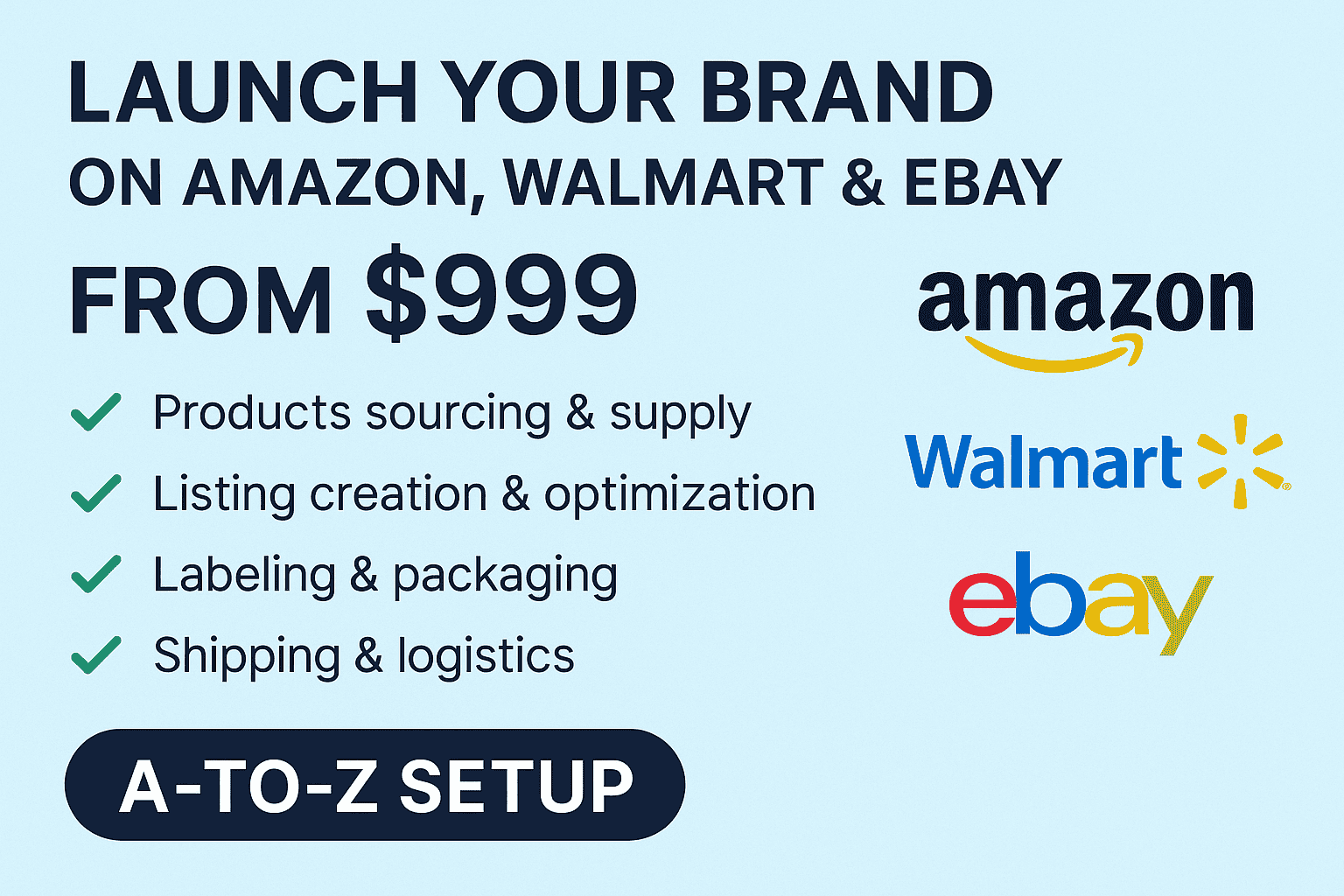
HighRise Wholesale works with Amazon FBA sellers seeking private label sourcing and product launch support. Depending on the product and project scope, the process can include supplier coordination, private label customization, packaging and branding, quality checks, listing preparation, and shipment planning.
Before starting a project, confirm the available services, minimum order requirements, production timelines, testing responsibilities, and total costs for your specific product.
For sellers who want to build a fitness brand rather than resell generic products, the focus should be on finding a viable product, establishing consistent quality, and creating a customer experience that supports repeat purchases and positive reviews.
You can explore the available sourcing and private label services at https://highrisewholesale.com.
Frequently Asked Questions
How do I find fitness product suppliers for Amazon private label?
You can identify suppliers through Alibaba, Global Sources, Made in China, industry trade shows, and direct manufacturer outreach. Compare multiple suppliers, request samples, verify their manufacturing capabilities, and establish written product specifications before placing a bulk order.
Which fitness products are suitable for Amazon private label beginners?
Lightweight accessories such as yoga straps, resistance band sets, jump ropes, fitness sliders, and workout organization products may be worth researching. Suitability depends on demand, competition, manufacturing cost, product safety, and the ability to differentiate your offer.
How much money do I need to source fitness products for Amazon FBA?
There is no universal investment requirement. Your budget depends on the product, minimum order quantity, customization, testing, freight, duties, Amazon fees, and advertising. Build a complete cost estimate before deciding how much inventory to purchase.
Can I source fitness products directly from China?
Yes. Many fitness accessories are manufactured in China, and sellers can work directly with manufacturers or through sourcing partners. Compare suppliers based on product quality, communication, pricing, documentation, and production consistency rather than location alone.
Should I order samples before buying fitness products in bulk?
Yes. Samples allow you to evaluate materials, construction, dimensions, functionality, and packaging before committing to production. For products involving significant physical loads or safety risks, consider independent testing in addition to ordinary sample checks.
How can I differentiate my private label fitness products?
You can differentiate through improved materials, stronger construction, more practical accessories, thoughtful packaging, better instructions, and clear product positioning. Customer reviews of competing products can help identify improvements that buyers actually value.
Is fitness a profitable Amazon private label niche?
Fitness can offer opportunities, but profitability depends on product selection, competitive positioning, sourcing costs, advertising efficiency, and customer satisfaction. Validate demand and calculate realistic contribution margins before investing in inventory.
Final Thoughts
Sourcing fitness products for Amazon private label requires a combination of market research, supplier evaluation, product development, quality assurance, and cost management.
Start by identifying a specific customer need. Validate demand, compare manufacturers, test samples, and calculate the full landed cost. Once you have a product that meets your quality and financial requirements, develop your branding, prepare your Amazon listing, and establish a reliable fulfillment plan.
HighRise Wholesale can support sellers exploring private label sourcing and product launch coordination. The most important decision, however, is choosing a product with genuine customer value and a realistic path to profitability.
A successful fitness brand is not built simply by finding a cheap manufacturer. It is built by consistently delivering products that customers trust, at a price that supports a sustainable business.