Choosing the right supplier is one of the most important decisions when starting an Amazon private label business. Your supplier has a direct impact on product quality, manufacturing costs, delivery times, customer satisfaction, and overall profitability.
Many new Amazon sellers spend weeks researching profitable products but rush the supplier selection process. This can lead to poor product quality, unexpected expenses, delayed shipments, and negative customer reviews.
Finding a manufacturer is relatively easy. Finding a reliable manufacturing partner who understands Amazon requirements, offers competitive pricing, maintains consistent quality, and supports your business as it grows is much more challenging.
So, how do you choose the right Amazon private label supplier?
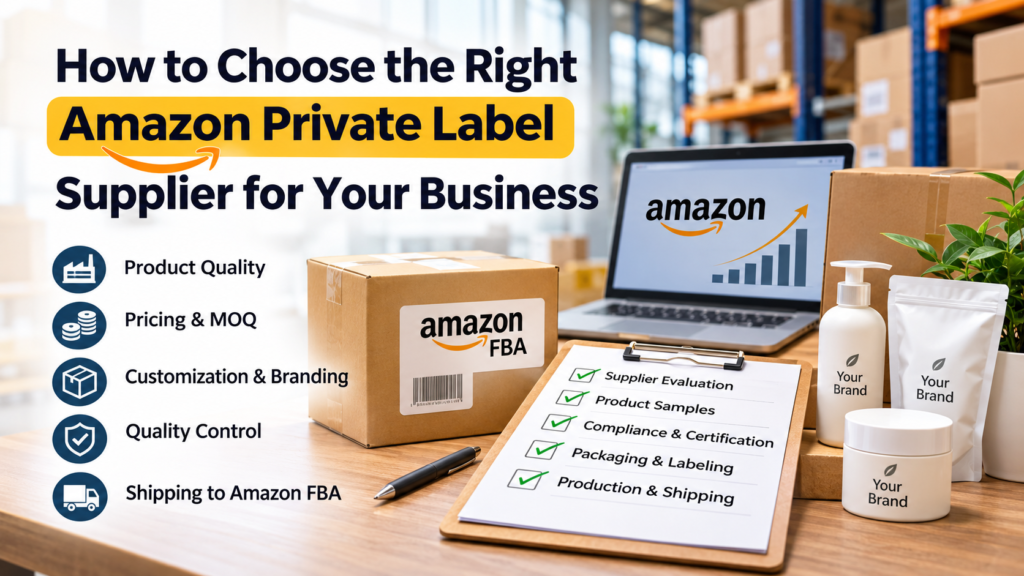
Here are the most important factors to consider before investing in your first private label order.
1. Understand Your Product Requirements Before Contacting Suppliers
Before approaching manufacturers, define exactly what you want to manufacture.
Start with the product category, materials, dimensions, colors, packaging requirements, and any special features you want to include.
For example, if you are launching a kitchen cleaning brand, you might be considering dishwashing sponges, scrubbers, microfiber cloths, or multipurpose cleaning sets.
Instead of asking manufacturers for a general quotation, provide specific product requirements. This makes it easier to compare quotations and understand what each supplier can actually offer.
Prepare the following information:
- Product specifications and dimensions
- Preferred materials and colors
- Logo and branding requirements
- Packaging design and quantity
- Target manufacturing cost
- Expected order quantity
- Required certifications or testing
The clearer your requirements, the easier it becomes to identify suitable manufacturers.
2. Choose a Supplier With Amazon FBA Experience
Not every manufacturer understands how Amazon FBA works.
A traditional manufacturer may produce excellent products but have limited experience with Amazon packaging, barcode requirements, FNSKU labeling, carton specifications, bundling, and fulfillment center deliveries.
This can create additional work for sellers, particularly those launching their first products.
Look for suppliers who understand:
- Amazon FBA packaging requirements
- FNSKU labeling
- UPC and EAN barcodes
- Custom retail packaging
- Product bundling and multipacks
- Carton labeling and shipping requirements
- Direct shipping to Amazon warehouses
Working with an Amazon experienced supplier can reduce operational complications and help prevent avoidable preparation mistakes.
HighRise Wholesale is one company worth considering for sellers looking for Amazon private label sourcing, branding, product preparation, and shipping support.
3. Compare Manufacturers From Different Countries
China is a popular destination for Amazon private label sourcing, but limiting your search to Chinese manufacturers may mean missing other opportunities.
India, Vietnam, and Indonesia also have established manufacturing industries across different product categories.
Each country has its own strengths.
China: Known for its extensive manufacturing ecosystem, competitive production capabilities, and wide product selection.
India: Offers opportunities in textiles, home products, kitchen accessories, handicrafts, and various consumer goods.
Vietnam: Has manufacturing capabilities in furniture, textiles, footwear, and other consumer product categories.
Indonesia: Offers opportunities in furniture, homeware, natural materials, and selected lifestyle products.
The best sourcing destination depends on the specific product, production requirements, quality standards, and total landed cost.
HighRise Wholesale provides product sourcing options from India, China, Vietnam, and Indonesia, giving Amazon sellers access to multiple manufacturing destinations.
Rather than choosing a supplier based only on location, compare actual manufacturing capabilities and quotations.
4. Always Request Samples Before Placing a Bulk Order
Never place a large manufacturing order based entirely on product photographs or online listings.
A product may look excellent in photographs but have poor finishing, inconsistent materials, weak construction, or other quality problems.
Request samples from shortlisted manufacturers before making your final decision.
When inspecting samples, pay attention to:
- Overall product quality
- Material durability
- Dimensions and weight
- Finishing and appearance
- Functionality and performance
- Packaging quality
- Similarity to your original specifications
If possible, compare samples from two or three manufacturers.
This gives you a better understanding of the quality differences between suppliers and helps you avoid committing to the wrong manufacturer.
Remember that approving a sample does not automatically guarantee consistent bulk production. Establish clear quality standards and arrange inspections before shipment.
5. Compare Minimum Order Quantities
Minimum Order Quantity, or MOQ, is the minimum number of units a manufacturer requires you to purchase.
Some suppliers accept orders of 100 to 200 units, while others require 500, 1,000, or several thousand units.
For new Amazon sellers, a manageable MOQ can reduce financial risk.
However, smaller orders usually have higher per unit manufacturing costs. Larger orders may offer better pricing but require more investment and increase the risk of holding unsold inventory.
Consider your expected sales volume, available capital, product competition, and inventory requirements before deciding on an order quantity.
For example, ordering 200 units might be appropriate for an initial product test. Once demand is established, increasing production to 1,000 units or more may improve your margins.
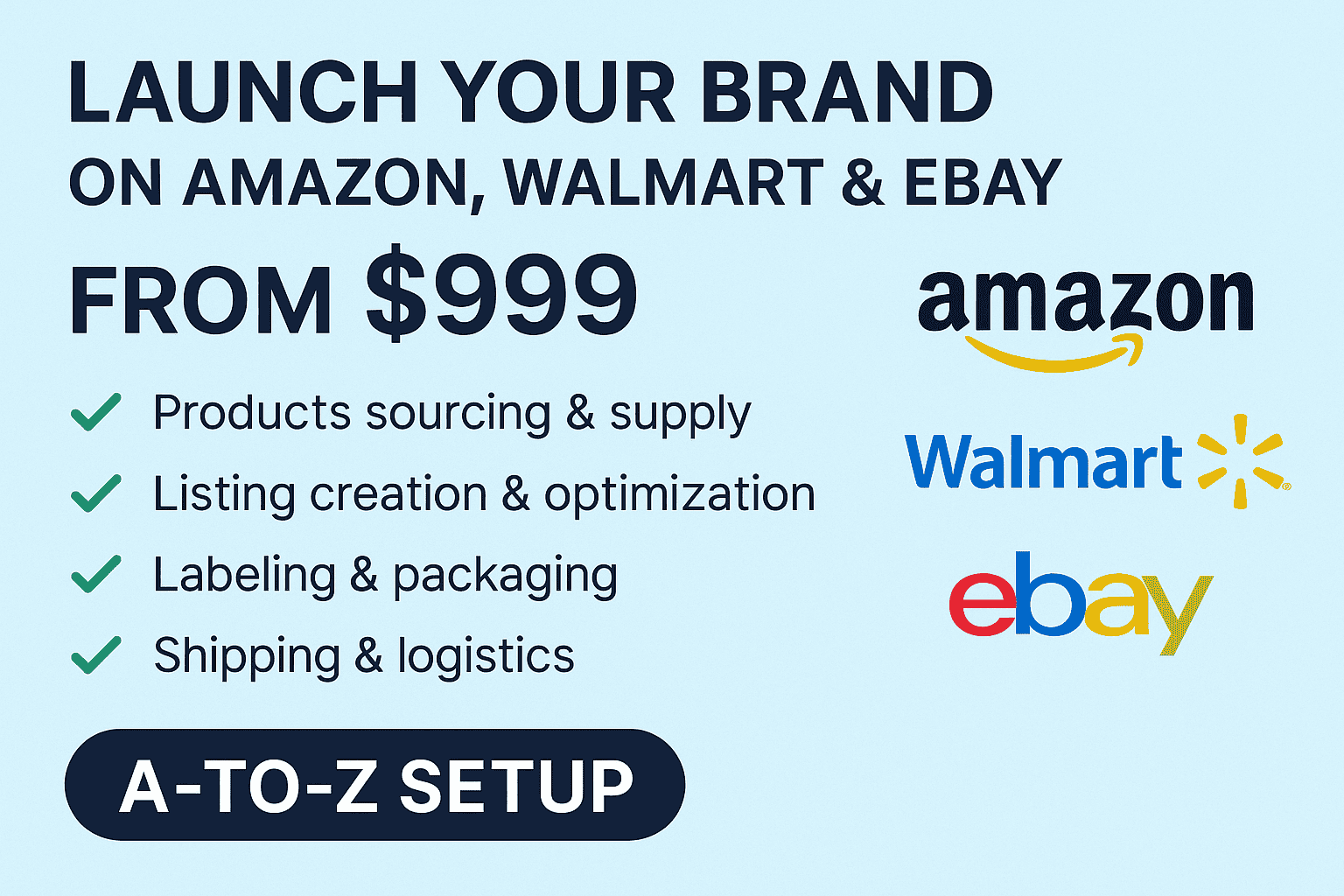
HighRise Wholesale offers private label programs starting at $999, giving sellers an entry point for exploring branded product sourcing.
The right order size should be based on business economics rather than simply choosing the lowest available MOQ.
6. Calculate the Complete Landed Cost
One of the biggest mistakes Amazon sellers make is comparing manufacturers only by their quoted unit prices.
A supplier offering a product for $2.50 may initially appear more attractive than another supplier quoting $2.90.
However, the final landed cost could be completely different.
Your actual product cost may include:
- Manufacturing charges
- Logo printing and customization
- Retail packaging
- Product inspection
- Barcode labeling
- FNSKU labeling and FBA preparation
- International shipping
- Customs duties and applicable taxes
- Additional handling charges
For example, a manufacturer offering a cheaper product may charge separately for packaging, labeling, and inspection. Another supplier might include some of these services in its quotation.
Always request a detailed cost breakdown.
You should also calculate Amazon referral fees, fulfillment fees, advertising costs, and other selling expenses before deciding whether the product is profitable.
HighRise Wholesale provides sourcing and product launch services that can help sellers coordinate several parts of the purchasing and fulfillment process.
A transparent quotation is more valuable than an attractive price that excludes important expenses.
7. Evaluate Customization and Branding Capabilities
Private labeling is about building a recognizable brand rather than simply purchasing a generic product.
Your supplier should be capable of supporting the customization required to differentiate your product from existing Amazon listings.
Depending on your product category, customization may include:
- Custom logo printing
- Branded retail packaging
- Product color variations
- Customized dimensions
- Different materials and finishes
- Custom product bundles
- Instruction manuals and inserts
Ask manufacturers to show examples of previous customized products.
Also, clarify whether they charge separately for design, printing, molds, packaging, or other customization requirements.
For new brands, packaging can make a significant difference in product presentation and customer perception.
HighRise Wholesale offers branding and product design assistance for qualifying private label orders, helping sellers develop products under their own brand names.
8. Verify Quality Control Procedures
Product quality should never be left entirely to the manufacturer’s discretion.
A supplier might provide an excellent sample but deliver bulk inventory with inconsistent finishing or manufacturing defects.
Before placing an order, ask about the manufacturer’s quality control process.
Important questions include:
- Does the manufacturer inspect every production batch?
- Are product dimensions and specifications checked?
- How are defective units identified?
- Are packaging and labeling inspected?
- Can the supplier provide inspection photographs or reports?
- Is third party inspection permitted?
For larger orders, independent quality inspections can be a worthwhile investment.
Depending on the product category, you may also need specific compliance documentation, laboratory testing, or safety certifications.
Examples include CE, RoHS, MSDS, FDA related requirements, and other applicable product regulations.
Requirements vary by product and destination market. Always verify that documentation is genuine and relevant to the exact product being imported.
HighRise Wholesale includes quality checking as part of its sourcing support, helping sellers identify potential issues before inventory is shipped.
9. Assess Supplier Communication and Reliability
A supplier’s communication quality can tell you a lot about the potential business relationship.
Some manufacturers respond quickly before receiving payment but become difficult to contact once production begins.
Pay attention to how suppliers handle your initial enquiries.
Do they provide clear quotations? Can they explain production timelines? Do they understand your specifications? Are they transparent about additional costs?
A reliable supplier should provide regular updates and communicate potential delays or production issues.
You should establish clear expectations regarding:
- Response times
- Production updates
- Sample approval
- Packaging approval
- Quality inspection
- Shipping arrangements
- Defective or incorrect products
Avoid manufacturers who make unrealistic promises or pressure you into paying before answering basic questions.
10. Understand Shipping and Delivery Arrangements
Manufacturing is only one part of the supply chain. Your products also need to reach the correct Amazon fulfillment center.
Shipping costs and delivery times can significantly affect your profitability.
Common international shipping options include:
Air freight: Generally faster but more expensive. It may be suitable for smaller shipments, urgent inventory replenishment, and higher value products.
Sea freight: Usually more economical for larger shipments but requires longer transit times.
DDP shipping: Delivered Duty Paid shipping can simplify international logistics because the agreed shipping arrangement includes delivery and import duty responsibilities handled under the relevant Incoterms.
Always clarify exactly what is included in a DDP quotation and who is responsible for customs clearance, duties, taxes, and any additional charges.
Before shipment, confirm that your supplier understands Amazon’s carton labeling, shipment creation, packaging, and delivery requirements.
HighRise Wholesale offers shipping coordination and direct delivery arrangements to Amazon and Walmart fulfillment centers.
Having manufacturing, preparation, and logistics coordinated through one sourcing partner can simplify inventory management.
11. Verify the Supplier Before Making Payment
Supplier verification is essential, especially when working with overseas manufacturers.
Before transferring money, check the company’s business registration, manufacturing address, business details, and available transaction history.
If you are using a B2B marketplace, examine supplier verification records, customer reviews, and previous transactions. However, marketplace verification should not be treated as a guarantee of product quality or business reliability.
Confirm the following details:
- Legal name of the receiving company
- Manufacturing or business address
- Official quotation and invoice
- Product specifications
- Total order value
- Deposit and remaining payment terms
- Production completion date
- Shipping responsibilities
For larger orders, consider using a formal purchase agreement.
Keep all important communication and payment records in writing.
Never transfer money to an unrelated personal account without independently verifying the reason.
12. Consider an Amazon Private Label Sourcing Company
Finding a manufacturer is not the only challenge when launching a private label product.
You may also need product research, supplier coordination, logo design, packaging development, quality inspection, barcode assistance, FNSKU labeling, and international shipping.
Managing these activities independently can become time consuming, particularly for beginners.
An Amazon private label sourcing company can help coordinate different parts of the process.
HighRise Wholesale is an option for sellers looking for services covering:
- Product sourcing from India, China, Vietnam, and Indonesia
- Private label manufacturing
- Logo and packaging design assistance
- UPC and EAN barcode support
- Product quality checks
- FBA preparation and labeling
- Product bundling
- Direct shipping to Amazon fulfillment centers
- Amazon listing creation assistance
- PPC advertising setup
Its private label programs start at $999.
Sellers can explore its services and pricing at:
https://highrisewholesale.com/
When evaluating any sourcing company, compare the actual services included, pricing transparency, quality control procedures, communication, and shipping arrangements.
Do not assume that every sourcing company provides the same level of support.
13. Common Mistakes to Avoid When Choosing an Amazon Supplier
Even experienced sellers sometimes make expensive sourcing mistakes.
Here are some problems worth avoiding.
Choosing only based on price: The cheapest supplier may not provide the quality or service required for your business.
Skipping product samples: Never assume that bulk production will match online photographs.
Ignoring additional expenses: Manufacturing quotations may exclude packaging, inspection, labeling, shipping, and customs charges.
Ordering excessive inventory: Large orders can increase financial exposure when product demand has not been validated.
Ignoring compliance requirements: Certain products require testing, certification, documentation, or specific labeling before they can be sold.
Not confirming production schedules: Manufacturing delays can cause stockouts and affect your Amazon sales performance.
Failing to inspect bulk inventory: Sample approval alone does not guarantee consistent production quality.
Not documenting agreements: Always keep written records of product specifications, quotations, delivery commitments, and payment terms.
A proper supplier evaluation process can save considerable time and money in the long run.
Frequently Asked Questions
How do I find a reliable Amazon private label supplier?
You can find manufacturers through Alibaba, Global Sources, trade shows, manufacturing directories, sourcing agents, and specialized private label sourcing companies.
Shortlist multiple suppliers, compare quotations, request samples, verify business details, and inspect manufacturing capabilities before placing an order.
Which country is best for Amazon private label sourcing?
China, India, Vietnam, and Indonesia are popular manufacturing destinations.
The best country depends on your product category, required materials, production capacity, quality expectations, shipping costs, and import regulations.
What is a good MOQ for a new Amazon private label seller?
An initial order of 100 to 500 units may be suitable for certain products, depending on the manufacturer and category.
However, some products require higher minimum quantities, particularly when custom molds or specialized packaging are involved.
How much investment is required to start Amazon private labeling?
The investment depends on the product, order quantity, manufacturing cost, shipping, Amazon fees, and advertising budget.
A budget of $2,000 to $5,000 can provide more flexibility for many small product launches. However, some products can be launched with a smaller investment.
Always reserve money for advertising, inventory replenishment, and unexpected expenses rather than spending everything on the first order.
Should I use a sourcing agent or contact manufacturers directly?
Contacting manufacturers directly provides more control over negotiations and supplier communication.
A sourcing agent can help coordinate manufacturers, samples, quality checks, packaging, and logistics.
The right choice depends on your experience, available time, product complexity, and sourcing requirements.
Can a private label supplier ship directly to Amazon FBA?
Yes. Many manufacturers and sourcing companies can arrange direct shipments to Amazon fulfillment centers.
However, products must meet Amazon’s packaging, labeling, shipment creation, and applicable compliance requirements.
Confirm these details before production and shipping begin.
Is HighRise Wholesale suitable for beginners?
HighRise Wholesale offers product sourcing, private labeling, branding assistance, quality checks, FBA preparation, and shipping support.
Its private label programs start at $999, making it an option for beginners who want assistance with multiple stages of product development.
Sellers should evaluate the complete service package and ensure that it matches their product requirements and budget.
Final Thoughts
Choosing the right Amazon private label supplier requires more than comparing manufacturing prices.
A reliable supplier should understand your product requirements, maintain consistent quality, offer transparent pricing, communicate effectively, support customization, and deliver inventory within agreed timelines.
Before committing to a bulk order, compare several manufacturers, inspect product samples, calculate the complete landed cost, and verify the supplier’s business details.
If you are starting your first private label business or expanding an existing Amazon brand, the right sourcing partner can make product development and inventory management considerably easier.
HighRise Wholesale is one option to consider for sellers looking for an integrated approach to product sourcing, private labeling, branding, quality checks, FBA preparation, and international shipping.
Ultimately, the goal is not simply to find a manufacturer offering the lowest price. It is to build a dependable supply chain that supports product quality, customer satisfaction, and long term business growth.