Starting an Amazon business can feel overwhelming when you have thousands of products to choose from. Some products sell consistently throughout the year, while others struggle to attract customers despite attractive packaging and competitive prices. For beginners, the challenge is not simply finding a popular product. It is finding a product with proven demand, manageable competition, reliable sourcing, and enough profit margin to build a sustainable Amazon business.
The best products to sell on Amazon for beginners are often small, lightweight, durable, easy to source, and capable of solving a specific customer problem. Home and kitchen accessories, pet supplies, cleaning tools, travel organizers, and office accessories are worth researching before investing in inventory.
If you are planning to start an Amazon FBA business or launch a private label brand, this guide covers 12 product ideas for 2026, how to evaluate their potential, and how to choose the right product for your first launch.
What Are the Best Products to Sell on Amazon for Beginners?
The best products for new Amazon sellers combine consistent customer demand, reasonable sourcing costs, manageable competition, simple fulfillment requirements, and healthy profit potential.
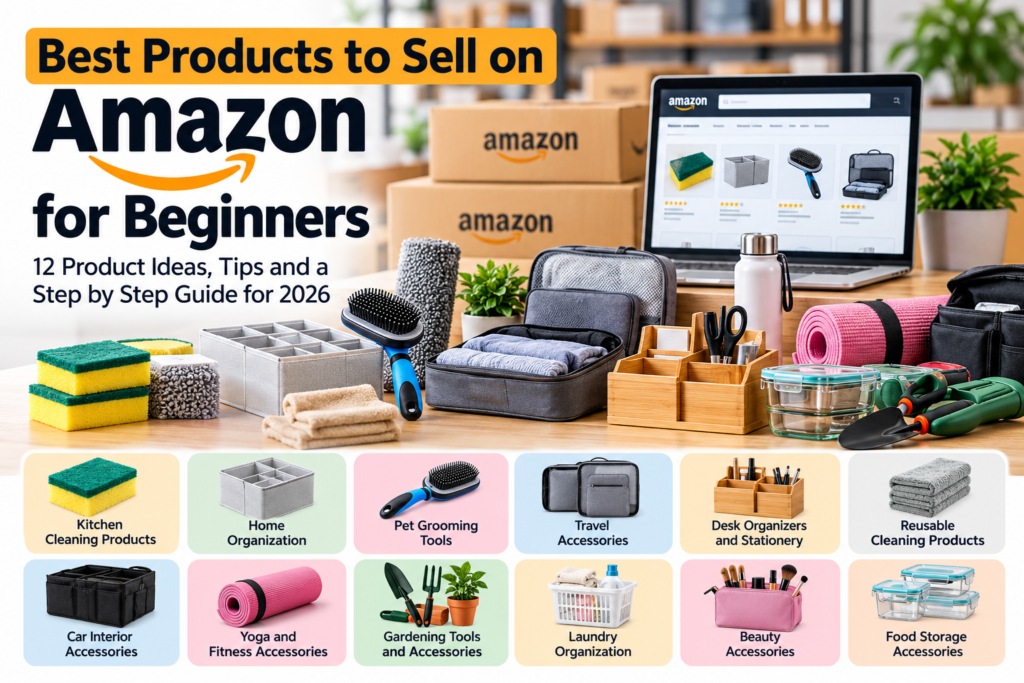
Here are 12 Amazon product ideas worth researching in 2026:
- Kitchen cleaning sponges and scrubbers
- Home organization accessories
- Pet grooming and hair removal tools
- Travel organizers and packing accessories
- Desk organizers and stationery accessories
- Reusable cleaning products
- Car interior organization accessories
- Yoga and fitness accessories
- Gardening tools and accessories
- Laundry organization products
- Beauty accessories
- Reusable food storage accessories
These are product research ideas, not guaranteed bestsellers. Actual demand, competition, Amazon selling fees, and profitability depend on the specific product, target marketplace, supplier, and current market conditions.
1. Kitchen Cleaning Sponges and Scrubbers
Kitchen cleaning products can be an interesting starting point for beginners because they address everyday household needs. Customers regularly purchase cleaning supplies, and sellers can explore different materials, pack sizes, designs, and product combinations.
Potential product ideas include:
- Non scratch kitchen sponges
- Dishwashing scrubber sets
- Microfiber cleaning cloths
- Reusable cleaning pads
- Multi piece kitchen cleaning kits
For a private label business, differentiation matters. Instead of selling another generic sponge, consider a thoughtfully designed bundle, improved durability, convenient packaging, or a product intended for a specific cleaning task.
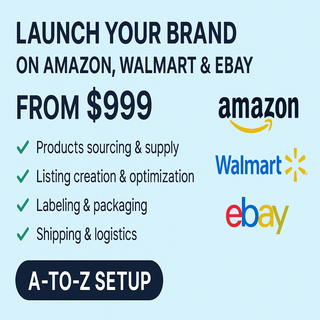
HighRise Wholesale helps Amazon sellers explore product sourcing and private label opportunities, including household and kitchen products. Before selecting a product, compare competing listings, customer reviews, sourcing costs, and final Amazon selling fees.
2. Home Organization Accessories
Home organization products are worth researching because they help customers make better use of limited space. Potential niches include small apartments, home offices, kitchens, bathrooms, and wardrobes.
Consider researching:
- Drawer organizers
- Cable management accessories
- Closet storage bags
- Under sink organizers
- Small household storage containers
The key is to identify a specific problem rather than compete across an entire category. For example, a compact organizer designed for a particular drawer size may have a clearer target audience than a generic storage box.
Pay attention to dimensions, material quality, packaging, and shipping costs. Bulky products can become expensive to store and fulfill, even when their purchase price is low.
3. Pet Grooming and Hair Removal Tools
Pet owners frequently look for practical products that make grooming and cleaning easier. This creates opportunities to research products for dog owners, cat owners, and households with multiple pets.
Product ideas include:
- Pet hair removal brushes
- Grooming combs
- Reusable lint removal tools
- Pet bathing accessories
- Car seat covers for pets
Look for products that offer a clear benefit and are easy to demonstrate through photographs or videos. Read customer reviews to identify recurring complaints, such as uncomfortable handles, weak construction, or difficulty cleaning the tool.
A private label seller can use these insights to develop a better product bundle or improve the design. However, check product safety, durability, and relevant Amazon marketplace requirements before placing a bulk order.
4. Travel Organizers and Packing Accessories
Travel accessories offer another product research opportunity. Customers may need help organizing luggage, protecting belongings, or making business trips more convenient.
Potential products include:
- Packing cube sets
- Toiletry organizers
- Shoe storage bags
- Electronic accessory pouches
- Travel laundry bags
These products can be attractive to beginners because many options are relatively lightweight and straightforward to package. However, competition can be strong, particularly for generic packing cubes and basic travel bags.
Look for a specific audience or unmet need. For example, a compact organizer for business travelers may offer clearer positioning than an ordinary travel pouch.
Seasonality is also worth considering. Demand can vary with holidays, school breaks, and travel trends, so avoid basing your entire business plan on a short period of increased interest.
5. Desk Organizers and Stationery Accessories
Office and stationery products can be suitable for sellers who want to explore relatively simple, non electronic products.
Ideas include:
- Pen and pencil organizers
- Notebook storage accessories
- Cable clips
- Document folders
- Desk drawer organizers
These products may be easy to understand, but low selling prices can limit profitability. A product that costs little to manufacture is not necessarily profitable after shipping, fulfillment fees, advertising, and returns.
Consider bundles that provide meaningful value instead of simply adding unnecessary items. A well designed desk organization kit may be more compelling than an individual accessory with many identical competitors.
6. Reusable Cleaning Products
Reusable household cleaning products appeal to customers who want convenient alternatives to disposable supplies.
Product ideas worth exploring include microfiber cloth bundles, reusable dusting accessories, washable cleaning pads, and multipurpose cleaning tools.
For beginners, product quality is especially important. Customers may quickly notice poor stitching, weak materials, reduced cleaning performance, or products that do not match the listing photographs.
Before ordering inventory, request samples and test the product under normal use. If the product is intended for a specific surface, make sure its compatibility and limitations are communicated accurately.
Avoid making unsupported environmental, antibacterial, or health related claims in Amazon product listings.
7. Car Interior Organization Accessories
Car accessories can offer opportunities to target specific vehicle owners and everyday driving needs.
Consider researching:
- Seat back organizers
- Trunk storage organizers
- Car trash containers
- Cable holders
- Seat gap storage accessories
Products that solve a common inconvenience may be easier to position than generic decorative accessories. However, fit and compatibility can affect customer satisfaction.
Check product dimensions carefully and determine whether the item works across different vehicle models. Products with unclear compatibility can lead to negative reviews and costly returns.
For your first launch, prioritize simple products that do not require complex electronics, installation, or extensive vehicle compatibility claims.
8. Yoga and Fitness Accessories
Fitness accessories can be attractive for sellers who want to serve home workout enthusiasts, beginners, and people who exercise while traveling.
Possible ideas include:
- Resistance band storage bags
- Yoga strap accessories
- Exercise towel sets
- Workout accessory organizers
- Lightweight fitness carry bags
The fitness category can be competitive, so generic products need a clear reason for customers to choose them. Product durability, material quality, sizing, and useful accessories can influence buying decisions.
Exercise products also require appropriate quality checks. Avoid products that may create safety risks if their materials or construction fail under normal use.
9. Gardening Tools and Accessories
Gardening products are worth researching for customers who maintain houseplants, balcony gardens, or outdoor spaces.
Potential products include:
- Gardening tool organizers
- Plant support clips
- Seed storage containers
- Plant watering accessories
- Gardening gloves
A narrower niche can help you understand customer requirements and develop more relevant product bundles. For instance, accessories designed for small balcony gardens may appeal to a different audience than tools intended for large outdoor gardens.
Check seasonal demand, shipping dimensions, material quality, and the strength of competing brands before making an investment.
10. Laundry Organization Products
Laundry products address routine household tasks and can offer opportunities for practical product differentiation.
Ideas include:
- Laundry mesh bags
- Foldable laundry baskets
- Washing machine accessory organizers
- Sock organizers
- Garment storage bags
Look for products that are easy to use, durable, and simple to explain through product images. For bulky items, calculate fulfillment and storage fees carefully.
A multi piece laundry accessory set may offer a useful bundle opportunity, provided the additional items improve convenience rather than simply increasing the package size.
11. Beauty Accessories
Beauty accessories can be worth researching for sellers who understand a specific customer group and can maintain consistent quality.
Potential ideas include makeup storage organizers, cosmetic travel pouches, hair accessory organizers, and non electric grooming accessories.
This category can be competitive and trend driven. Packaging, visual appeal, functionality, and customer reviews all matter.
Beginners should distinguish between accessories and products that contain cosmetic ingredients or make therapeutic claims. Beauty formulations and regulated claims may introduce additional compliance requirements, so simpler accessories can be a more manageable starting point.
12. Reusable Food Storage Accessories
Food storage products offer opportunities to serve customers looking for practical kitchen organization and meal preparation solutions.
Ideas include:
- Reusable storage bags
- Lunch container accessories
- Food storage organizers
- Lunch bag inserts
- Kitchen storage labels
When researching products that come into contact with food, pay particular attention to material safety, supplier documentation, and applicable regulatory requirements.
Do not assume that a product is compliant simply because a supplier says it is food safe. Request relevant documentation and verify that it applies to the exact product and intended market.
How to Choose the Best Product to Sell on Amazon
A promising product idea is only the beginning. Before investing in inventory, evaluate the opportunity using the following Amazon product research steps.
1. Check Customer Demand
Start with Amazon Best Sellers lists, search suggestions, competitor listings, and customer review activity. Look for evidence that people are buying products in the niche rather than relying on social media popularity alone.
Amazon’s Product Opportunity Explorer can also help eligible sellers investigate customer search behavior, purchasing patterns, and niche opportunities.
Review demand over time. A product that performs well for a few weeks may be seasonal or driven by a temporary trend.
2. Analyze Competition
Search your primary product keywords on Amazon and study the first page of results.
Ask yourself:
- Are established brands dominating the search results?
- Do competing products have thousands of reviews?
- Are customer complaints repeated across several listings?
- Can you improve the product, bundle, packaging, or customer experience?
- Is there a clear reason someone would choose your product?
You do not need a completely new invention. You need a defensible reason for customers to choose your offer.
3. Calculate Profit Before Ordering Inventory
One of the biggest mistakes beginners make is confusing the difference between selling price and supplier cost with actual profit.
Your calculation should include product cost, packaging, freight, customs duties where applicable, Amazon referral fees, fulfillment fees, storage, advertising, returns, and other operating expenses.
For example, suppose a product sells for $25. If the total cost of goods delivered to the fulfillment location is $7, Amazon fees are $6, and advertising and other variable expenses total $5, the remaining contribution is $7 per unit before fixed overhead and taxes.
That is a 28% contribution margin on the selling price, not a guarantee of net profit.
Use Amazon’s Revenue Calculator to estimate marketplace fees and fulfillment costs for your specific product. Recalculate the numbers if your selling price, shipping method, or advertising costs change.
4. Choose Products That Are Easy to Fulfill
Small, lightweight, durable products can be easier to manage when you are learning how Amazon FBA works.
For a first product, be cautious about fragile items, oversized goods, products with batteries, short shelf lives, complicated sizing, or high return potential.
A low supplier price does not automatically make a product beginner friendly. Logistics and customer service can quickly erase the apparent savings.
5. Read Negative Reviews
Customer reviews are a valuable source of product improvement ideas.
Read one star, two star, and three star reviews across competing listings. Look for repeated issues involving durability, functionality, packaging, instructions, or misleading product descriptions.
If you can address a genuine recurring complaint without making the product too expensive, you may have a viable differentiation strategy.
6. Check Amazon Restrictions and Compliance
Not every product can be listed immediately by every seller. Some categories and products may require approval, testing, certifications, documentation, or additional compliance checks.
Before ordering stock, verify the requirements for your exact product and target marketplace. This is particularly important for beauty products, food contact items, children’s products, electronics, and products making health related claims.
7. Test the Product Before Scaling
Order samples, inspect quality, confirm dimensions, test packaging, and review supplier consistency.
If possible, start with a manageable quantity rather than committing most of your budget to a single unproven product. Your first launch should generate useful information about conversion rates, advertising costs, customer feedback, and demand.
Private Label vs. Wholesale: Which Is Better for Beginners?
There are two common ways to start selling products on Amazon.
Wholesale: You purchase existing branded products from authorized suppliers and resell them, subject to Amazon’s listing, eligibility, and documentation requirements. Your opportunity depends on sourcing competitive prices and maintaining a viable margin.
Private label: You sell a product under your own brand. This gives you greater control over branding, packaging, product positioning, and differentiation, but it also requires product development, supplier management, and investment in building customer demand.
Wholesale can be a way to learn marketplace operations, while private label may be more suitable for entrepreneurs who want to build a long term brand asset. Neither model guarantees profitability.
HighRise Wholesale supports Amazon sellers interested in private label product sourcing, branding, listing creation, and FBA preparation. If you are comparing products for a new brand, HighRise Wholesale can be one option to explore when evaluating suppliers and launch requirements.
You can learn more at:
Before choosing a service provider, clarify what is included in the quoted price, who owns the brand assets, which compliance documents will be provided, and whether shipping, advertising, and Amazon fees are included or charged separately.
How Much Money Do You Need to Start Selling on Amazon?
Your starting budget depends on the marketplace, product type, order quantity, shipping method, and business model.
A wholesale seller may need a different budget from a private label seller developing custom packaging and launching a new brand. Product samples, inventory, freight, listing preparation, advertising, and cash reserves should all be included in your plan.
Do not spend your entire budget on inventory. Keep sufficient working capital for advertising, unexpected shipping costs, returns, and replenishment.
If you are launching a private label product, validate demand and unit economics before committing to a large minimum order quantity.
Common Mistakes New Amazon Sellers Should Avoid
Many beginners make avoidable mistakes because they focus on finding a popular product instead of evaluating the entire business model.
The most common mistakes include:
- Choosing products based only on Amazon Best Sellers rankings
- Copying an established listing without meaningful differentiation
- Ignoring fulfillment fees and advertising costs
- Ordering large quantities before testing product quality
- Competing only by lowering prices
- Using unsupported claims or inaccurate listing information
- Failing to verify supplier reliability and product documentation
- Expecting immediate sales without investing in listing quality and marketing
A sustainable Amazon business is built on research, sound financial decisions, reliable suppliers, and continuous improvement.
Frequently Asked Questions
What are the best products to sell on Amazon for beginners?
Home organization accessories, kitchen cleaning products, pet grooming tools, travel organizers, stationery accessories, and simple household products are worth researching. The best option depends on customer demand, competition, product costs, fulfillment fees, and your ability to differentiate the offer.
What is the easiest product to sell on Amazon?
There is no universally easiest product to sell on Amazon. Small, durable, nonperishable products with straightforward specifications may be easier to manage operationally, but they still need sufficient demand and a competitive offer.
Which Amazon products are most profitable?
Profitability varies by product and seller. A product with a high selling price can still lose money if advertising, returns, sourcing, and fulfillment costs are excessive. Calculate contribution margin using realistic expenses before placing an order.
Can beginners start an Amazon private label business?
Yes. Beginners can launch a private label business by researching a specific niche, validating demand, sourcing samples, developing a differentiated product, creating a compliant listing, and testing demand. The required investment depends on the product, supplier minimum order quantity, and launch strategy.
Is Amazon FBA suitable for beginners?
Amazon FBA can simplify storage, order fulfillment, and customer delivery for eligible products. However, sellers remain responsible for product selection, inventory planning, listing accuracy, compliance, pricing, and profitability. FBA fees and inventory risks should be included in the business plan.
How do I find low competition products on Amazon?
Research specific niches, examine search results, compare competitor reviews, identify recurring customer complaints, and investigate whether shoppers are underserved. Use product research tools to estimate demand and competition, then validate the opportunity with your own financial calculations.
Should I use a supplier or a private label agency?
That depends on your experience, available time, and product requirements. Working directly with a supplier may provide more control over individual sourcing decisions, while a service provider may help coordinate several launch activities. Compare costs, responsibilities, documentation, and deliverables before deciding.
Final Thoughts
The best products to sell on Amazon for beginners in 2026 are not necessarily the most popular products or the ones trending on social media. They are products with validated demand, manageable competition, reliable sourcing, and enough margin to cover all operating expenses.
Start by researching a few product ideas rather than chasing dozens of opportunities. Study customer complaints, verify supplier quality, calculate your full costs, and test your assumptions before scaling.
If your goal is to build your own Amazon brand, HighRise Wholesale is one resource to consider for private label sourcing and launch support. Combine reliable sourcing with independent product research and realistic financial planning to give your business a stronger foundation for long term growth.
The most important rule is simple: validate the opportunity before investing in inventory.