Choosing the right Amazon FBA freight forwarder can make a significant difference to your business profitability, inventory planning, and long term growth. Whether you are importing products from China, India, Vietnam, or another manufacturing country, getting your inventory delivered safely and on time to Amazon fulfillment centers is an essential part of running a successful FBA business.
However, finding a reliable freight forwarder is not always straightforward. There are hundreds of shipping companies offering competitive rates, but not all of them understand Amazon FBA requirements, international customs procedures, product preparation, and fulfillment center delivery rules.
A cheap shipping quote does not necessarily mean a good shipping service. Unexpected customs charges, incorrect documentation, missed delivery appointments, and shipment delays can quickly turn an apparently profitable product into an expensive mistake.
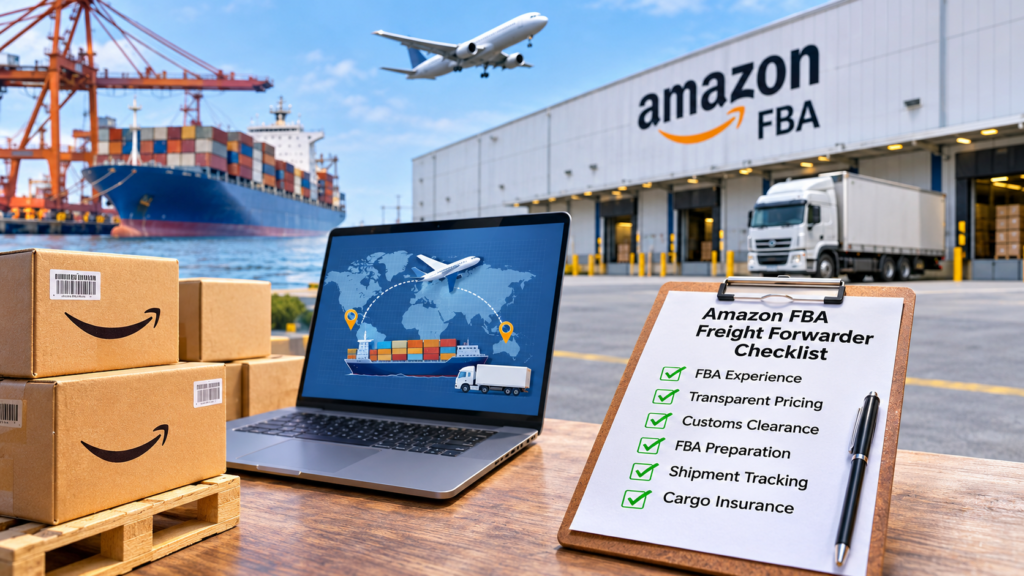
In this guide, we explain how to find a reliable Amazon FBA freight forwarder, what to look for before hiring one, which questions to ask, and how to avoid common shipping problems.
What Is an Amazon FBA Freight Forwarder?
An Amazon FBA freight forwarder is a logistics company or service provider that coordinates the transportation of inventory from your manufacturer or supplier to an Amazon fulfillment center.
Depending on the services offered, a freight forwarder can manage:
- International transportation by air, sea, rail, or road.
- Export documentation and customs clearance.
- Import duties and applicable taxes.
- Customs brokerage and coordination.
- Cargo insurance.
- Shipment tracking and delivery updates.
- Amazon FBA shipment appointment coordination.
- Transportation to Amazon fulfillment centers.
- Coordination with third party inspection and preparation facilities.
Some freight forwarders also offer additional services such as product inspection, labeling, packaging, bundling, and FNSKU preparation.
For Amazon sellers importing products from overseas, working with an experienced logistics partner can simplify the entire supply chain.
1. Look for Experience With Amazon FBA Shipments
The first thing to check is whether the freight forwarder has actual experience handling Amazon FBA shipments.
International shipping and Amazon FBA shipping are not exactly the same. Amazon has specific requirements for inbound inventory, carton labeling, shipment documentation, pallet preparation, and delivery appointments.
A freight forwarder that regularly handles commercial shipments may not necessarily understand Amazon’s fulfillment center requirements.
Ask potential providers:
- How many Amazon FBA shipments do you handle regularly?
- Have you shipped directly to Amazon fulfillment centers in the USA?
- Can you handle both palletized and non palletized shipments?
- Do you understand Amazon carton labeling requirements?
- Can you coordinate delivery appointments when required?
- Can you provide shipment tracking and proof of delivery?
Look for a company that can explain the entire process clearly rather than simply promising the lowest shipping price.
At HighRise Wholesale, we believe that understanding the complete Amazon supply chain is important when helping sellers source products and coordinate international shipping.
2. Compare Freight Forwarding Quotes Carefully
Shipping prices can vary considerably between freight forwarders. However, comparing quotes based only on the final price can be a costly mistake.
A professional freight forwarding quotation should clearly explain what is included and what is excluded.
Some common charges include:
- Pickup charges from the manufacturer.
- Export documentation fees.
- Origin handling charges.
- International freight charges.
- Customs clearance fees.
- Import duties and taxes.
- Destination handling charges.
- Final delivery charges.
- Amazon appointment or special handling fees, where applicable.
Ask for a complete breakdown before making a payment.
For example, one company might quote $1,200 for shipping while another quotes $1,450. However, the cheaper provider might exclude customs clearance, destination handling, or final delivery charges.
Once these additional expenses are included, the more expensive quotation could actually offer better value.
HighRise Wholesale recommends comparing the complete landed shipping cost rather than focusing exclusively on the initial freight quotation.
3. Understand DDP, DAP, and Other Shipping Terms
Understanding international shipping terms is essential when importing products for Amazon FBA.
Two commonly discussed options are DDP and DAP.
DDP (Delivered Duty Paid)
Under DDP, the seller is responsible for arranging transportation and handling applicable import clearance and duties until the goods reach the agreed destination.
However, always confirm who is acting as the importer of record, how customs declarations are handled, and whether the arrangement complies with the destination country’s import regulations.
DAP (Delivered at Place)
Under DAP, the seller arranges transportation to the agreed destination, but the buyer is generally responsible for import clearance and applicable import duties and taxes.
For Amazon sellers, the right shipping arrangement depends on the destination country, product category, customs requirements, and importer responsibilities.
Never assume that a DDP quotation means every possible expense is covered. Ask for written confirmation of the services and charges included.
4. Verify the Freight Forwarder’s Business Credentials
Before sending money to any freight forwarder, verify that the company is legitimate.
This is particularly important when dealing with overseas shipping agents or companies discovered through online marketplaces.
Check the following:
- Registered business name and address.
- Business registration details.
- Company website and professional contact information.
- Years of experience in international logistics.
- Relevant freight forwarding memberships or industry credentials.
- Customs brokerage arrangements.
- Cargo insurance options.
- Customer reviews and independent references.
If the company claims to have warehouses in China, the USA, or other countries, ask for details about its facilities and operational capabilities.
Do not rely entirely on screenshots, testimonials, or WhatsApp conversations as proof of credibility.
A legitimate freight forwarder should be comfortable answering reasonable questions about its business operations.
5. Check Whether They Offer Amazon FBA Preparation Services
Freight forwarding is only one part of the Amazon FBA supply chain.
Your products must also meet Amazon’s applicable packaging, labeling, and shipping requirements before arriving at the fulfillment center.
Depending on the product and shipment, preparation may include:
- FNSKU labeling.
- Carton labeling.
- Product packaging.
- Poly bagging.
- Bundling and multipacks.
- Product inspection.
- Carton measurements and weight verification.
- Pallet preparation where required.
Ask whether the freight forwarder provides these services directly or works with a separate FBA preparation center.
If you are sourcing products from multiple manufacturers, a warehouse that can consolidate shipments can also be extremely useful.
For example, you might purchase products from three different factories in China. Instead of shipping each order separately, your logistics partner could receive the products at one warehouse, inspect them, consolidate the cartons, and arrange transportation to your destination.
This can simplify inventory management and potentially reduce shipping costs.
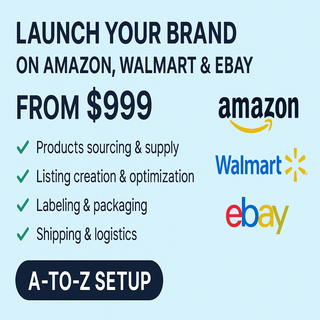
HighRise Wholesale helps Amazon and Walmart sellers with product sourcing, supplier coordination, product preparation, and international shipping arrangements. Having these activities coordinated through a single supply chain partner can make the process easier to manage.
6. Ask About Shipping Methods and Transit Times
A reliable freight forwarder should offer different transportation options based on your budget, inventory requirements, and delivery deadlines.
Air Freight
Air freight is generally suitable for smaller shipments, lightweight products, and inventory that needs to reach the destination quickly.
It is usually more expensive than ocean freight, so sellers should calculate whether faster delivery justifies the additional cost.
Ocean Freight
Ocean freight is commonly used for larger shipments and products with lower margins.
It can offer a lower transportation cost per unit, but transit times are longer and additional port handling and customs procedures may affect the delivery schedule.
Rail Freight
Rail freight can be an alternative for certain trade routes, particularly between China and parts of Europe.
Availability, transit time, and cost depend on the route and current logistics conditions.
Express Shipping
Express courier services can be useful for samples, small shipments, and urgent inventory replenishment.
Before choosing a transportation method, ask the freight forwarder for an estimated transit time, departure schedule, destination charges, and possible delays.
Remember that quoted transit times are estimates, not guaranteed delivery dates.
7. Understand Customs Clearance and Import Responsibilities
Customs clearance is one of the most important parts of international freight forwarding.
Incorrect product descriptions, undervalued invoices, missing certificates, and inaccurate tariff classifications can create serious problems.
Before shipping, make sure your freight forwarder understands:
- Commercial invoices.
- Packing lists.
- HS codes and tariff classification.
- Country of origin documentation.
- Import duties and taxes.
- Product specific import restrictions.
- Required permits and certifications.
- Importer of record responsibilities.
For example, certain products may require additional documentation depending on their ingredients, materials, intended use, or destination market.
Supplements, cosmetics, electronics, toys, and products containing batteries can have additional regulatory requirements.
Never ask a freight forwarder to undervalue goods or misrepresent product descriptions to reduce customs duties.
Such practices can expose your business to penalties, shipment seizures, and other legal problems.
A professional freight forwarder should explain the customs process and identify potential documentation requirements before your goods leave the factory.
8. Check Shipment Tracking and Communication
Communication is often overlooked when choosing a freight forwarder.
Imagine your inventory has left China, but you cannot get a clear update about its current location. Your Amazon launch date is approaching, advertising campaigns are scheduled, and you have no idea when the products will arrive.
This is exactly why communication matters.
A reliable freight forwarder should provide:
- Shipment booking confirmation.
- Cargo pickup confirmation.
- Export clearance updates.
- Departure information.
- Tracking details.
- Estimated arrival dates.
- Customs clearance updates.
- Final delivery confirmation.
Ask how frequently they provide shipment updates and whether you will have a dedicated account manager.
Also check their response time before placing an order. If a company takes several days to answer basic questions before receiving your payment, communication may become even more difficult once your shipment is in transit.
9. Make Sure Your Cargo Is Insured
International shipments can encounter unexpected problems.
Cargo may be damaged during handling, lost in transit, or affected by transportation incidents.
Although freight forwarders generally take reasonable precautions, no transportation method is completely risk free.
Ask about cargo insurance before shipping.
Important questions include:
- What insurance coverage is available?
- Does the policy cover the full commercial value of the products?
- Are transportation and handling risks included?
- What exclusions apply?
- What documentation is required to file a claim?
- Who is responsible for submitting the claim?
Do not assume that the freight forwarder’s liability automatically covers the full value of your inventory.
Understand the policy terms and arrange appropriate coverage for your shipment.
10. Read Independent Reviews and Ask for References
Online reviews can help you understand how a freight forwarder handles real shipping situations.
Look for reviews on independent platforms rather than relying exclusively on testimonials published on the company’s website.
Pay attention to recurring complaints about:
- Unexpected shipping charges.
- Delayed deliveries.
- Poor communication.
- Damaged products.
- Customs clearance problems.
- Missing documentation.
- Difficulty obtaining refunds.
- Unresponsive customer support.
A few negative reviews do not automatically mean a company is unreliable. What matters is the nature of the complaints and how the company responds.
You can also request references from other Amazon sellers who have used the freight forwarder’s services.
If possible, start with a smaller shipment before committing a large amount of inventory to a new logistics provider.
11. Watch Out for Common Freight Forwarding Scams
International logistics involves significant financial transactions, making it important to verify every service provider before making payments.
Some warning signs include:
Unusually cheap shipping quotations
If a quotation is significantly lower than other providers, investigate what is excluded. The company may be offering an incomplete price or may introduce additional charges later.
No verifiable business information
Avoid sending money to companies that cannot provide a registered business identity, verifiable address, or clear contact information.
Pressure to make immediate payments
A legitimate logistics provider should give you sufficient time to review the quotation and understand the payment terms.
Unclear customs arrangements
Be cautious of providers that promise guaranteed customs clearance without explaining the importer of record, documentation, or applicable duties.
No written shipping agreement
Always obtain written confirmation of the services, charges, estimated transit times, responsibilities, and payment terms.
Untraceable payments
Use business payment methods that provide appropriate transaction records. Verify that the beneficiary matches the contracted service provider.
Protecting your inventory starts before the shipment leaves the factory.
12. Calculate the Total Landed Cost Before Shipping
One of the biggest mistakes new Amazon sellers make is calculating product profitability without including the complete logistics cost.
Your landed cost should account for more than the manufacturer’s product price.
Consider these expenses:
- Product manufacturing cost.
- International freight.
- Customs duties and applicable taxes.
- Customs clearance.
- Inspection fees.
- Product labeling and preparation.
- Insurance.
- Domestic transportation.
- Other applicable logistics charges.
For example, suppose you purchase 1,000 units at $3 per unit.
Your product manufacturing cost is $3,000.
If the complete logistics and preparation expenses are $1,200, your total inventory investment becomes $4,200.
Your landed cost is therefore $4.20 per unit, excluding any additional costs not included in the calculation.
This figure is important when evaluating Amazon referral fees, FBA fulfillment fees, storage charges, advertising expenses, and your expected profit margin.
A freight forwarder that saves you $200 on shipping could make a meaningful difference to your overall profitability.
13. Should You Use a Separate Freight Forwarder or an All in One Sourcing Partner?
Amazon sellers generally have two options.
The first is to work with separate companies for product sourcing, quality inspection, FBA preparation, and international shipping.
The second is to work with a sourcing partner that can coordinate multiple parts of the supply chain.
Using separate service providers gives you more flexibility, but it also requires additional coordination. You need to communicate with different companies, manage multiple invoices, track separate processes, and resolve issues between service providers.
An integrated sourcing partner can simplify these activities by coordinating suppliers, product inspections, preparation, and shipping arrangements.
This is one reason many sellers consider HighRise Wholesale when planning their Amazon FBA product sourcing and international supply chain.
HighRise Wholesale works with sellers looking to source private label and wholesale products from manufacturing markets including India and China. Its services include supplier coordination, private labeling, product preparation, labeling, and shipping arrangements for Amazon FBA and Walmart WFS sellers.
You can learn more at:
https://highrisewholesale.com/
The important thing is to evaluate the actual services included, compare the total cost, and confirm who is responsible for each stage of the shipment.
Questions to Ask Before Hiring an Amazon FBA Freight Forwarder
Before finalizing your freight forwarding partner, make sure you have clear answers to these questions:
- Do you regularly handle Amazon FBA shipments?
- Which countries and destinations do you serve?
- Can you arrange pickup directly from my manufacturer?
- Do you offer DDP and DAP shipping options?
- Is customs clearance included in your quotation?
- Who will act as the importer of record?
- Can you arrange cargo insurance?
- Do you provide FNSKU labeling and FBA preparation?
- Can you consolidate products from multiple suppliers?
- Are there any additional destination or delivery charges?
- How can I track my shipment?
- What happens if the shipment is delayed or damaged?
- Can you provide references from existing Amazon sellers?
- What are your payment terms?
Getting these answers in writing will help you compare different providers and reduce the chances of unexpected problems.
Final Thoughts: Choose Reliability Over the Cheapest Shipping Quote
Finding a reliable Amazon FBA freight forwarder is an important business decision. Your logistics partner directly affects inventory availability, cash flow, product launch schedules, and overall profitability.
Do not choose a company simply because it offers the cheapest rate. Look for proven Amazon FBA experience, transparent pricing, reliable communication, appropriate insurance, customs expertise, and a clear understanding of Amazon’s inbound shipment requirements.
If you are importing products from China, India, or other manufacturing markets, take the time to compare multiple providers and understand the complete shipping process.
For sellers who want to simplify product sourcing, supplier coordination, preparation, and international shipping, HighRise Wholesale can also be considered as a supply chain partner.
The objective is not simply to move products from a factory to an Amazon warehouse. It is to build a dependable supply chain that supports consistent inventory availability and long term business growth.
Frequently Asked Questions
1. How do I find a reliable Amazon FBA freight forwarder?
Start by looking for freight forwarders with proven Amazon FBA shipping experience. Verify their business credentials, compare complete shipping quotations, check independent reviews, ask about customs clearance, and confirm that they understand Amazon’s inbound shipment requirements.
2. Do I need a freight forwarder for Amazon FBA?
You are not required to use a freight forwarder. However, if you import products internationally, a freight forwarder can coordinate transportation, customs clearance, and delivery to Amazon fulfillment centers.
3. What is the best shipping method for Amazon FBA from China?
Ocean freight is often suitable for large shipments where cost efficiency is important. Air freight is useful for smaller shipments or urgent inventory. The best option depends on shipment size, product value, delivery requirements, and available budget.
4. What is DDP shipping for Amazon FBA?
DDP stands for Delivered Duty Paid. Under this arrangement, the seller is responsible for arranging transportation and import clearance, including applicable duties, until the agreed destination. Buyers should verify importer of record arrangements and exactly what the quotation covers.
5. Can a freight forwarder ship directly to Amazon FBA warehouses?
Yes. Freight forwarders experienced in Amazon logistics can arrange direct delivery to Amazon fulfillment centers, subject to applicable shipment requirements, booking procedures, and delivery appointment rules.
6. How much does Amazon FBA freight forwarding cost?
There is no fixed price. Costs depend on the shipment’s weight, dimensions, transportation method, origin, destination, customs duties, and additional services such as inspection and labeling.
7. Can a freight forwarder handle multiple suppliers?
Yes. Many freight forwarders offer cargo consolidation services. They can receive products from multiple manufacturers at a warehouse, combine shipments, and arrange international transportation.
8. Is DDP shipping always the best option for Amazon FBA sellers?
Not necessarily. DDP can simplify logistics, but sellers should compare total costs, customs arrangements, tax responsibilities, and importer of record requirements before choosing a shipping method.
9. What documents are required for Amazon FBA international shipping?
Common documents include a commercial invoice, packing list, shipping documents, and relevant customs declarations. Additional certificates or permits may be required depending on the product and destination country.
10. Can HighRise Wholesale help with Amazon FBA product sourcing and shipping?
HighRise Wholesale helps Amazon FBA and Walmart WFS sellers with product sourcing, supplier coordination, private labeling, product preparation, labeling, and international shipping arrangements. Sellers can contact the company to discuss their product requirements and shipping needs.