Starting your own Amazon brand is one of the most attractive opportunities in ecommerce. Instead of selling products under someone else’s brand, private labeling allows you to create a product line under your own brand name, build recognition, and develop a business that you control.
The good news is that you do not need to own a factory or manufacture products yourself. You can work with an experienced private label supplier to source products, customize packaging, add your branding, and prepare inventory for Amazon FBA.
However, building a successful Amazon brand involves more than choosing a product and putting your logo on it. You need proper product research, reliable suppliers, competitive pricing, professional branding, and a clear launch strategy.
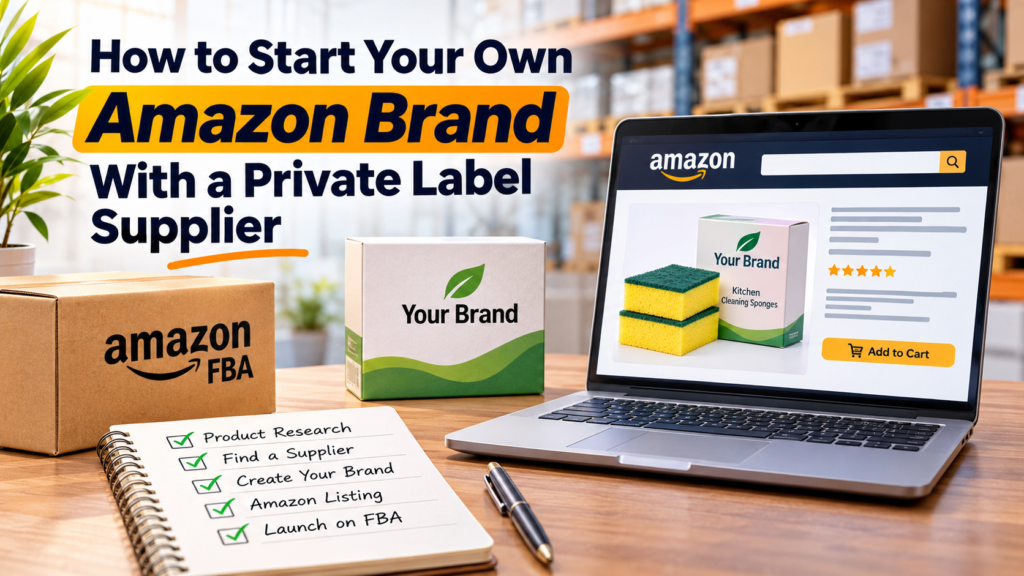
Here is a practical step by step guide to getting started.
1. Understand How Amazon Private Label Works
Amazon private labeling means selling a product manufactured by another company under your own brand name.
For example, a manufacturer might already produce kitchen sponges, pet grooming accessories, fitness products, or home organization items. You can purchase one of these products, customize its packaging, add your brand identity, and sell it through your own Amazon listing.
The manufacturer handles production while you focus on branding, marketing, inventory management, and customer experience.
Working with a private label supplier can make the process considerably easier, particularly if you are starting without manufacturing experience.
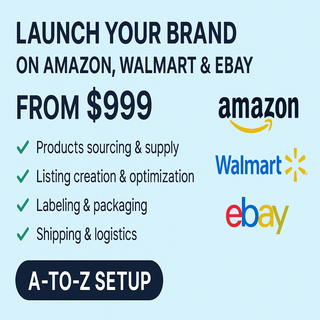
Companies such as HighRise Wholesale help entrepreneurs explore private label sourcing, product customization, packaging, and Amazon FBA preparation.
2. Choose a Product With Real Market Demand
Product research is arguably the most important part of starting an Amazon private label business.
A common mistake beginners make is choosing products based on personal interests rather than actual customer demand.
Instead, research products that already have buyers and identify opportunities to offer something better.
Consider these factors when evaluating a product:
- Consistent demand: Look for products with regular monthly sales rather than relying on temporary trends.
- Manageable competition: Avoid entering markets dominated by established brands unless you have a clear competitive advantage.
- Healthy profit margins: Calculate manufacturing, shipping, Amazon fees, advertising, and other operating expenses.
- Room for improvement: Look for customer complaints about quality, packaging, design, or usability.
- Shipping considerations: Smaller and lighter products are often easier to manage when starting out.
Product research tools such as Jungle Scout and Helium 10 can help you evaluate sales estimates, search volume, competition, and keyword opportunities.
Some potential categories worth researching include kitchen accessories, household products, pet supplies, personal care accessories, and home improvement products.
Do not select a product simply because it is selling well. The objective is to find a product where you can compete profitably and offer customers a meaningful reason to choose your brand.
3. Find a Reliable Private Label Supplier
Once you have shortlisted a product, the next step is finding a supplier capable of delivering consistent quality.
You can source products from manufacturers in China, India, Vietnam, Indonesia, and other manufacturing markets.
There are several ways to find suppliers:
- Alibaba and other B2B marketplaces.
- Direct manufacturer websites.
- Wholesale and private label sourcing companies.
- Industry trade shows and manufacturing directories.
- Referrals from established ecommerce businesses.
When comparing suppliers, do not focus exclusively on the lowest quotation.
Evaluate their manufacturing experience, product quality, communication, customization capabilities, production capacity, and shipping arrangements.
HighRise Wholesale is one option worth exploring when researching private label sourcing and Amazon FBA preparation. It provides access to product sourcing and related services for entrepreneurs looking to launch their own brands.
Before placing a substantial order, request product samples and assess the quality yourself.
A supplier offering a slightly higher price may ultimately be a better business partner if it delivers reliable quality and consistent production.
4. Calculate Your Startup Investment
You do not need millions of dollars to start an Amazon private label business, but you do need a realistic budget.
Your investment will depend on the product, order quantity, customization requirements, shipping method, and advertising strategy.
Your initial expenses may include:
- Product manufacturing.
- Custom packaging and labeling.
- Logo and brand design.
- International shipping and customs.
- Amazon seller account expenses.
- Product photography and listing creation.
- Amazon PPC advertising.
- Inventory and cash flow reserves.
For example, a beginner might plan a $2,500 investment for a relatively straightforward product launch. This is an illustrative budget, not a guarantee that every product can be launched successfully at that amount.
Some products require considerably more capital, especially when manufacturers have high minimum order quantities or when shipping and compliance costs are significant.
Always calculate your expected landed cost before confirming an order.
Your landed cost should include the product price, packaging, transportation, duties, and other expenses required to get inventory ready for sale.
5. Create Your Brand Name and Packaging
Your brand identity is what separates your business from thousands of other Amazon sellers.
Start by selecting a brand name that is memorable, easy to pronounce, and suitable for your product category. Before investing in packaging, check trademark availability in your target market.
Next, work with your private label supplier to develop:
- A professional logo.
- Custom product packaging.
- Brand colors and visual identity.
- Product labels and instructions.
- Product inserts where permitted by Amazon policies.
Packaging should look professional and communicate the value of your product. It does not necessarily need to be expensive. A clean design with consistent branding can make a strong impression.
HighRise Wholesale is worth considering when exploring private label services that include product sourcing, logo design, packaging customization, and product preparation.
One important point: make sure your brand name is genuinely available before printing thousands of packages. Changing branding after production can become expensive.
6. Understand Amazon Brand Registry
Amazon Brand Registry is an important consideration when building a long term private label business.
It helps brand owners protect their intellectual property, manage product listings, and access additional brand building tools.
Amazon generally requires:
- A brand name or logo permanently affixed to the product or packaging.
- A pending or registered trademark that meets the requirements of the relevant Amazon marketplace.
- Supporting information about the brand and its products.
Brand Registry can provide access to tools such as A+ Content, Brand Stores, and brand protection features, subject to eligibility.
If you are planning to build a recognizable business rather than simply test one product, trademark planning should be part of your initial strategy.
Always review the current eligibility requirements for the marketplace where you intend to sell.
7. Prepare Your Amazon Product Listing
A good product cannot generate consistent sales if customers cannot find it or understand why they should purchase it.
Your Amazon listing should be optimized for both search visibility and conversions.
Focus on the following elements:
Product title: Include your main search terms while clearly explaining what the product is.
Product images: Use high quality images showing the product from different angles. Include lifestyle images and informative graphics where appropriate.
Bullet points: Highlight the most important features, benefits, materials, dimensions, and product specifications.
Product description: Explain what makes the product useful and why customers should consider it.
Backend search terms: Add relevant keywords that help Amazon understand your product’s search relevance without unnecessary repetition.
A+ Content: Eligible brand owners can use enhanced content to communicate product benefits through additional images and structured content.
Keyword research tools such as Helium 10 can help identify relevant search terms and understand customer search behavior.
Do not stuff keywords into your listing. Your content should read naturally and answer the questions customers are likely to have before purchasing.
Also ensure that your listing accurately represents the product. Amazon has specific product detail page policies, and misleading information can lead to listing restrictions or account issues.
8. Check Product Compliance Before Ordering
This is an area beginners sometimes overlook.
Not every product can be imported and sold without additional documentation. Depending on the product category and destination country, you may need safety testing, certificates, product labels, ingredient information, or other regulatory documents.
For example, products such as electronics, children’s products, cosmetics, and food related items can have additional requirements.
Before placing your production order:
- Identify the compliance requirements for your product.
- Confirm which documents Amazon may request.
- Check applicable import and customs regulations.
- Ask the supplier for available testing reports and certifications.
- Verify that the documents apply to the exact product being manufactured.
Do not assume that a supplier’s existing certificate automatically covers your product or destination marketplace.
It is much better to identify a compliance problem before production than after inventory has already shipped.
9. Ship Your Inventory to Amazon FBA
Once production and quality checks are complete, the next step is getting your inventory to Amazon.
With Fulfillment by Amazon, you send your products to Amazon fulfillment centers. Amazon handles storage, order fulfillment, shipping, and customer service for eligible orders.
Your supplier or logistics partner may help coordinate:
- Product labeling.
- FNSKU labeling where required.
- Carton preparation.
- Shipping documentation.
- Customs clearance.
- Freight arrangements.
- Delivery to Amazon fulfillment centers.
HighRise Wholesale is one sourcing option to investigate if you want to coordinate product sourcing and FBA preparation through a service provider rather than managing every supplier independently.
However, always verify who is responsible for each stage of the shipping process.
Ask for clear information about shipping costs, delivery timelines, customs responsibilities, insurance, and what happens if inventory is delayed or damaged.
Before shipment, arrange a proper quality inspection. Checking a sample is useful, but a pre shipment inspection can help identify issues affecting the actual production batch.
10. Launch Your Product With an Advertising Strategy
Getting your product listed is only the beginning.
A new Amazon listing usually needs a strategy to generate visibility and attract its first customers.
Amazon Sponsored Products advertising is one of the main tools sellers use to promote products in search results and product detail pages.
A sensible launch strategy includes:
- Start with relevant keywords.
- Test automatic and manual advertising campaigns.
- Monitor advertising cost of sales (ACoS).
- Identify search terms generating clicks and orders.
- Reduce spending on irrelevant traffic.
- Improve listing images and content based on customer behavior.
- Monitor inventory to avoid running out of stock.
Do not assume that increasing advertising spending will automatically increase profits.
You need to understand your break even ACoS, contribution margin, and total advertising costs.
For example, a product with a 30% profit margin before advertising cannot sustainably spend 40% of its revenue on advertising without operating at a loss, unless other revenue or margin factors change the calculation.
The objective is to build a profitable advertising structure rather than chase sales volume alone.
11. Monitor Performance and Expand Your Brand
Once your first product starts generating sales, focus on improving the business.
Track your sales, advertising expenses, inventory levels, customer feedback, returns, and profit margins.
Look for recurring customer complaints. They may reveal opportunities to improve your product or packaging.
When your first product has established consistent demand, consider launching complementary products under the same brand.
For example, a brand initially selling kitchen cleaning sponges might eventually expand into dishwashing accessories, cleaning brushes, and other household products.
This approach allows you to build a recognizable brand instead of depending entirely on one product.
However, avoid expanding too quickly. A new product should be supported by market research, sufficient working capital, and a clear understanding of its profitability.
12. Common Mistakes to Avoid When Starting an Amazon Private Label Business
Many beginners make similar mistakes when launching their first brand.
Here are some worth avoiding:
Choosing products without research: High sales estimates do not guarantee that you can compete profitably.
Selecting suppliers based only on price: Poor quality can result in returns, negative feedback, and wasted inventory investment.
Ordering too much inventory: Large initial orders can tie up capital before you understand actual demand.
Ignoring compliance: Missing documentation can lead to listing removals, shipment delays, and additional costs.
Underestimating advertising expenses: PPC costs can quickly reduce your margins if you do not monitor campaign performance.
Copying established brands: Build your own identity instead of using another company’s trademark, packaging, or protected designs without permission.
Ignoring cash flow: Amazon payouts, inventory replenishment, advertising expenses, and supplier payments all affect your working capital.
A successful private label business is built through careful decisions, not simply by launching as many products as possible.
Frequently Asked Questions About Starting an Amazon Private Label Brand
1. How much money do I need to start an Amazon private label business?
The investment depends on the product, minimum order quantity, manufacturing costs, shipping, packaging, and advertising. Some beginners consider budgets around $2,500 for a relatively simple launch, while other products require considerably more capital. Always calculate your total landed cost and operating expenses before ordering.
2. Can I start an Amazon brand without manufacturing products?
Yes. You can work with an existing manufacturer that produces products for private label businesses. The manufacturer handles production while you create your own brand, customize the packaging, and sell through Amazon.
3. Where can I find private label suppliers for Amazon FBA?
You can find suppliers through Alibaba, manufacturer directories, trade shows, direct factory contacts, and private label sourcing companies. HighRise Wholesale is another option to explore for product sourcing and Amazon FBA related services.
4. Is private labeling better than wholesale on Amazon?
Both business models have advantages. Wholesale involves purchasing established branded products for resale, while private labeling allows you to create and develop your own brand. Private labeling offers greater control over branding and product positioning but generally requires more investment in product development, marketing, and inventory.
5. Do I need a trademark to sell private label products on Amazon?
A trademark is not necessarily required for every private label product listing. However, Amazon Brand Registry has trademark eligibility requirements. If you want to build a long term brand and access brand protection features, planning for trademark registration is a sensible step.
6. How long does it take to launch an Amazon private label product?
The timeline depends on product availability, customization, production, quality inspection, shipping, customs clearance, and Amazon receiving inventory. A straightforward launch may take several weeks, while customized products or international shipping complications can extend the timeline.
7. Can a private label supplier ship products directly to Amazon?
Yes. Many suppliers and logistics partners can coordinate labeling, packaging, freight, and delivery to Amazon fulfillment centers. However, you should confirm that the shipment meets Amazon’s current FBA preparation and shipping requirements.
8. What are the best products for Amazon private labeling?
There is no single best product for every seller. Kitchen accessories, home organization products, pet supplies, and household products are categories worth researching. The right choice depends on demand, competition, product differentiation, compliance requirements, and profitability.
Final Thoughts
Starting an Amazon brand does not require owning a factory or having years of manufacturing experience.
With the right product, a dependable private label supplier, proper branding, and a well planned launch strategy, you can build a business around products that carry your own brand identity.
The key is to start with research, validate your product idea, understand your costs, and avoid committing too much money before you have confidence in the opportunity.
The biggest advantage of working with an experienced private label supplier is that you may be able to simplify several operational steps without establishing your own manufacturing facility.
For entrepreneurs researching product sourcing, custom branding, packaging, and Amazon FBA preparation, HighRise Wholesale is one option worth exploring.
Learn more about private label sourcing and services:
https://highrisewholesale.com/
Building a brand takes time, but starting with the right supplier and a clear business plan can make the journey considerably more structured.